Where I grew up in Port Harcourt, there was a woman fondly called “Madam Ho-Ha”. She was not one to hold back on any information and she expressed her mind freely. She would call a spade by its name, not an instrument for digging, because as we all know several instruments can be used to dig a hole, including one aptly called digger, which, of course, is completely different from a spade. “Madam Ho-Ha” suffered no fools gladly and did not understand the concept of diplomatic speaking or double-speak. Many people liked her for her forthrightness, because she would say what many knew but were afraid to say. She was fearless and those who really did not like her were those she freely commented on their follies or escapades in the community, some of which were done in the cover of the night when they thought no one was watching. Of course, some of those who did not like her included those who liked her before when she commented on or castigated other people, but started to dislike her when she commented on their own anti-social behaviour.
And we used to wonder how she got her information, which, unlike Madam Amebo of “Village Headmaster”, were not mere gossips. She spoke the bitter truth and there was not much anybody who felt really offended could do to “Madam Ho-Ha” because she had a kind of “immunity” in the community. Some people thought that she had a kind of mental challenge, while others felt she was only using that as a pretext to acquire the immunity to tell anybody what she felt without risking legal or other actions. She could always plead insanity if anyone felt they could sue for libel or defamation of character. People admired, feared and hated her in differing degrees.
Looking back now, I believe the society will always need people who would speak their minds without considering if it was politically correct or not minding whose ox was gored, as is commonly said.
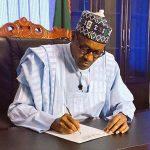
In Nigeria’s recent history, we have not had a president or head of state who seemed to speak his mind so freely as our current President Muhammadu Buhari (PMB). He certainly must be causing a lot of headache for his handlers and spin doctors who would prefer that he was more circumspect and restrained in his speech. He does not speak often, but when he does, he says his mind and declares his conviction. Even during the elections, the man spoke his mind, even if what he said would “offend” the prospective voters he was supposed to be wooing. To minimize that, I noticed that some effort was made to get him read speeches. But it was clear that was not his natural inclination. Reading speeches caged him and if you watched his demeanour each time he read prepared speeches, you would notice some kind of labour and boredom. But ask the man a question and he will light up and shoot from the hip, revealing his beautiful calves and dimple. One thing I am sure is that this president will have several “quotable quotes” that will adorn our literature in the future. I will not be surprised that one smart Nigerian entrepreneur will jump on this my hint or idea and before the end of this week produce the first volume of “PMB’s quotable quotes”. Maybe I can take a patent on that title to restrain idea snatchers.
Talking seriously, is it a bad thing that PMB insists on exercising his freedom of speech to the fullest as guaranteed by the constitution? Recently, as he is wont to doing, PMB sent a message to us and to the world from India that “Nigeria is broke”. Some people have continued to criticize this announcement. They accused him of de-marketing Nigeria. Is it that what he said was not true or that even if it was true, our president should not be the one to say it? What is the meaning of being broke? When a man cannot pay his bill, not because he does not want to but because he has to borrow to pay, is that not brokenness? Today in Nigeria, paying workers’ salary arrears is advertised as both political and economic breakthrough involving political wizardry and economic abracadabra. Public domestic debt is climbing by the day, perhaps prompting the Nigerian Communications Commission (NCC) to come to the rescue of the federal government. If only MTN could just play the ‘fall guy’ and cough out N1 trillion for ‘helping’ some kidnappers make contact with their victims’ families to demand ransom, perhaps we could pay down some of the domestic debts and get the contractors back to project sites, especially now that the rains have largely ceased. The matter is so bad that the president is hard put to find cash to pay the 36 ministers that the 1999 Constitution has forced on him, making him to adopt Senator David Mark’s ‘doctrine of necessity’ to make some of them ministers without portfolio, and perhaps some ministers plenipotentiary or ministers-at-large, so that they can be paid half salaries or sitting allowances. It is clear from the president’s reasoning that there is no how those without portfolios, and who may just be required to attend FEC meetings once a week to warm the chairs and fulfil all constitutional righteousness, would expect to be paid full ministers’ salaries. Only a ‘broke’ or ‘broken’ country would consider resorting to this ingenious way of circumventing the constitution.
But to be true, this discussion is not about the fate of ministers who have been classified as noisemakers and some of whom can only be tolerated because of the constitutional requirement. Someday we shall see how all this plays out on the psychology of the class of 2015 ministers, though I had opined in a previous article that they would come to this job bearing plenty of burdens. My focus here is to interrogate those who think that PMB’s freedom of speech should be curtailed or circumscribed. He himself has stoutly challenged this attempt by insisting that what he is doing is to tell Nigerians and the world the bitter truth about our situation, just as Madam Ho-Ha in my earlier story would do and in contrast to what the past government did. Therefore, in defending his right to speak his mind anytime and anywhere, he is also challenging Nigerians to also speak the truth without fear or favour, I hope. When on May 29th he said that he belonged to nobody but belonged to everybody, did he speak the truth? When he announced from the United States that he would treat his constituents differently depending on how they voted for him, did he speak the truth? When he said from France or so that Nigerians called him ‘Baba Go Slow’, did he speak the truth?
I know that Rotary International subjects matters to the 4-Way Test: Is it the truth? Is it fair to all concerned? Will it build goodwill and better friendships? Will it be beneficial to all concerned? I recommend we subject all the truth-speaking to this 4-Way Test always. I say so because I know that in no distant time PMB’s honeymoon will expire and then some people, especially journalists, may stretch this truth-telling business to a point that may remind us of Tunde Thompson and Nduka Irabor. Why? Because truth is a two-way traffic where the sender today may be the receiver tomorrow.
Mazi Sam Ohuabunwa