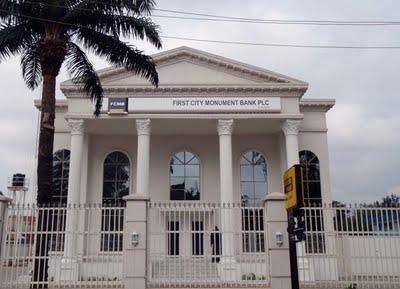
First City Monument Bank (FCMB) Limited has assured of its continued support through funding and other initiatives, towards the growth of export trade business and the ongoing efforts of the government to diversify the Nigerian economy with focus on non-oil products.
This, it said, is in recognition of the huge resources available in the non-oil sector and its capacity to accelerate national development.
Adam Nuru, the bank’s executive director, business development, gave the assurance at the Customer Forum on Export Trade with the theme, “Enhancing Capacity for Export Growth,” held in Lagos, yesterday.
The interactive and capacity building forum was organised by FCMB in partnership with the Nigerian Export Promotion Council (NEPC), Nigeria Export-Import Bank (NEXIM), Bank of Industry (BoI), National Agency for Food and Drug Administration and Control (NAFDAC), Nigeria Customs Service (NCS), Nigeria Agricultural Quarantine Services (NAQS), Federal Inspection Agency for Solid Minerals (FIASM).

The bank has created various windows of opportunity to assist Nigerian exporters benefit optimally from the exportation of products, Nuru said. He listed some of the offerings of the bank in this regard to include pre- and post-shipment financing/refinancing and discounting, provision of market information as well as advisory services.
In his paper titled, ‘’Maximising Export Opportunities in Nigeria,” Olusegun Awolowo, executive director/chief executive, NEPC, said there were several factors that work in favour of Nigerian exporters and should be explored to maximise their export potentials.
Awolowo, represented by Evelyn Obidike, a deputy director of the Council, pointed out that Nigeria’s abundant natural resources and large population remained a veritable tool that should be leveraged by exporters to enhance their competitiveness in the international market.
Also speaking at the forum, Waheed Olagunju, executive director, Small and Medium Enterprises (SMEs) at BoI, said the lender was placed importance on export trade and how SMEs could be effectively empowered to play active roles in the business.