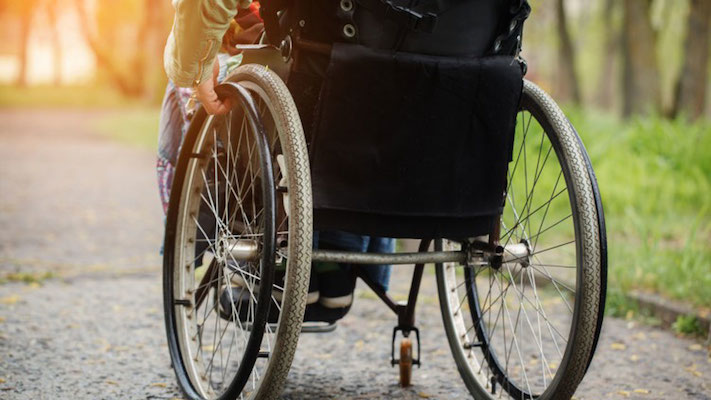
The Nigerian Women Trust Fund, a non-governmental organisation, has expressed concern over the challenges persons with disabilities face in accessing public facilities across the 23 local government areas of Benue State, citing a lack of inclusivity that contradicts the state’s Disability Law.
Ogabiela Daniel, the project coordinator, Disability Rights Advocacy Project for Inclusive Development (D-RAPID), in a presentation explained that the project, co-funded by the European Union and Christian Blind Mission (CBM), aims to ensure inclusivity for persons with disabilities.
He emphasised that the establishment of a disability commission in the State will facilitate the effective implementation of the already passed disability Law in the State, which will in turn shape the public perception of pity on persons with disabilities to rights-based.
Daniel said the two-day media advocacy training for Benue journalists held in Makurdi will guide them on the right ways to report persons with disabilities, which is anchored on promoting empathy rather than sympathy.

He gave the training objectives to include building competencies in ethical reporting, equipping journalists with skills that will help journalists apply dignity-focused language, to promote accurate representation.
“The training also aims at strengthening media advocacy skills, developing participants’ ability to frame disability issues, and promoting accurate representation.
The training also seeks to transition media professionals from awareness to action, positioning them as informed partners in advancing disability rights, strengthening public awareness, and supporting inclusive development through sustained and responsible media engagement.”
In opening remarks, the Monitoring and Evaluation Officer, D-RAPID, Victor Diji, said the training is designed to strengthen the technical capacity, knowledge and institutional commitment of print, radio, television, and digital media professionals in Benue State to effectively advocate for disability inclusion in all sectors of the economy at the National and state levels down to the grassroots.
He stated that the training seeks to deepen participants’ understanding of the legal framework governing disability rights, connecting the Benue State Disability Law and the National Disability Act, with particular emphasis on enforcement mechanisms, domestication at the state level, and the media’s role in promoting accountability.

Given an overview of the engagement, the Programme Officer of the D-RAPID project, Benedicta Kave, explained that the project is going to span three years.
According to her, “the programme is being implemented in three Local Government Areas, LGAs, in the three Senatorial zones of the state, including Tarka, Ushongo and Okpokwu LGAs to improve the livelihoods of beneficiaries.
Earlier, Kehinde Ogunbiyitan, Head, Education Unit, National Commission for Persons with Disabilities, in a presentation on Media Advocacy Strategies for Disability Inclusion, Developing Strong Advocacy Messaging, Framing for Policy Influence, Understanding Agenda-Setting Power, which he said aims at disability inclusion from a rights-based perspective.
He said, “The training will also help journalists to apply framing techniques in disability reporting, recognise media Agenda-Setting influence on policy, develop compelling, ethical advocacy-driven stories and intelligence accessibility into newsroom practices to shape public perception, influence political agenda, hold institutions accountable and as well dismantle stigma.