…Diesel price above N1,000
When Taiwo Adeyemi, a logistics driver attached to Uber in Nigeria’s commercial capital, pulled into a filling station on Tuesday morning, the price board stopped him cold.
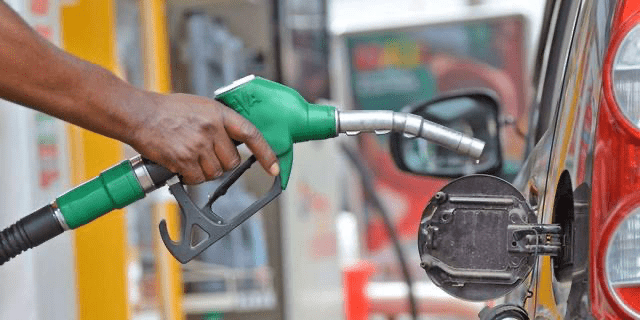
Petrol had jumped to N970 per litre, up from the N860 he paid just days earlier. This is the third-highest daily increase since President Bola Tinubu’s subsidy removal in 2023, stoking fears that Nigeria’s fragile inflation gains might backtrack.
Adeyemi did the math in his head, turned off his engine, and called his employer.

Read also: US-Iran war bites Nigerians as petrol price hits N950
“I cannot absorb this,” the 34-year-old said. “Everything I earn goes into the tank.”
Adeyemi’s frustration is being felt across Africa’s largest economy, after a war miles away in the Persian Gulf has delivered an almost immediate hit to household budgets and supply chains.
In the space of 48 hours, petrol prices at the pump rose roughly 13percent, as Africa’s largest refinery rushed to reprice the product in response to crude oil’s sharpest rally in years.
Petrol price reacts

The trigger was swift and decisive. Dangote Petroleum Refinery, the 650,000-barrel-per-day facility that has become the cornerstone of Nigeria’s downstream energy market, suspended petrol loading operations at midnight on March 2 after international crude prices surged past $80 per barrel overnight.
By Tuesday morning, it had raised its ex-depot price of Premium Motor Spirit to N874 per litre, up from N774, a N100 increase, as an official cited “changes in global crude fundamentals and replacement costs.”
The adjustment cascaded almost immediately downstream. Several private depot owners suspended petrol sales amid concerns over replacement costs, with some marketers ultimately pricing product at N940 per litre and others fixing it slightly lower at N925.
A manager at an MRS filling station in Abuja confirmed a new retail price was implemented by Tuesday.
“Several depot owners suspended PMS sales because of the crude rally,” said one downstream operator who declined to be named. “The market is already factoring in risk premiums. Nobody wants to sell below replacement cost.”
Diesel market ignites
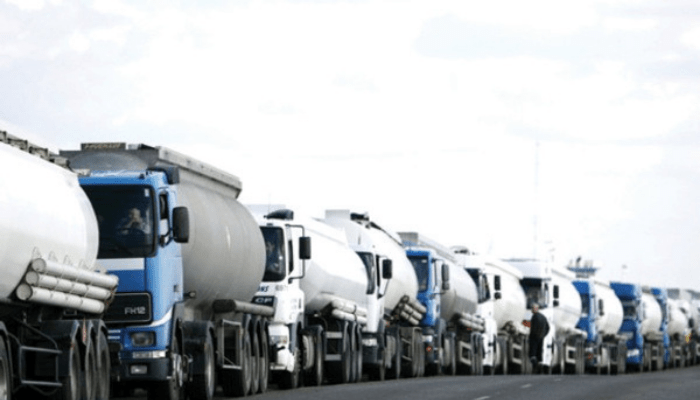
Checks by Petroleumprice.ng showed Dangote Refinery has separately raised its ex-depot price of Automotive Gas Oil (AGO) by N170, from N880 to N1,050 per litre, resetting the gantry benchmark across the country’s critical industrial fuel market. For many depots, marketers, and bulk buyers, the adjustment was only a matter of time.
Market intelligence showed that diesel had already been firming across private depots even before the official announcement, with the average ex-depot price hovering around N1,150 per litre.
For businesses reliant on diesel, manufacturers, cold chain operators, hospitals, and transport companies, the surge adds fresh pressure to operating expenses that have only recently begun to stabilise.
Inflation’s fragile gains at risk
Nigeria entered this crisis in the middle of a rare and hard-won reprieve on prices. After years of punishing inflation that peaked in 2024, the country’s annual inflation rate had eased to 15.10% in January 2026, the lowest level since November 2020, marking ten consecutive months of declining price growth.
Read also: Dangote Refinery raises petrol ex-depot price to N874 on crude rally
Food inflation, which carries the heaviest weight in Nigerian household budgets, had fallen to 8.89 percent, helped by a strong harvest season and a more stable naira. Core inflation, which strips out volatile food and energy prices, had moderated to 17.72 percent, its lowest since October 2022.
That painstaking disinflation progress is now directly in the line of fire.
“With deregulated fuel pricing, higher international crude costs translate directly into rising petrol, diesel, and aviation fuel prices,” said Muda Yusuf, chief executive officer of the Centre for the Promotion of Private Enterprise. “This feeds into transportation, food distribution, and manufacturing costs, intensifying inflationary pressures.”
Yusuf, whose organisation released a policy brief on March 1 describing the conflict as a “double-edged shock,” warned that the structural mechanics of Nigeria’s economy leave households with almost no buffer.
BusinessDay’s findings showed transportation and food together account for a dominant share of the consumer price basket. When petrol moves, almost everything else follows, from the cost of moving yams from Benue to Lagos, to the diesel bills for the generators that keep small businesses alive in the absence of reliable grid power.
A war’s ripple reaches Nigeria
The price shock traces directly to the escalation of military hostilities in the Middle East. US and Israeli forces jointly struck Iran in an operation the White House code-named “Operation Epic Fury,” resulting in the reported death of Iran’s Supreme Leader, Ali Khamenei, and senior officials.
Iran retaliated with missile barrages and attacks on tankers near the Strait of Hormuz, and struck oil installations in both Saudi Arabia and Qatar. Qatar, for its part, shut down liquefied natural gas production after drones hit key facilities.
The consequences for global energy markets were immediate. Tanker traffic through the Strait of Hormuz, the critical chokepoint through which roughly one-fifth of the world’s seaborne oil passes, effectively ground to a halt.
Brent crude, which settled around $72.87 on Saturday, rose to $83.48 on Monday, with intraday peaks nearing $85.
“We have not seen anything like this in pretty much the history of the Strait of Hormuz,” Claudio Galimberti, chief economist at Rystad Energy, told reporters. He likened the disruption to blocking the aorta of the global circulatory system.
Analysts’s views
Chinedu Ukadike, spokesperson of the Independent Petroleum Marketers Association of Nigeria (IPMAN), warned that pump prices in the Federal Capital Territory and surrounding areas could climb to between N980 and N1,000 per litre depending on transportation and logistics costs.
He urged Nigerians not to panic-buy, assuring that supply would continue.
Paul Alaje, an economist, warned that petrol prices in Nigeria could climb to about N1,000 per litre if the ongoing conflict involving the United States, Israel, and Iran is not effectively managed.
Alaje, who is the chief economist at SPM Professionals, stated this while appearing on Channels Television’s Politics Today, against the backdrop of escalating geopolitical tensions in the Middle East.
According to him, increases in crude oil prices typically translate into higher costs for refined petroleum products such as petrol, diesel, and aviation fuel, with broad implications for businesses and households.
“While crude oil goes up, we all need to check the impact on our economy. The first thing you see is high inflation, because as crude oil goes up, the cost of PMS, diesel, and Jet-A1 will also follow.
“As that is going on, about nine per cent has already attracted more cost for PMS in Nigeria, and by the end of April, we project that if the war is not properly managed, it might get to N1,000 plus for PMS in Nigeria.
Read also: Nigeria faces oil windfall, petrol shock as US-Iran war rages
“If PMS is N1,000, you can imagine what diesel will be; you can imagine what flight tickets will be. It will affect the poor, the middle class and, of course, the rich,” the economist said.
Analysts at JPMorgan warned that a war lasting more than three weeks could exhaust Gulf countries’ storage capacity, force production shutdowns and potentially send Brent crude to $120 per barrel.
Bank of America commodity strategist Francisco Blanch said a prolonged disruption in the Strait could spike Brent by $40 to $80 per barrel. Goldman Sachs, in a separate note, flagged that if the Middle East crisis persisted, LNG prices in Europe and Asia could spike to $25 per million British thermal units.