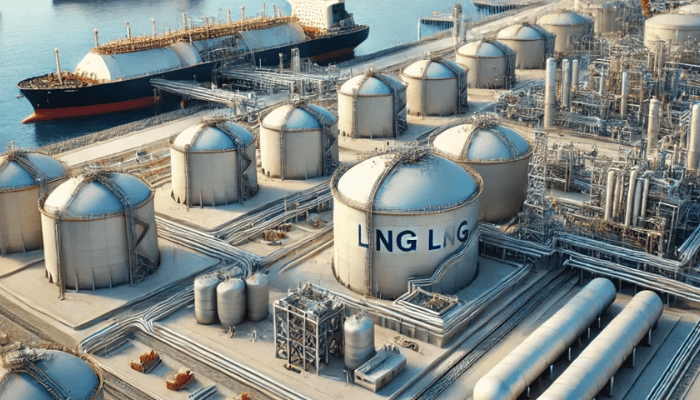
This article draws critical attention to the emergence of Mozambique as a gas exporting powerhouse in Africa, with the potential to dominate the African LNG export scene and possibly eclipse Nigeria as the leading LNG exporting country in Africa in the next five to ten years. That is, if Nigeria maintains its current complacent posture as the leading African LNG exporter and its three-decades-long approach of glacial gradualism in the development of its huge proven gas reserves, the largest in Africa, oblivious of the dynamism and strategic competitive developments in the global LNG market; and increasingly so, in the sub-Saharan LNG scene. The article is also a follow-up to last week’s article titled, “Crafting a strategy for private sector initiatives in LNG development in Nigeria,” meant to promote a broad-based private-sector led strategy for the rapid development of the Nigerian LNG sector involving all stakeholders and investors from both the public sector (NNPC) and the private sector but with the private sector taking the lead in zest and speed, taking a cue from the United States, which only recently entered the market for LNG export ten years ago and is now the global leader in LNG export, accounting for nearly 30% of global LNG export capacity – an entirely private sector led development.
Mozambique has 100 trillion cubic feet (tcf) of proven gas reserves, the third to the fifth largest in Africa after Nigeria and Algeria, depending on the source of information. The international Energy Agency (IEA) ranks it third in Africa. However, Mozambique currently produces a meager 3.4 million tons per annum (mtpa) of LNG from its Coral South floating LNG (FLNG) plant operational since 2022. The Coral North FLNG project is expected to double the capacity to 7 mtpa by 2028. Nonetheless, there are two major LNG projects that will transform Mozambique’s gas production and exporting profile. These are the $20 billion TotalEnergies promoted Mozambique LNG with a capacity of 12.9 mtpa expected to come on stream in 2029; and the $30 billion ExxonMobile led Rovuma LNG with a planned capacity of 18 mtpa. The final investment decision (FID) for the project is planned for 2026. Mozambique is expected to be producing a minimum of 34.7 mtpa of LNG for exports by 2034. These projects are expected to deliver $100 billion in revenue to Mozambique by 2045.
Mozambique’s Indian Ocean location has proven to be a huge logistical advantage for LNG exports and foreign direct investment (FDI) flows. Its proximity to the Mozambique Channel offers it direct shipping routes, while its massive offshore Rovuna Basin attracts huge FDI. These position the country as a rapid supply hub to high demand Asian (Japan, China and India) and European LNG markets; and explains why it is attracting $50 billion for two major LNG plants from two major international oil companies (IOCs) – the kind of quantum of investments Nigeria sorely needs in its gas sector.
However, though Mozambique has by far greater potential to contend with Nigeria in the next ten years especially for leadership in LNG exports, other Sub-Saharan countries including Angola, Senegal, Mauritania and Tanzania are developing their gas resources and LNG export potential. Between Senegal and Mauritania is a major gas development hub on the coast of West Africa, the Greater Tortue Ahmeyim (GTA), a massive 25 trillion cubic feet gas field that straddles the maritime border of both countries. They have realised that it is more cost-effective to jointly develop the gas field and share both the cost and revenue accruing there from on a 50/50 basis. The major goals of the project include supplying gas to their respective domestic markets for power generation and industrialisation; jointly developing infrastructure for LNG exports, and the costs of complex offshore, subsea and floating LNG infrastructure. The GTA’s LNG project (Gimi FLNG) is located 120 kilometers offshore where a floating, production, storage and offloading (FPSO) vessel processes gas, which is then transferred to the FLNG located 10 kilometers near shore for liquefaction and export. The Phase 1 of the project has capacity to process 2.3 to 2.5 mtpa of LNG for export, which began in 2025.

Africa currently holds 40% of the world’s FLNG capacity, with 12 countries having FLNG projects that are either under construction or advanced development stages. These projects include Coral South FLNG (Mozambique), operational since 2022 in the Rovuna Basis, with capacity of 3.4 mtpa; Hilli Episayo FLNG (Cameroon), operational since 2018, but expected to sail away at the end of 2026; Tango FLNG (Republic of Congo), operational since February 2024, with capacity of 0.6 mtpa ; Gimi FLNG, the Senegalese-Mauritania GTA’s FLNG project, operational since 2025 with capacity of 2.3 mtpa; Nguya FLG (Republic of Congo), expected to be on-stream in mid-2026 with capacity of 2.4 mtpa; Coral North FLNG (Mozambique), expected to be commissioned in third quarter 2028, with capacity of 3.6 mtpa; UTM FLNG (Nigeria), a $5 billion project expected to begin construction in 2026, completed in 2028 and begin production in 2029, with capacity of 2.8 mtpa; and Cap Lopez FLNG (Gabon), promoted by Perenco, expected to be operational in 2026-2027, with capacity of 0.7 mtpa. These seven FLNG projects (not counting the Cameroonian project which is being phased out) have capacity to produce 15.8 mtpa into the foreseeable future and are scalable. This is significant. What this shows is that a number of African countries have chosen FLNG as a strategic and pragmatc route to joining the LNG export boom in a cost and time effective manner.
The lessons for Nigeria are that it cannot afford to rest on its oars both from the perspective of the surge in the global LNG market; and against the background of the FLNG bandwagon in Sub-Saharan Africa. But the real competitive challenge in the next decade or so is the contention by Mozambique for African LNG production and leadership. But Nigeria has no cause for alarm, if only it can structure the required strategic partnerships across the public and private sectors and between various local and international stakeholders, oil and gas companies, oil and gas technology groups, investor groups and financial institutions and technical and managerial capacity development groups to deliver a combination of onshore and offshore LNG plants that can see the country not only maintaining its LNG export leadership in Africa, but contending for global leadership in the LNG market in the next decade or two (2026-2045).
The Nigerian economy, despite the nation’s political challenges, is gradually transiting into an era of a maturing, resourceful and emboldened private sector, with visionary leaders, players who are increasingly prepared to seize the moment or create their own moments of bold and audacious entrepreneurial initiatives to transform different sectors of the economy. One of such sectors ripe for the brave and the bold is the gas sector, particularly LNG/FLING investment portfolios. In the next five to ten years, oil and gas investors in Nigeria will be expected to replicate what they are increasingly doing in the crude oil upstream sector in the upstream and midstream gas sector, particularly gas production and LNG liquefaction for export.
• Mr. Igbinoba is Team Lead/CEO at ProServe Options Consulting, Lagos