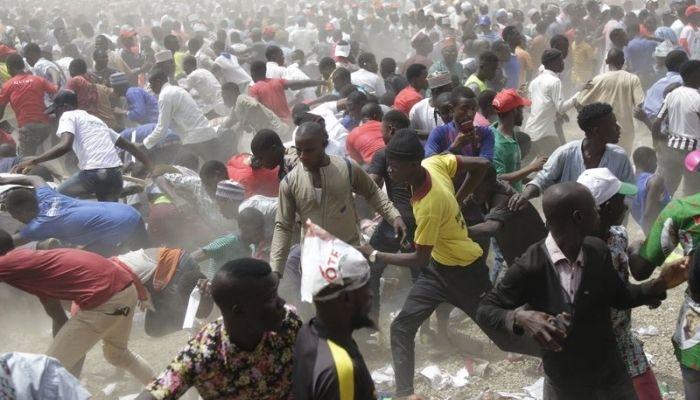
The statistics are grim. Nigeria has a massive ‘youth bulge’, with 105 million children and adolescents under the age of 18 years, out of a total population of 237 million. Out of this number, roughly 7 million are living, and sleeping, rough on the streets. On this demographic alone, Nigeria ranks only behind India in the percentage of the total population that may be categorised as street children.
It gets worse, when the focus shifts slightly from ‘street’ children to ‘out of school’ children. The number of out of school children in Nigeria, by a 2024 estimate, is put at 18.3 million. Though there was a huge spike in recent years due to the multiple insurgencies and internal dislocations, especially in the North of the country, it confers on Nigeria the dubious distinction of being the country with the largest number of out of school children in the world. Analysing these figures further, it emerges that about 10 million out of them are at primary school age, meaning they are ten years or below.
Whether the issue is ‘out-of-school’ or ‘street dwelling’, the highest numbers are concentrated in Northern Nigeria. Even among the ‘street children’ populations that are seen in other states, such as Lagos, where they co-mingle with ‘area boys’, a substantial percentage are of Northern extraction.
The ‘Almajiri’ system is often seen as a key factor underpinning this huge social problem.

‘Almajiri’ is a Hausa word for ‘pupil’ or ‘student’.
These ‘students’ are supposed to have been sent by their parents to the charge of ‘Mallams’ who are to give them ‘religious’ education. In reality, millions of dirty scruffy young children are roaming the streets, becoming a feature of roadsides and motor parks of major cities across the nation. Effectively uneducated, and with no training in practical or technical skills that could prepare them for a meaningful existence in a modern society, they form a large mass of untrained, and in many cases untrainable citizens who live rough and have no stake in society. They are visible in situations of social strife, where they are easily incited to violent action and used as cannon fodder by ‘leaders’ who ‘run’ them. More lately they have been fingered as a ready source of recruitment for Boko Haram, ‘Bandits’ and other groups who wage war on society.
This is the context in which to view the recent call by a prominent cleric, Sheikh Gumi, for a ‘Marshall Plan’ to rescue the North from the throes of the self-inflicted problem of ‘Alamajiri’. His plan, so far as this column understands it, calls for a massive transfer of resources from the government of Nigeria to deal with the ‘Almajiri’ problem, which is finally being acknowledged as a real and present danger to the North itself. The funds would be used for massive infrastructure to teach the ‘Almajiri’ ‘moral and religious’ education, along with some elements of literacy and numeracy, presumably in that order.
There are troubling questions that need to be asked. How are ‘Almajiri’ going to be made to attend school and stay engaged with it? ‘Almajiri’ are Nigerian children, at least for the most part. Why should their education be different in content from the education of regular children, including the children of the elite in the North who attend the best of mainstream schools at home and abroad, where they study for literacy and numeracy, and still manage to get their ‘moral and religious’ education? And finally, is the system going to be administered by the same ‘teachers’ who put the children out on the streets in the first instance?
Any effort to carry out a ‘Marshall Plan’ without answering these questions satisfactorily would amount to a cynical political gesture to placate entrenched interests who have been clamouring for ‘federal money like that given to Niger Delta Militants’, an argument the same people have advanced as ‘solution’ to the problem of ‘Bandits’ ravaging the civilian population in the region.

The ‘Almajiri’ problem is a national time-bomb, and it does indeed require a Marshall Plan. But the solution must be data driven, and knowledge-based, rather than an effort at political appeasement of ‘entitled’ power brokers.
First, most of the target population are of primary school age. For them the whole gamut of educational and artisanal skills training would be justified.
The second subgroup are the teenagers, for whom the emphasis should probably be apprenticeship for acquisition of skills that could help them to earn a living.
Finally, there are the end-stage grown-up products of the ‘Almajiri’ system. Set in their ways, probably already engaging in drug use and street crime, or flirting with the thought of something worse, such as joining Boko Haram, any correctional effort such as skills training would need to be backed by a law-and-order proscription of street-living and criminal behaviour.
A properly enforced ban on street begging is a sine qua non for success. Charity donations from Muslims and Christians could be channeled to structures set up to support funding of the project, along with a system of proper, shot-stay Rehabilitation Centres for the reintegration of adult disabled and able-bodied people who have made a career out of street begging.
In every locality there would need to be a census and documentation of ‘Alamajiri’ children. Since the system represents a failure of parenting, every ‘Almajiri’ for whom a parent does not show up would be ‘adopted’ by the State. This would require a massive Social Work expansion and caseload.
Without the documentation and parenting – direct or adoptive, glossy classrooms and expensive training equipment would be a massive waste of money.
The professional view is at radical variance with what the vocal, partisan proponents of the ‘Marshall Plan’ are calling for, but it is precisely the intelligent, best-practice approach that can ensure that public money is not thrown down the drain.
It would show that Nigeria is, at last, ready to get a handle on its ‘Almajiri’ problem.