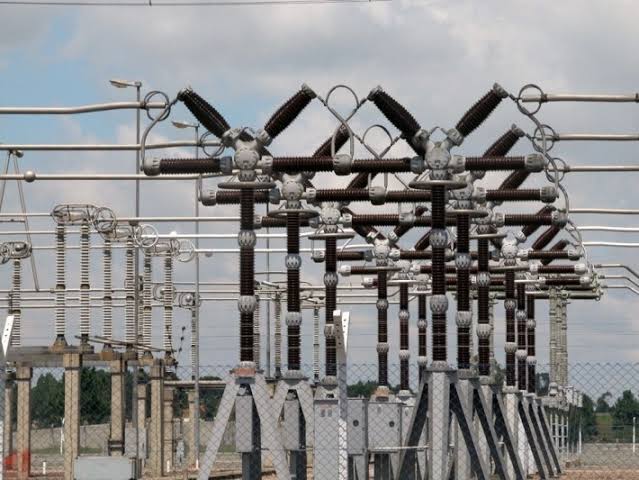
The failure of Nigeria’s national grid does not leave the country in darkness. It transitions between systems.
As markets reopen, clinics continue their operations, small businesses maintain their productivity, and households continue their daily routines. This ongoing reliability is not fuelled by the national grid; rather, it is sustained by countless petrol and diesel generators that Nigerians have discreetly organised into the nation’s most trustworthy electricity network.
A recently published report by the Access to Energy Institute, Open Capital, and ZE-Gen provides substantial data to support what many Nigerians have long understood through their experiences. The study substitutes conjecture with proof by using a year’s worth of smart meter data from 500 generators located in homes, marketplaces, hotels, schools, and medical facilities. The conclusion is unsettling yet inescapable. The true nature of Nigeria’s power system is one that is decentralized, reliant on private financing, and predominantly based on fossil fuels. Any meaningful shift in energy must begin at that point.
The key takeaway from the data is not the extent of the grid’s dysfunction. Nigerians have demonstrated remarkable adaptability. Nigerians are pouring billions of dollars annually into generator fuel, repairs, and replacement equipment, as highlighted in the report. For small users, monthly operating expenses frequently surpass ₦35,000, not accounting for maintenance and downtime. Such behavior does not constitute a failure to pay for electricity. This demonstrates a commitment to investing in reliability, even when it comes at a significant personal expense.

Nigerians are, in essence, funding electricity on a daily basis. They engage in the process with a lack of efficiency and informality and at a considerable cost to both the economy and the environment.
The data also challenges a longstanding misconception about energy demand. The majority of generator usage tends to be moderate and foreseeable. The majority of users run their generators for a duration of two to four hours daily. Peak power demand is usually below 2.5 kilowatts. For the majority of users, daily energy consumption typically falls under 1.5 kilowatt hours.
These trends are consistent among households and small enterprises.
This fact is significant as it shifts the narrative surrounding clean energy. Well-designed solar generator systems, equipped with appropriately sized panels, inverters, and reasonable battery storage, can currently fulfill as much as 85 percent of identified backup power requirements. This is a present reality. This is a current technical reality backed by actual usage data, rather than mere projections.
What accounts for the slower pace of adoption?
The issue at hand is certainly not a deficiency in enthusiasm. The report’s survey data reveals a widespread willingness to transition to cleaner alternatives. The limitation lies in both design and financing. Fossil fuel generators receive funding gradually via daily fuel acquisitions. Clean energy solutions continue to be primarily marketed as upfront capital investments. This discrepancy generates tension, despite the evident long-term financial advantages of solar energy.
The report reveals a compelling data point. Almost 20% of monitored generator users had ceased using their generators altogether, not due to a lack of alternatives, but because the cost of fuel had skyrocketed beyond their means. Such an outcome does not constitute progress. There is a decline in productivity and a lack of access to energy.

The message is unmistakable. The upcoming stage of Nigeria’s energy transition is not chiefly a matter of technology. The situation presents a challenge in both financing and product design.
Financial institutions, including banks, development finance entities, and fintech lenders, hold a pivotal responsibility. Solar generators and productive-use appliances serve as valuable assets that help preserve income. They lower operating expenses, enhance cash flow stability for small enterprises, and bolster resilience.
Financing models that convert fuel costs into consistent monthly payments, such as pay-as-you-save or lease-to-own arrangements, resonate more effectively with Nigerians’ existing payment habits for power.
For financial institutions, the choice of financing is a business decision. The market is substantial, demonstrating established demand indicators, quantifiable usage metrics, and robust repayment rationale. Few asset classes intertwine economic necessity, climate impact, and customer willingness as distinctly as decentralized energy.
While policy is important, its function should focus on alignment instead of blame. Nigeria persists in importing fossil fuel generators, frequently benefiting from trade conditions that are more advantageous than those available for cleaner alternatives. Revising standards, incentives, and customs frameworks to align with contemporary energy realities would promote adoption while safeguarding investment in the national grid. The grid continues to be indispensable. However, it is no longer the sole system of significance.
A narrative shift may be the most crucial change needed. Nigeria’s reliance on generators is frequently portrayed as a source of shame or merely a temporary solution. The evidence presents an alternative narrative. The evidence reflects a steadfast resolve and the ability to adjust in the face of limitations. This case illustrates the reactions of individuals when systems fall short of fulfilling their requirements.
The generators throughout Nigeria represent more than a mere symptom. They serve as an indication. They reveal the true power structure in place and highlight the starting points for the energy transition.
. Osinowo is CEO of Izili Group, a Senior Research Fellow at the FATE Institute, and a Public Voices Fellow Tackling Poverty, a partnership of Acumen and The OpEd Project.