What if the ability to communicate was less about hearing and more about seeing, observing, and connecting? Sign language may hold the key to a more inclusive future.
As a child, I once watched a young woman signing rapidly to an audience that laughed, nodded, paused, and occasionally showed disapproval. Her hands moved almost faster than my eyelids blinked, and in that moment, I realized something profound: it was I who was deaf, by choice.
Visual language plays a central role in cognitive adaptation within the Deaf community. Through sign language, individuals rely on heightened visual attention, spatial awareness, facial recognition, and pattern detection to interpret meaning and emotion. Over time, this strengthens memory, concentration, and the ability to notice subtle environmental changes. Rather than a limitation, deafness demonstrates the brain’s remarkable flexibility: when one sensory channel is reduced, others expand to support learning, connection, and effective communication.
Living in a country without my familiar language reinforced the lesson that, we are only as deaf as the languages we refuse to learn. So, we smile sheepishly while facilitating sessions, hoping to be applauded rather than misunderstood, struggling to comprehend what is being communicated because we refuse to go beyond the boundaries of our inherited tongue.

Sign language should not be optional. It should be a default form of communication. Consider the thousands of preschoolers with receptive and expressive language delays or older adults losing comprehension due to dementia, stroke, or trauma. Why are we not adopting a form of communication available to nearly anyone with limbs and forearms? Learning to “listen” with your eyes and speak with your hands could be a revolutionary step toward richer human connection.
Communication is multimodal, and children who learn sign language from an early age benefit in countless ways: patience, improved cognitive skills, attentive listening, turn-taking, and heightened focus. Imagine a generation of Africans mastering visual attention and enjoying deep, meaningful interactions, free from the endless noise of alerts, alarms, and constant chatter.
A recent television commercial depicted a whole community communicating through sign language for an entire day. The only young man with hearing difficulties in that community initially mistook the first person he saw signing as another individual with hearing impairment, only to realize the entire village was signing just to make him feel accepted and loved. He wept upon realizing that the community could meet him halfway through determination, purpose, and love. Around the world, religious spaces, public events, and media outlets are adopting sign language for audiences often relegated to a corner of the screen for those who hear, yet serving as the heart of accessibility for the community of those with hearing impairment.
The goal is to reframe hearing as a choice of effort rather than a biological default. We can shift the conversation from disability to language barrier, which the hearing world has a responsibility to bridge. In sign language, tone and emotion are expressed visually: facial expressions, movement speed, and use of space communicate nuance and feeling just as effectively as pitch and volume do in spoken language. Many content creators now use Pidgin Signed English (PSE) to convey emotion in the music videos they lipsync, proving that visual cues are powerful and expressive.
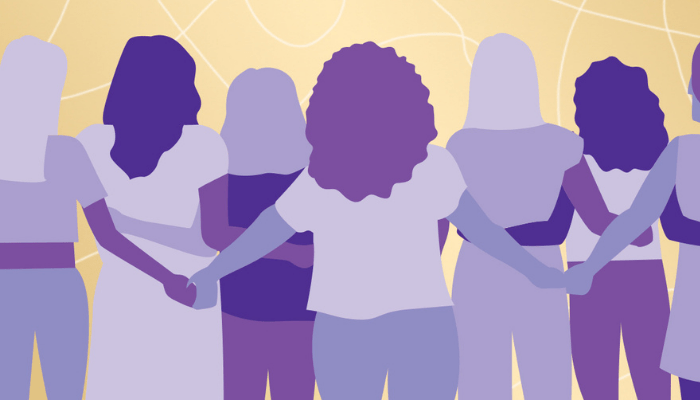
To create an inclusive society, sign language must become a language for all. Schools should not be labeled as “for the Deaf” everyone should learn to sign and implement it daily. Reducing labels and removing barriers gradually normalizes belonging in societies. While government inclusion policies are a step forward, a truly African society would enforce sign language education and integration at every level. After all, in a world where everyone signs, no one is truly deaf.

Communication is far more than sound. It is attention, presence, observation and connection. Perhaps the future will belong not to those who hear the loudest, but to those who learn to listen without words.
.Mokwe-Ijiko, Eliakimsessions4u@gmail.com