A 34 percent surge in petrol consumption is the latest sign that Nigeria’s economy is turning the corner.
Average daily consumption of premium motor spirit reached 63.7 million litres in December 2025, up from 47.5 million litres in October 2024, according to data sourced from the Nigerian Midstream and Downstream Petroleum Regulatory Authority.
The December figure represents the highest level recorded during a 15-month tracking period tracked by BusinessDay.
“The trend signals heightened demand for rugged and durable vehicles, largely driven by security operations,” said Bismarck Rewane, chief executive officer of Financial Derivatives Company, during a presentation at the Lagos Business School in February. “As the Toyota Hilux dominates police and military fleets, Dangote Petroleum Refinery has reaffirmed its capacity to supply 75 million litres of PMS daily.”

Toyota vehicles, particularly the Hilux pickup truck, accounted for approximately 54% of Toyota imports during the period, reflecting how government agencies and private security firms are investing heavily in four-wheel-drive vehicles capable of navigating difficult terrain in regions affected by banditry, terrorism and separatist violence.
The consumption surge coincides with a sharp rise in vehicle imports.
Passenger motor car imports climbed to N1.01 trillion in the first nine months of 2025, compared with N894.09 billion in the same period of 2024.
The United States accounted for 41 percent of total imports at N415.05 billion, followed by South Africa at N47.27 billion and the United Arab Emirates at N26.35 billion.
While first-half 2025 imports lagged the previous year by N51.41 billion, third-quarter purchases exceeded their 2024 equivalent by N164.56 billion, driving the nine-month total N113 billion higher.

“Nigeria’s petrol consumption trajectory is directly tied to its import patterns, particularly for vehicles,” said Ayodeji Dawodu, an energy sector consultant at PetroAnalytics Lagos. “When you see a 34% jump in such a short period, it’s not just about population growth or economic expansion, it’s about the types of vehicles entering the market and their fuel efficiency.”
Abayomi Duyile, Apapa chapter chairman of the National Council of Managing Directors of Licensed Customs Agents, attributed part of the import growth to changes in customs duty assessments on vehicles, suggesting policy adjustments may have inadvertently accelerated the trend.
Post-Subsidy market dynamics
The consumption rebound comes nearly two years after President Bola Tinubu ended decades of fuel subsidies in May 2023, a move that initially tripled pump prices and dampened demand. Petrol now sells for between N800 and N850 per liter depending on location, compared to pre-subsidy levels of around N185.
At an average of N839 per litre, Nigeria maintains the lowest prices among surveyed regional peers.
By contrast, petrol exceeds N1,700 per litre in several neighbouring countries. Cameroon posts the highest at N2,114.49, followed by Benin Republic at N1,744.28 and Niger at N1,252.06.
Ghana, Togo, Gabon, Sierra Leone and Kenya all sell petrol above N1,400 per litre.
Financial Derivatives Company estimates the equilibrium price based on regional averages should be around N1,176 per litre, nearly 40 percent higher than Nigeria’s current pump price.
“At a selling price of N839, there is a significant 40 percent incentive to smuggle PMS out of Nigeria,” Rewane’s analysis showed.
Refining capacity questions
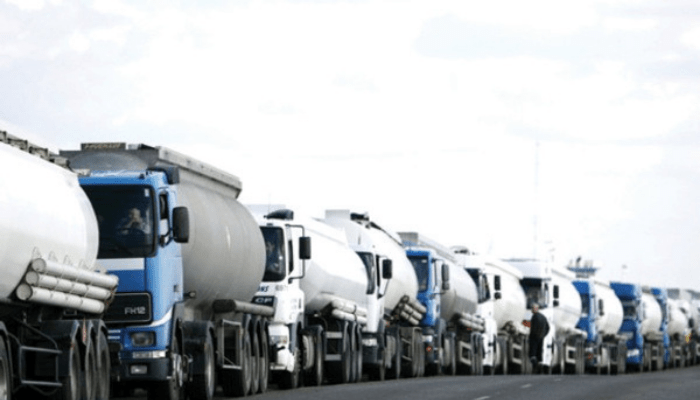
The rising consumption underscores pressure on Nigeria’s refining infrastructure. While the 650,000-barrel-per-day Dangote refinery in Lagos began operations in 2024 and pledged to meet domestic demand, the country continues importing significant volumes of refined petroleum products to bridge supply gaps.
Dangote Petroleum Refinery’s assertion that it can supply 75 million litres daily, well above current peak demand, provides some reassurance about supply security.
The facility, Africa’s largest single-train refinery, is expected to transform Nigeria from a net importer to a potential exporter of refined products.
Monthly consumption data showed fluctuations, with peaks in October and December 2024 at 51.5 million and 52.3 million litres respectively, before dropping to 43.8 million litres in September 2025 and climbing again to year-end highs, according to data from NMDPRA.
Economic implications
The vehicle import surge has drained foreign exchange reserves and complicated the Central Bank of Nigeria’s efforts to stabilise the naira, which has depreciated significantly against the dollar over the past year.
Critics argued that without a coherent automotive policy encouraging local manufacturing and assembly, Nigeria will remain trapped in import dependency.
“We’re importing vehicles that consume imported fuel, and wondering why our economy isn’t growing,” said Aisha Mohammed, an energy analyst at the Lagos-based Centre for Development Studies. “This is a fundamental policy contradiction that successive governments have failed to address.”