Nigeria’s political terrain ahead of the 2027 general election is undergoing subtle but significant changes, as the registration of two new political parties and a wave of unresolved litigations inject fresh uncertainty into an already complex electoral equation.
The Independent National Electoral Commission (INEC) last week registered two additional political parties, the Democratic Leadership Alliance (DLA) and the Nigeria Democratic Congress (NDC), bringing the total number of registered parties in the country to 21.
The development has reopened long-standing debates over the utility of Nigeria’s multiparty system and raised questions about whether an expanding political field will strengthen democratic competition or merely recycle familiar political habits under new labels.
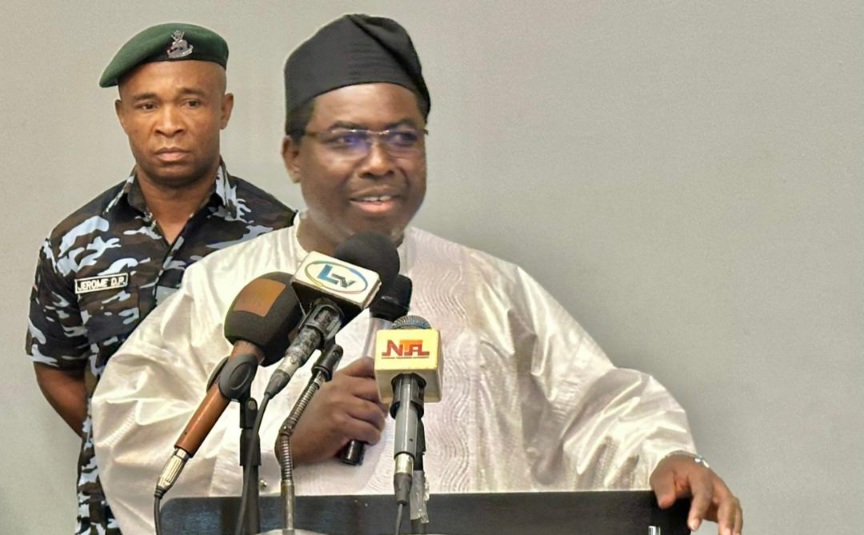
Joash Amupitan, a professor and INEC chairman, announced the registration in Abuja, during the commission’s first regular consultative meeting with political parties in 2026.

He said the decision followed what he described as a painstaking screening process that began with 171 letters of intent submitted by political associations seeking party status.
According to Amupitan, 14 associations scaled the initial pre-qualification stage after being assessed against constitutional provisions, the Electoral Act and INEC’s internal guidelines. He said of those, eight associations successfully uploaded their documents and completed the required processes on the commission’s dedicated online portal.
“They are the All Democratic Alliance (ADA), Citizens Democratic Alliance (CDA), Abundance Social Party (ASP), African Alliance Party (AAP), Democratic Leadership Alliance (DLA), Green Future Party (GFP), National Democratic Party (NDP) and the Peoples Freedom Party (PFP),” he said.
Amupitan explained that only associations that met INEC’s legal, constitutional and administrative benchmarks were approved, stressing that the commission was committed to balancing inclusiveness with regulatory discipline.
Yet, beyond the procedural explanations, the latest registrations have widened the political chessboard ahead of 2027, introducing new variables into an electoral contest already shaped by intense rivalries, shifting alliances and voter disillusionment.

A crowded field
Before the registration of DLA and NDC, Nigeria had 19 political parties. These were Accord Party, Action Alliance (AA), African Action Congress (AAC), African Democratic Congress (ADC), Action Democratic Party (ADP), All Progressives Congress (APC), All Progressives Grand Alliance (APGA), Allied Peoples Movement (APM), Action Peoples Party (APP) and the Boot Party (BP).
Others are the Labour Party (LP), New Nigeria Peoples Party (NNPP), National Rescue Movement (NRM), Peoples Democratic Party (PDP), Peoples Redemption Party (PRP), Social Democratic Party (SDP), Young Progressive Party (YPP), Zenith Labour Party (ZLP) and the Youth Party (YP).
BusinessDay reports that Nigeria’s party system has fluctuated sharply in recent years. In February 2020, INEC de-registered 74 political parties that failed to meet constitutional thresholds, citing poor electoral performance.
Since then, a handful of new parties have been registered, reviving debates over whether Nigeria is drifting back towards an overcrowded and largely ineffective party system.
While the addition of two parties may appear modest on paper, some political analysts argue that the emergence of new parties, no matter how small, can reshape alliances, split votes or provide bargaining chips in pre- and post-election negotiations.
There are already indications that influential political figures who are yet to settle on a platform for 2027 have begun quietly exploring emerging parties as fallback options.
Read also: Governors first, voters later: Inside Tinubu’s 2027 survival strategy
Chekwas Okorie, an elder statesman and former presidential candidate, said that the newly registered parties can only make waves in 2027 and future elections if they remain free of internal turbulence.
In a telephone interview with BusinessDay, Okorie noted that a stable internal structure could attract heavyweight politicians who are denied tickets or sidelined by the major parties, along with their supporters.
He added that politicians from parties currently engulfed in prolonged internal disputes may later defect to the new parties in search of relevance, but cautioned that factionalisation in the new parties would spell doom.
Okorie also warned that such divisions could limit their survival to the period between now and the 2027 general elections. He said the growing number of aspirants across the political landscape may also push some politicians, particularly those unable to secure relevance in their current parties, towards the new platforms.
The elder statesman further expressed concern about the limited timeframe available to make the new parties attractive and widely known ahead of the 2027 polls, describing the task as a daunting one.
Weighing the new parties
For many political actors, the registration of new parties is less about ideology and more about survival.
Analysts note that new platforms often serve as refuge for politicians squeezed out by internal crises, factional battles or zoning arrangements within established parties. As 2027 approaches, nomination contests, particularly for presidential, governorship and senatorial tickets, are expected to intensify across the political spectrum.
The APC and the PDP, Nigeria’s two dominant parties, are already grappling with internal realignments and crises. President Bola Ahmed Tinubu had in December 2025, constituted a reconciliation and strategy committee headed by Mai Mala Buni, Yobe State governor, to resolve crisis within the APC.
The Labour Party and the NNPP, buoyed by their strong showings in the 2023 elections, are battling leadership disputes and questions over organisational coherence. The SDP is enmeshed in internal skirmishes, while the ADC is facing early strains linked to its presidential ticket.
Against this backdrop, some pundits have argued that new parties like the DLA and NDC could evolve into vehicles for new ideas, issue-based campaigns and alternative platforms for winning elections if properly structured and managed.
There are arguments that some politicians can emerge as flagbearers of these fresh platforms, negotiate alliances or position themselves as spoilers capable of influencing outcomes in future elections.
Critics, however, remain sceptical. They point to Nigeria’s history of weak, personality-driven parties with little ideological distinction. Many parties, they argue, exist largely on paper, springing to life during election seasons before retreating into dormancy.
This fragmentation, critics warn, often confuses voters, dilutes opposition strength and ultimately entrenches the dominance of the ruling party by splitting dissenting votes.
Speaking in a telephone interview with BusinessDay, Aminu Yakudima, political analyst, said that the registration of new parties was unlikely to meaningfully alter Nigeria’s political landscape ahead of 2027.
According to him, opposition parties are already struggling with deep structural and organisational challenges, making it difficult for either old or new parties to gain traction so close to a general election.
Yakudima also argued that institutions established to support democracy have largely aligned with the ruling APC, alleging that they now operate in ways that favour the party in power. While some political actors believe voters could push the APC out in 2027, Yakudima expressed strong scepticism.
“Things continue to change, but not necessarily for the better,” he said, describing the registration of new parties as largely symbolic, designed to give applicants a sense of inclusion and widen participation rather than produce real political change.
“Even though some people say the APC will be voted out in 2027, that will be very difficult given the current political situation in the country,” he added.
Observers warn that too many parties, often with similar names, symbols and vague manifestos, may overwhelm voters, particularly in rural areas with limited access to civic education. They are of the view that this could lead to higher rates of invalid votes or disengagement, undermining efforts to boost voter turnout.
Others, however, argue that more parties could energise the electorate if they articulate clear, relatable positions on pressing issues such as cost of living, insecurity, youth unemployment and governance reform.
Bernard Mikko, a political scientist and former federal lawmaker, argues that Nigeria’s political culture remains deeply flawed.
In a telephone interview with BusinessDay, Mikko, a former governorship aspirant in Rivers State, said: “Nigeria inherited political structures from the top rather than building them from the grassroots.”
He noted that this explains why parties lack ideological clarity and why politicians move freely from one platform to another.
“Voters see parties as vehicles for power, not governance. Some parties exist mainly as negotiation tools for mergers, endorsements or appointments,” Mikko told BusinessDay.
Litigation clouds fresh registration
Even as INEC celebrates the registration of new parties, litigation continues to cast a shadow over the process.
Umar Ardo, promoter of the All-Democratic Alliance (ADA), has challenged INEC’s refusal to register his political association, despite what he described as earlier assurances that it met all legal requirements.
Ardo has also questioned the basis upon which INEC registered the NDC, arguing that the party did not satisfy all stipulated conditions.
Speaking on Arise News, Ardo confirmed that ADA’s case is already before the court.
“Our party, the All-Democratic Alliance, has not been registered. We have gone to court on the matter, so I will not discuss the facts because it is in court,” he said.
Ardo however, outlined the sequence of events leading to the dispute. He said that on September 15, 2025, INEC shortlisted 14 associations from 171 applicants after screening them under constitutional and legal provisions, adding that ADA was among those initially cleared.
Ardo also said that INEC officials visited ADA’s offices on December 8 to verify documents and assess organisational readiness nationwide.
“At the end of the process, INEC said we did not meet requirements it had earlier confirmed we met,” he said.
As political actors digest INEC’s announcement, strategic realignments are already underway. Coalition talks, tacit alliances and behind-the-scenes negotiations are expected to intensify as parties reassess their strengths and vulnerabilities ahead of the 2027 polls.