Nigerian and African exporters have one more year to access the United States (US) market duty-free, after the African Growth and Opportunity Act (AGOA) was extended by Donald Trump to December 31, 2026, falling short of hopes for a three-year renewal.
The act, which has existed for 25 years until its expiry in September 2025, provided Nigerian and other African manufacturers in eligible countries with tariff-free access to the US market on over 1,800 products.
For Nigeria, the extension preserves opportunities for over 6,000 products, but industry analysts say the country needs decisive action to capitalise on the tariff-free access window if it does not wish to repeat previous failures.
Read also: Deadly strikes hit Gaza as Israel, Hamas trade blame over ceasefire breach

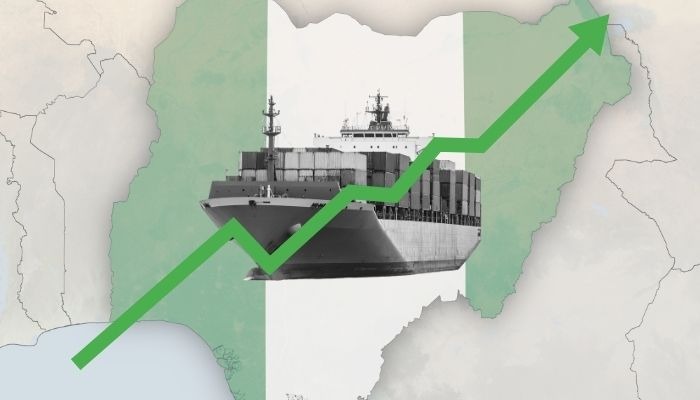
Over its 25-year period, Nigeria struggled to convert AGOA’s potential into diversified exports. Despite being the second-highest earner from the trade pact, oil dominated the country’s trade figures, accounting for more than 90% of AGOA exports, even though the legislation was designed to boost non-oil goods.
Non-oil shipments have slowly gained ground, led by demand for cocoa, sesame seeds, cashew nuts, rubber and leather products.
“The challenge is structural,” said export analyst Obiora Madu, berating Nigeria’s inability to “find some niche products and capitalise on them,” pointing to underutilised textile quotas and missed opportunities in agriculture, despite the country being a leading global producer in several commodities
He pointed to budding textile and garment companies in Ghana and Lesotho where the industry contributes one-third of the country’s GDP and employs thousands of workers.
“There’s a company in Ghana, they make stockings. At some point in time, they were shipping like four containers every month. Under textile and apparel, you need a visa to participate. [Nigeria] got the visa, we celebrated the visa and nothing followed,” he said.

Acknowledging the brief relief window, Madu suggested selecting a few key products and building value chains that could yield tangible results in the next year.
Read also: Nigeria–US trade pact puts job creation at the centre of economic cooperation
“It’s actually about just selecting two, three, four products and say, look, in this maybe last life cycle of AGOA, we want to do this, we want to do that, and then we work on it, put the structure in place,” he said.
Jamieson Greer, US trade representative, signalled intent to push for greater market access for American firms in Africa in the next year, making it urgent for Nigerian exports to be competitive.
Some manufacturers are optimistic. “We had some optimal benefits in the past, so naturally this extension by one year is now an opportunity for us to take advantage of it and continue to strengthen our capacity to benefit from it,” said Segun Ajayi, Director-General of the Manufacturers Association of Nigeria.
He pointed to Nigeria’s recently launched industrial policy and President Bola Tinubu’s appointment of an ambassador-designate to the US as turning points.
“The advisory should work for domestic industries. We should effectively use our embassies there to provide market intelligence and areas where we can achieve more of market access and market penetration,” he said.
Manufacturers had previously complained to BusinessDay of the lack of proper training on AGOA rules for exporters, making utilisation increasingly difficult.
Ajayi stated that the government must be “intentional about getting the people to understand more of AGOA and how they can benefit from it,” but also said manufacturers must take the initiative and seek the knowledge for themselves if they must keep up with foreign peers.
Nigeria’s AGOA status will ultimately be decided by a a comprehensive report due from the US, with questions also hanging over how last year’s 15% tariff could influence outcomes.