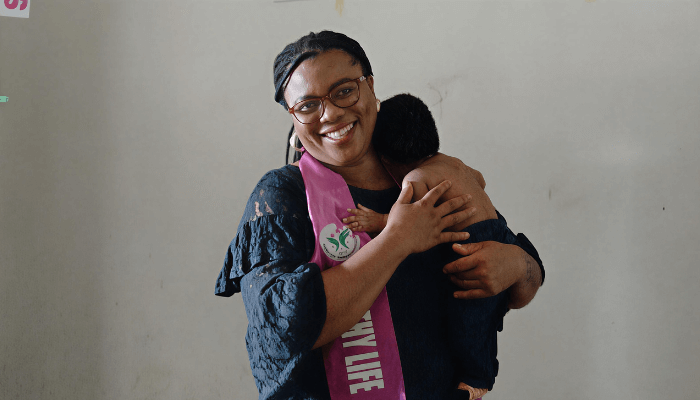
Rivers State has set up its first sexual and gender based violence (SGBV) trauma healing centre through a non-governmental organization (NGO).
The centre which was set up in Eleme area of the state has already recorded some pathetic cases. The centre run by the Healthy Life Development Initiative (HELDi), reported that one of the most emotional cases is a survivor who was blinded and facially disfigured due to intimate partner violence on 9th December 2025.
According to Mfon Utin, coordinator of HELDi, most of the victims hardly had money to pursue legal options. The Eleme centre recorded that “Although the victim is seeking justice, she faces serious financial constraints that limit her ability to pursue legal action.”
In another case, the coordinator noted, “A response team member and anticipated women leader brought a severely traumatized survivor experiencing intense depression and stigma; however, the survivor had to leave before the end of the session due to restrictions imposed by her husband, from leaving the house and left her alone with the children without care.”

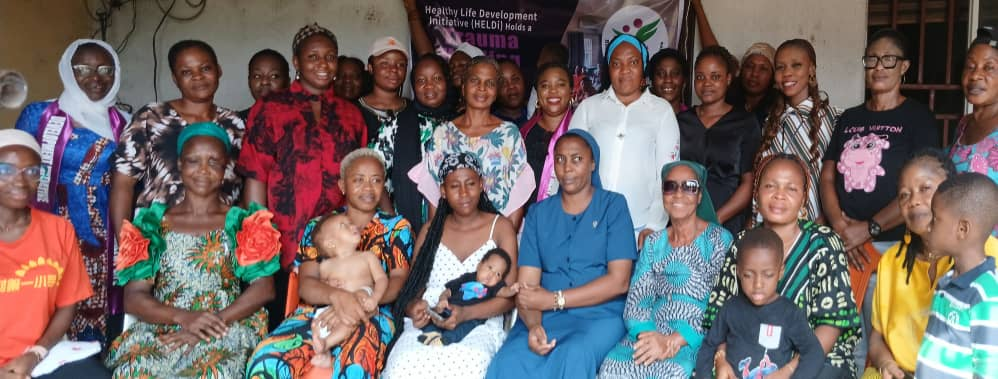
HELDi, a fast-rising non-governmental organization (NGO) focusing on health of rural women, girls, and youth, kick-started what it calls ‘Trauma Healing Circles’ in the rural and sub-urban areas of Rivers State.
HELDi, which has made huge impact on ‘Sexual and Gender-Based Violence’ (SGBV) kicked off in Eleme area of Rivers State.
In a report by HELDi, the Executive Coordinator, Utin, said the first Circle held on January 21st, 2026, saying it was deeply impactful, comprehensive. The report said the session was survivor-centered and was designed to provide holistic healing, psychosocial support, and empowerment for women survivors of SGBV. “The session was intentionally structured to create a safe, inclusive, and supportive environment where survivors could begin or continue their healing journey with dignity and care.”
According to the report, the day commenced with a free medical checkup and counselling session, which was said to have served as a gentle and welcoming entry point for trust building, care, and emotional support.
The venue was said to be thoughtfully prepared, with placards displayed around the hall carrying messages of hope, renewal, healing, resilience, dignity, courage, love, upliftment, belonging, and strength.

“These visual affirmations contributed to a warm and reassuring atmosphere that encouraged openness and comfort among participants.
“The session was exclusively for women, and all HELDi team members present, including facilitators, media personnel, the reusable sanitary pad trainer, and photographers, were women.”
The Report said this intentional arrangement helped foster openness, safety, trust, and connect. Some participants attended with their children, who were carefully accommodated and cared for throughout the programme, allowing the women to relax, feel secure, and share freely without distraction.
“At the start of the session, confidentiality was strongly emphasized, assuring participants that all shared experiences would remain private and respected. This assurance was critical in building trust and encouraging honest participation. Most participants were young women under the age of 45.”
Before the formal presentations, Utin added, participants were invited to share their expectations and intentions for the healing circle. “Despite visible signs of pain, stigma, depression, trauma, abandonment, loneliness, and loss of hope, survivors demonstrated remarkable courage in voicing their experiences and expressing their desire for healing, restoration, and renewed strength.”
Read also: Group says Rivers rural women suffer depression and trauma due to sexual and gender-based violence
During the sessions, the report added, facilitators emphasized that ‘Sexual and Gender-Based Violence (SGBV)’ manifests in multiple forms, including physical abuse such as beatings, assault, and harmful confinement; sexual violence such as rape, sexual coercion, and harassment; emotional and psychological abuse including threats, insults, and intimidation; economic abuse such as withholding money or preventing access to work; and verbal abuse involving constant insults, humiliation, harassment, and the use of degrading or threatening language.
“Participants were supported to understand that verbal and emotional abuse are also serious forms of violence with long-lasting psychological and emotional consequences.
“The programme featured engaging and participatory activities anchored by professional presentations. A key session titled “The Healing Journey: Understanding Trauma, Emotions, and Support,” facilitated by Sr. Cynthia Obi of the Daughters of Charity Congregation, explored trauma, emotional responses, and practical steps toward healing.”
The Report stated that the session was enriched with survivors’ lived experiences, real life trauma scenarios, and guided discussions on healthy coping mechanisms, emotional regulation, self-awareness, and recovery pathways.
Another session, “Safety, Rights, Healthy Relationships, and Reclaiming Identity,” was said to be facilitated by Utin with support from Sr. Cynthia Obi focused on survivors’ rights, personal safety, boundaries, healthy relationships, and the restoration of self-worth and identity after trauma. “Emphasis was placed on empowerment, informed decision-making, dignity, and self-respect as essential elements of healing. This was followed by a session on “Safe Care and Building Support Systems,” facilitated by Utin.
This was said to have highlighted the importance of trusted support networks, community response mechanisms, referral pathways, and collective healing for long-term recovery.
“Two anticipated women leaders participated in the trauma healing circle, alongside facilitators from the Daughters of Charity Congregation, who are present across three communities in Eleme LGA. Their involvement was intentional and strategic, aimed at strengthening survivors’ connection to trusted and accessible community support structures. This approach ensured that survivors have reliable points of contact for follow-up support beyond the session. In addition, Sr. Cynthia Obi provided individual counselling to some survivors prior to the healing circle, helping to emotionally prepare them and reinforce a safe and supportive environment.
“As part of the health and empowerment support provided, HIV self-test kits supported by the Initiative for Advancement of Humanity organisation were distributed to participants, with a practical demonstration conducted by the HELDi Coordinator, Utin, to ensure proper understanding and correct usage.
“A capacity-building session on the production of reusable sanitary pads, facilitated by Henrieta Ekeh, was also conducted. All participants actively engaged in the hands-on practical session, producing their own pads and gaining skills for personal menstrual hygiene management as well as potential income-generating opportunities. Health screenings revealed alarming cases of high and low blood sugar levels and high blood pressure among several participants, indicating serious health risks and underscoring the urgent need for sustained medical support.”
The report said the healing circle was open, safe, and highly interactive. Survivors openly shared their painful and traumatic experiences, offering mutual empathy, validation, and encouragement. “By the end of the session, participants expressed feelings of relief, connection, empowerment, courage, happiness, and renewed hope, acknowledging that healing is a process and that they had taken an important step forward in their journey. Many affirmed that they no longer felt alone.
Attendance was said to have exceeded expectations, as some survivors attended without formal invitations. “Due to their vulnerable circumstances, no survivor was turned away.
“Those who could not be fully accommodated were assured of inclusion in subsequent sessions. Feedback collected at the end of the programme showed that participants’ expectations were met and, in many cases, exceeded, with many expressing willingness to attend future healing circles and to support one another beyond the session.
“An affirmation song introduced by the HELDi Coordinator, Utin, reinforced collective healing and strength. The song, sung at different intervals during the session, affirmed: “We are here, we are not alone, we are strong, we are loved, we are healing, we are rising. Together we shine, together we rise.”
The medical and empowerment components of this session were fully sponsored by HELDi, based on field observations that many women remain in abusive situations due to poverty, limited resources, and lack of economic empowerment.
The Report continued thus: “Due to financial constraints and the fact that these components were not originally included in the project budget, however, HELDi may be unable to sustain medical and empowerment support in future sessions.
“HELDi therefore calls for collaboration and support from NGOs, donors, and partners to ensure follow up services, access to justice, continued medical care, and, most importantly, empowerment support for survivors in future healing sessions, including small business and livelihood opportunities, particularly for those facing critical and life-threatening situations.
“The empowerment support also serves as a strategic approach to engage and encourage survivors to actively participate in the healing sessions, fostering their involvement, motivation, and sense of agency in the recovery process.
“We sincerely appreciate the generous support of our sponsor, whose contribution has been instrumental in the successful implementation of this project and in creating a safe, empowering, and healing environment for the survivors.”