…As Rivers govt wades through political crisis to rebuild economy
Economic experts around the country have come together to find how Rivers State can return to the path of economic growth and investment progression.
The verdict at the one-day seminar mounted by the Rivers Entrepreneurs and Investors Forum (REIF) is that stability and sanctity of contract attract businesses more than the much talked about tax incentives which governments put forward mostly.
The business community however smiled home with the promise by Abubakar Bello, the managing director of NEXIM Bank, to bring a branch to Port Harcourt, in addition to the Calabar centre.

These were the highlights of the event themed: Ease of Doing Business – The Role of Government. Bello was the keynote speaker and the government was fully represented by the deputy governor who stood in for the governor, plus the commissioner of commerce and industry as well as the director-general of the Rivers State Investment Promotion Agency (RSIPA).
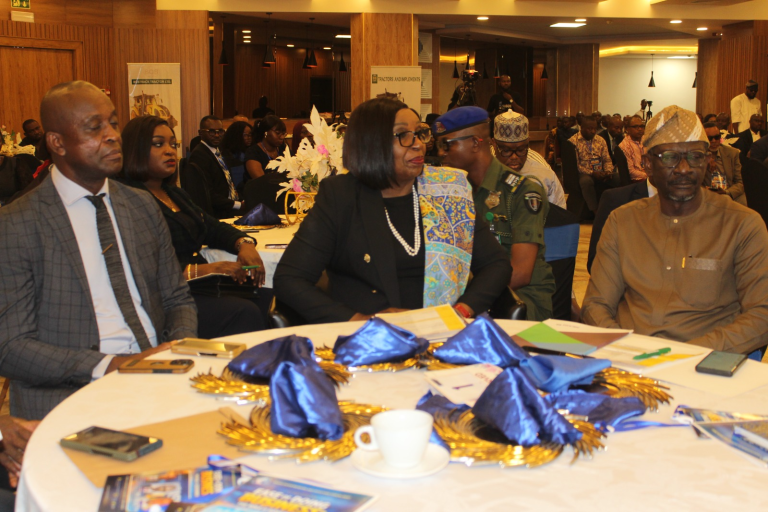
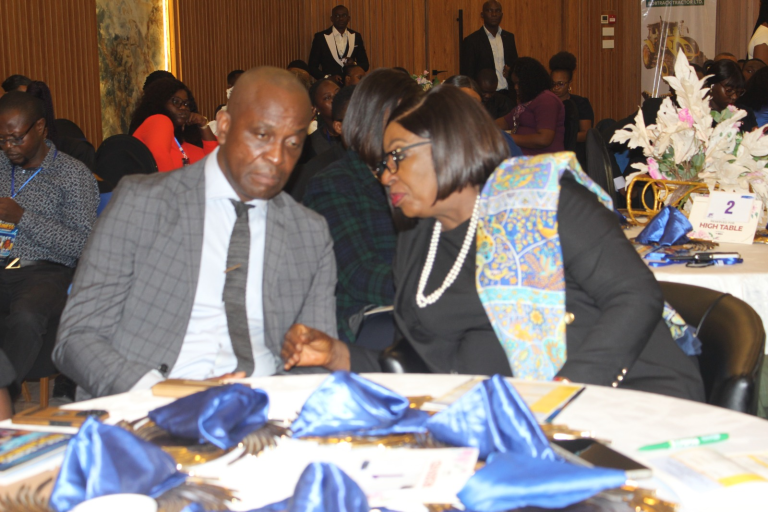
Ngozi Odu, the deputy governor, hinted that the Sim Fubara administration was keen to work with the recommendations of the seminar.
Listing things that make the economy of a state grow fast, Bello mentioned policy consistency and the sanctity of contracts, saying the greatest enemy of capital is not risk; “It is unpredictability. An investor can calculate risk, hedge against it, and price it into a model, but no entrepreneur, no matter how seasoned, can calculate within or legislate against caprice.”
He described predictability as economic currency, saying: “For the industrialist in the Trans-Amadi Industrial Layout or the visionary developer breaking ground in Greater Port Harcourt, a permit or license granted today must be treated as a sacred covenant that remains valid tomorrow. The government’s primary moral and economic duty is to ensure that the “rules of the game” do not shift with the political tides or the changing of the guard.”
Quoting authorities, the NEXIM Bank CEO said: “Efficient, transparent contract enforcement is the most potent “tax holiday” a government can ever offer.

He also mentioned infrastructure as a catalyst for growth, which he said is far more than concrete and steel but the physical manifestation of government intent.
He harped on need for bureaucratic de-bottlenecking and the digital imperative. He however mentioned the place of tax harmonization for overturning the multiplicity crisis. “For far too long, the Nigerian entrepreneur has been besieged by a “multiplicity of taxes”—a fragmented and exhausting system where federal, state, and local agents often demand similar dues under a dizzying array of different names. This is not just an accounting headache; it is a structural impediment to survival.”
Read also: Fubara, Rivers investors tackle ease of doing business to tap Africa’s $3trn market
NEXIM’s toolkit for Rivers State:
The CEO said because the government is working to fix these structural bottlenecks—the
policy, the roads, and the tax systems—NEXIM Bank can now step in with more confidence to provide the financial fuel for their ambitions.
“We recognise that the entrepreneurs of Rivers State require more than just a friendly
policy environment; they require liquid, accessible, and affordable capital. NEXIM
Bank has moved beyond traditional banking to create a specialised toolkit designed to de-risk your operations and amplify your reach. “For non-oil exporters with a turnover under N100m, we offer concessionary interest rates, typically capped at 9%. This is ‘patient capital’ is designed to let your business breathe while it grows.”
He also mentioned the ‘Women and Youth Export Facility (WAYEF)’, and some others.
He added thus: “No discussion on ease of doing business is complete without addressing logistics. In today’s world, supply chains are the bloodstream of commerce. NEXIM is actively investing in strategic logistics initiatives to turn Port Harcourt into the most efficient gateway for West and Central Africa.”
He had earlier defined ‘Ease of Doing Business’ saying it is a measure of how conducive the regulatory and social environment is to the establishment and operation of a local firm. He said it is about minimizing the friction of the state.
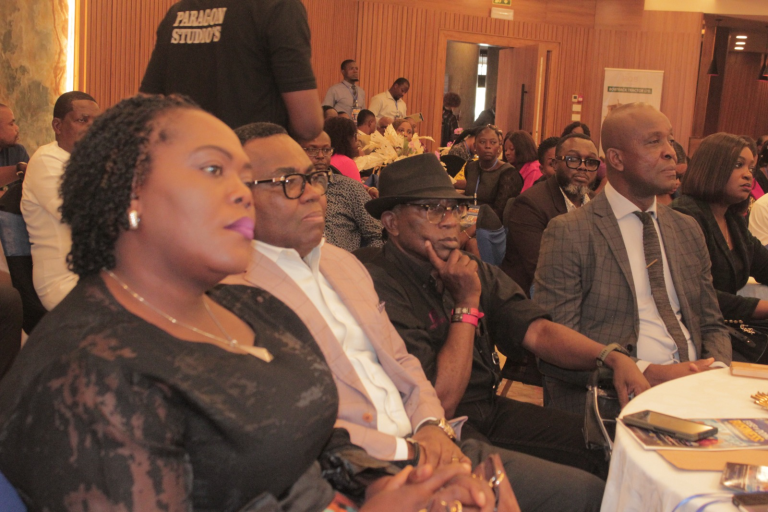
“At NEXIM Bank, our conviction is simple yet powerful: people create wealth when they are empowered to trade, innovate, and compete. But this empowerment does not occur in isolation. It rests heavily on the broader business environment—the policies, institutions, infrastructure, and incentives that either accelerate success or impede it.
“Today, as Rivers State continues to reassert itself as one of Nigeria’s economic nerve centres, this discussion is both timely and essential. Whether we are looking at manufacturing, logistics, agribusiness, maritime services, or the creative economy, one thing remains constant: businesses thrive when government plays its enabling role effectively and consistently.”
He described the government as the enabler framework, a referee, and the groundsman.
Mentioning some projects backed by the NEXIM Bank, the CEO mentioned the Port Harcourt–Kano–Maradi Corridor, and the Inland Waterways and the Lower Niger. “In collaboration with NIWA and the Nigerian Navy, we have completed the navigational charting of the lower River Niger. This is a game-changer. It allows for the movement of bulk cargo via barges from the hinterlands directly to the ports of Port Harcourt and Onne. This effectively turns our rivers into highways, de-congesting our roads and lowering the carbon footprint of our exports.” He said it would aid the African Continental Free Trade Area (AFCFTA) that is now a reality.
On the way forward, the experienced banker pointed to partnerships of purpose. He said to REIF: “You are resilient, you are innovative, and you are the engine of this state’s future. But you cannot do it alone.
“The ‘Ease of Doing Business’ is a continuous, dynamic handshake between the private sector and the government. It requires platforms like REIF to hold the government accountable, and it requires institutions like NEXIM to provide the fuel for your ambitions.
“To His Excellency, Governor Fubara, I pledge that NEXIM Bank will remain a steadfast partner in your quest to industrialise Rivers State. We are ready to co-fund projects, provide technical advisory, and open doors to international markets for the products made right here in this state.
“Let us leave this banquet hall not just with a collection of business cards, but with a renewed commitment to dismantle the barriers to our collective success. When the government optimises the environment, and the financier provides the capital, the Nigerian entrepreneur will always—without fail—do the rest. May the businesses represented here grow to become global conglomerates. May Rivers State lead the way in our non-oil revolution.”
How to save Rivers economy from sinking:
Reviving the industries in Rivers State was pointed out as key step to take immediately.
Leading the voice in this, Peterside of RSIPA, a globally recognized financial expert, in his panel presentation, made it clear the focus of the state is changing the narrative of Port Harcourt from that of a state in crisis to a place of profit.
He said the state has suffered bloated negativity. “We aim to rebuild trust and confidence and ensure easy ride for businesses. For instance, we want ease of acquiring land papers (certificate of occupancy). This is because we compete with Lagos and Abuja but getting land papers in Port Harcourt appears harder. That is not good enough.”
Saying businesses must have it easy in PH, the investment expert said what the government tells business people must agree with what they would find on ground when they come in.
He said that was why the agency has set up a One-Stop-Shop. “This has been set up at the headquarters of RSIPA on Moscow Road. There, we have representatives of all the government agencies having anything to do with businesses such as regulation and registration; Greater Port Harcourt City Development Authority (GPHCDA), Ministry of Urban, Ministry of Housing, Ministry of Lands, Ministry of Commerce, Tax agency, etc. This brings together the Ministries that give permit. This is to make things easy.”
On how Rivers State can compete again, Peterside said it is better for Rivers to compete in areas of its advantage. “One such area is gas sector. Rivers State can develop gas to the extent of supplying it free. Enough has not been done in this area.”
He said Rivers focus is on re-industrialisation of the state, and that Bonny is a huge asset in this regard. “A new port city is coming up in Onne axis, a mix-use area to feed off the East West Road.”
He advised that Rivers State must grow at a faster pace than things around it. “Multiple taxes affect businesses, so, need to harmonise it. That is why we are trying to bring together local council authorities.”
He commended REIF saying the group was complementing the government by trying to enhance businesses. “We promote and enhance businesses, old or new, not just hunting for and focusing on inbound investments as is often the focus. Local Direct Investments (LDIs) are very important, too.”
Speaking, Joe Johnson, the commissioner for Commerce and Industry, said Trans-Amadi zone is being re-industrialised and that investors were coming and that roads were being repaired from the ports to markets. “Ships are coming to Onne now. We must commend President Bola Ahmed Tinubu on these.”
He said Gov Fubara who he said came in with 37-page blue print, has promoted the economy in many ways including N4bn loan package to SMEs, organizing an economic summit, creating the RSIPA to promote businesses, plans to revive industries and boost Trans-Amadi, etc. He said investors were on the way.
In his welcome remarks, Ibifiri Bobmanuel, President, Rivers Entrepreneurs and Investors Forum (REIF), said they coordinate businesses in the South-South and South-East zones.
He repeated the story of the shoe he saw in Dubai only to discover it was made in Aba. “That was where I began to make a case for the Aba shoes and leather works because our potentials as a country are huge. The purpose of this summit is for us as a people, government, investors, entrepreneurs, policy makers, etc, to talk and find a way to reset our thinking. Economy of Rivers State is not the FAAC (Federal allocation).
“The summit has brought together different key players in the different sectors to brainstorm and come up with a policy plan and a framework. They are people with very deep knowledge in financial sector, ethical banking space, technocrats who have done it over and over. Power is crucial and it has to be based on gas which can be trapped and put to greater use.”
He showed agony over endless political crisis, saying; “Discordant tunes from Rivers State is not good. Rivers State must not go bad, as Lagos has a slogan that Eko must not go bad.”
He went on: “See what happened with the Dangote Refinery that eventually went to Lagos. See how Akwa Ibom is steadily growing as a preferred business destination in the region with a deep seaport, international airport, BUA Refinery, etc.”
Read also: TUC targets 150% hike in minimum wage, demands N200k for Rivers civil servants
Gas is key:
Ubani Nkanginieme, President, Total Support Energy Group, said power is critical to businesses because it consumes about 60% of cost to a business.
He said Rivers State is a power state for supplying up to 35% to the national grid, but observed that power can be developed by the state and sold.
He said the host communities could focus on power generation from the fund coming from the Petroleum Industry Act (PIA) fallout where fund is kept in the Host Community Development Trust.
Govt reacts:
The Rivers State Government put up forceful presence at the seminar in Port Harcourt, and reaffirmed its commitment to creating a more business-friendly environment as a strategy for economic recovery, job creation, and sustainable development.
Speaking, Gov Siminalayi Fubara noted that economic growth can only thrive where policies were stable, institutions responsive, and government deliberately supports enterprise.
According to him, while Rivers State—like many parts of the country—has faced economic challenges marked by reduced investment, business migration, and rising unemployment, such challenges also present opportunities to rethink economic strategies, strengthen institutions, and build productive partnerships.
The Governor, who was represented by his deputy, Ngozi Nma Odu, emphasized that government alone cannot drive economic transformation, stressing the need for collaboration among policymakers, investors, entrepreneurs, and civil society. The government’s role, he said, is to provide peace and security, transparent regulations, improved infrastructure, and policies that encourage innovation and attract both local and foreign investment.
The state government assured participants that recommendations emerging from the forum would be taken seriously and translated into actionable policies aimed at restoring Rivers State as a preferred destination for business and investment.
Drawing lessons from Lagos and global success stories such as Singapore and the Asian Tigers, the governor urged stakeholders to see the forum as a turning point in rewriting the economic narrative of Rivers State and the South-South region.
Fubara commended participants who travelled from across the country to contribute to the discussions and encouraged open engagement, creative thinking and collaborative solutions capable of stimulating economic growth and reducing unemployment.
The deputy governor said she said collaboration is key, and that she was excited by Bobmanuel’s Dubai story because that is key to Nigeria’s growth.
She said the goal of the state government is to restore Rivers State as a preferred business destination. “We are committed to ease of doing business.”