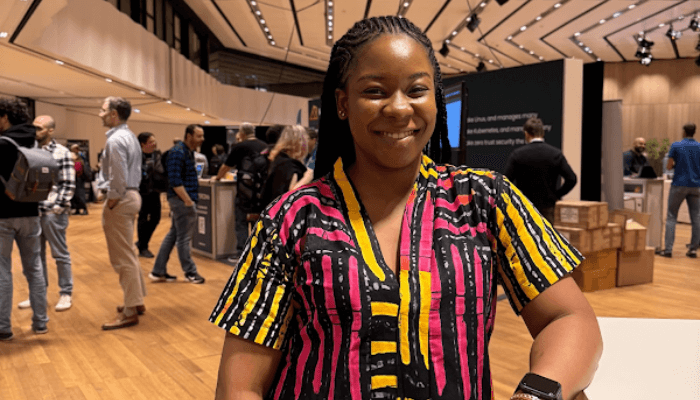
Oluebube Princess Amadi is a Software engineer and the founder of OSPush, an initiative dedicated to helping developers break into open source through structured learning, mentorship, hands-on contributions, and guided pathways into real world projects and communities. Over the years, Amadi has been deeply involved in building and supporting developing communities across Africa through teaching, volunteering, mentoring, and organising technical programmes and workshops. In this interview with NGOZI OKPALAKUNNE, she spoke on the current state of Nigeria’s tech ecosystem and the impact of Artificial Intelligence on Nigeria’s job market. Excerpts:
How would you describe the current state of Nigeria’s tech ecosystem?
Nigeria’s tech ecosystem has gone through several phases. There was a time when it was genuinely exciting. People were willing to teach without expecting anything in return. A whole generation of builders spent their own money organising meet ups, conferences, workshops, and communities. People volunteered their time just to help others grow. It was very community-driven.
However, there was also what many people refer to as the Nigerian factor, especially when it came to applying for jobs and getting global opportunities. Many talented people kept hitting invisible walls.

Over time, those same people started leaving the country for greener pastures. When they left, the ecosystem lost a lot of depth.
Today, there are still many people in tech, but the quality has dropped significantly. A lot of mid-level developers are being pushed into senior roles without the experience needed to succeed at that level. This is not an individual failure. It is a system problem. The pipeline did not favor long term growth, mentorship, or proper skill development. When you remove strong mentors and experienced engineers from a system, the impact shows eventually.
How do you see AI impacting Nigeria’s job market?
AI will definitely change how teams are structured. Roles that involve repeatable and predictable tasks will shrink because those tasks can now be automated. This is already happening globally, and Nigeria is not exempt.
At the same time, the market will begin to favour people who take action, communicate clearly, and can think beyond just writing code. The gap between those who wait and those who act is closing. Access to information is no longer the main issue. Execution is.

People who are willing to learn, update their skills, and adapt will be fine. AI is not replacing humans wholesale. It is replacing people who refuse to evolve. Those who understand how to work with AI, guide it, and integrate it into systems will remain relevant.
People are relying more on AI even when they could figure things out themselves. What could be the consequences of this trend?
This is a very important question. AI is a powerful tool, but it should not replace thinking. One major consequence of over-reliance is skill atrophy. When people stop thinking through problems themselves, they lose the ability to reason deeply, debug effectively, and make sound decisions under pressure.
Another consequence is shallow understanding. You might get an answer quickly, but without understanding why it works. In the long run, this becomes a problem, especially in critical systems where blind trust can lead to serious failures.
AI should be used as an assistant, not a crutch. It should help you move faster, explore ideas, and validate thinking, but the responsibility of understanding should still rest with the human. The people who will stand out are those who can combine strong fundamentals with intelligent use of AI.
What are the major hurdles in the Nigerian tech space, and how can they be overcome?
The first major hurdle is infrastructure. Power and the internet are still serious problems. I did not fully understand how bad this was until I left Nigeria. Stable electricity and reliable internet are not luxuries. They are basic requirements for modern tech work.
The second hurdle is skills. There are truly talented people in Nigeria, but there are also many people who do not yet have the right skills or experience. This creates a noisy market where employers struggle to separate signal from noise.
The third hurdle is trust. Many companies are hesitant to hire people in Nigeria. At the same time, there are not enough local tech jobs to absorb the growing talent pool. This creates frustration on both sides.
Solving these problems requires investment in infrastructure, stronger training pipelines, better mentorship, and global companies being more intentional about engaging with Nigerian talent beyond stereotypes.
Having been in the software engineering field for some times, what is the most challenging project you have worked on, and how did you overcome the hurdles?
One of the most challenging projects I worked on was a software diagnostic engine used onsite by water engineers to diagnose complex water system issues. This was not just a software problem. It was a real-world system with physical consequences.
At the beginning, I did not understand how complex water systems were. These systems were critical, and failures could affect entire communities. The software needed to detect physical presence through web sockets and operate reliably at scale.
Beyond writing code, I had to learn a lot about water systems. I had to understand how engineers thought, how faults occurred, and what information they needed to make decisions. That learning process was uncomfortable but necessary.
I overcame the challenges by asking questions, studying the domain deeply, and collaborating closely with non-software experts. It taught me that great software solutions come from understanding the problem space, not just the code.
How do you approach problem-solving in your coding work?
I start by understanding the problem clearly. I ask a lot of questions and try to see the problem from different perspectives. I avoid jumping straight into code because that often leads to solving the wrong problem.
Once I understand the context, I break the problem down into smaller parts. I focus on building something simple first and then improving it. I also think a lot about edge cases and failure scenarios.
Most importantly, I believe in iteration. I build, test, learn, and adjust. Software is rarely perfect the first time, and that is okay.
How has your Nigerian experience shaped your approach to engineering abroad?
Nigeria built tenacity in me. It gave me a strong lets fix it mentality. I do not wait around for perfect conditions. I look for ways to make progress with what I have.
Nigeria also built my sense of community. I learned early that growth is faster when people help each other. That mindset has stayed with me wherever I go. I value collaboration, mentorship, and shared success.
What inspired your passion for Software Engineering?
My interest in software engineering started quite early. When I was fifteen, my Dad bought me a laptop as a birthday present. At first, I did what most teenagers would do. I played games, explored the software on it, and spent hours just clicking around.
But very quickly, curiosity kicked in. I wanted to understand how these things worked. I kept asking myself questions like who made this game, how does the software respond when I click a button, and where does all of this logic live.
That curiosity pushed me to start researching on my own. I read blog posts, watched videos, and tried to break things just to see what would happen.
Over time, that curiosity turned into deliberate learning. I realised I enjoyed problem-solving, building things from scratch, and watching ideas come to life on a screen. Software engineering gave me a way to combine logic, creativity, and impact, and I knew early on that it was something I wanted to pursue seriously.
What advice do you have for young people who want to study software engineering?
Software engineering alone will not survive the full impact of AI. I strongly advise young people to look into AI systems, machine learning, and system architecture. Learn how AI systems are designed, built, and deployed.
The future belongs to people who understand how to build systems, not just write code. Learn how to think, design, and adapt. That combination will always be valuable.
As a woman in software engineering, have you experienced bias from male counterparts? How were you able to handle it?
I hear stories about bias often, and my heart goes out to those who have experienced it. Personally, I have not faced bias. The men I have worked with have been allies.
They have advocated for me, mentored me, and given me room to grow and shine. I see this as an opportunity to say thank you. Thank you to the men who support women, create safe spaces, and use their voices to lift others. That support makes a real difference