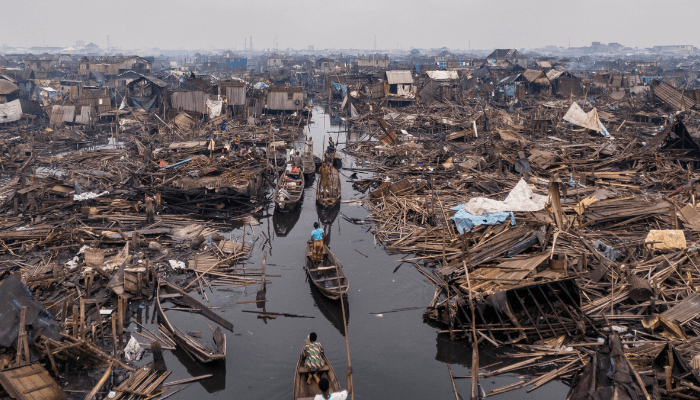
As the demolition of Makoko continues to raise dust that refuses to settle, the Lagos state government has been advised to align its development and urban safety plans with social justice that protects people in vulnerable communities.
Makoko is an informal settlement in Lagos, Nigeria, known for its unique floating homes built on stilts over the Lagos Lagoon. Originally established as a fishing village, it has evolved into a densely populated urban slum, with over 85,000 residents.
Recently, the state government’s angry bulldozer visited that community and reduced their homes to rubble, citing safety of lives, especially for those whose structures were built right under high-tension power lines that pose serious risks.
Though the government’s action is genuine and in the public interest, Nigerians are saying that such an action should also consider both the present and future lives of the people.

Housing Development Advocacy Network (HDAN), an affordable housing delivery advocate, has expressed deep concern over the Maroko demolition, emphasizing that safety concerns should not be addressed in a manner that violates the rights and dignity of vulnerable citizens.
Read also: A newborn’s last breath: The human cost of Lagos state’s Makoko demolition
“While we recognize the state government’s responsibility to protect lives and enforce planning regulations, the sudden demolition of homes without alternative settlement plans exposes residents to homelessness, poverty, and social instability,” Festus Adebayo, HDAN’s executive director, stated.
He noted that Makoko is home to thousands of low-income residents who depend on the area for their livelihoods, advising that development and urban safety must go hand in hand with social justice, inclusive planning, and humane resettlement strategies.
As a community, Maroko faces significant challenges, including lack of basic amenities like clean water and proper sanitation, and has been at the centre of ongoing urban planning conflicts.

The recent demolitions have displaced thousands of residents, leaving many of them without shelter and livelihoods, highlighting the ongoing struggles of this historically significant community.
HDAN is, therefore, calling on the state government to suspend further demolitions and engage with affected communities, and provide clear, affordable, and accessible settlement options for displaced residents.
The network also advised the state government to ensure that compensation and resettlement plans align with national and international housing and human rights standards, and adopt participatory urban planning approaches that include community voices in decision-making.
“No Lagos resident should be rendered homeless in the name of development,” Adebayo said, adding, “a truly modern city protects both infrastructure and its people. HDAN remains committed to working with government authorities, civil society organizations, and community leaders to promote safe, inclusive, and sustainable housing solutions across Lagos in particular, and Nigeria at large.