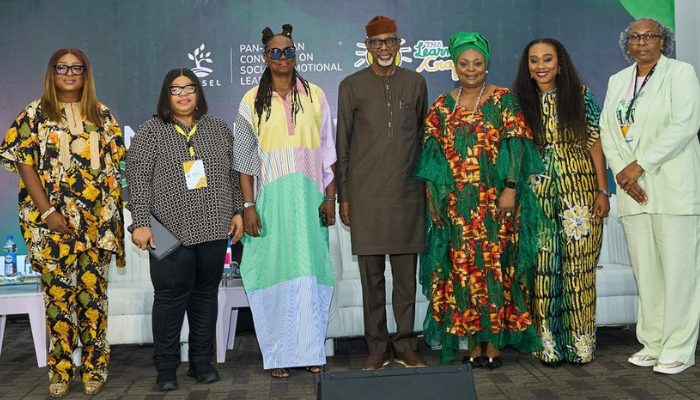
The Learning Craft Foundation has called for stronger policy action to embed social and emotional learning (SEL) within African education systems, as stakeholders gathered for the Pan-African Convening on Social and Emotional Learning (PACSEL), themed For outcomes that matter: Life, Academics and Well-being.
Opening the conversation, Rhoda Odigboh, Founder of The Learning Craft Foundation, said the convening was created to reframe what education systems are designed to deliver, beyond examination results alone.
She emphasised that educating the whole child requires deliberate system design and policy commitment, noting that SEL must be embedded rather than treated as optional or peripheral.
Aaliyah A. Samuel, Chief Executive Officer and President of the Collaborative for Academic, Social and Emotional Learning (CASEL), said 30 years of global evidence show that SEL delivers both academic and life outcomes.

“When students experience social and emotional learning in their schools, homes, and communities, they are more engaged and curious in class, form strong relationships, develop self-motivation, and build persistence when learning becomes challenging,” she said.
According to Samuel, the benefits are clear. “Students experience stronger academic achievement, better wellbeing, a deeper sense of belonging and identity, and a love for learning,” she added. “These are the skills and mindsets young people take into adulthood as they pursue meaningful careers.”
Senator Liyel Imoke, former Governor of Cross River State, said education systems that ignore social and emotional development weaken both academic and economic outcomes.
“We have expanded access to schooling, but ignored what happens inside the hearts and minds of children,” he said.
He stressed the importance of governance and incentives. “Schools behave exactly as policy incentives encourage them to behave,” Imoke said. “When policy rewards examination results alone, schools produce certificates, not citizens.”

According to him, sustainability depends on institutional backing. “What is not embedded in policy rarely survives,” he added.
Andreas Schleicher, Director for Education and Skills at the OECD, said global assessment systems are evolving to reflect a broader understanding of learning.
“In PISA, we now assess outcomes beyond academic performance,” he said. “These include wellbeing, agency, resilience, engagement, and relationships.”
He explained that measuring learning must go beyond test scores. “Digital tools allow us to observe the learning process, not just the final result,” Schleicher said. He added that high-performing systems are explicit in their design. “Systems that succeed make social and emotional learning visible in curriculum frameworks. What you measure is where you place your attention.”
Schleicher cautioned against copying international models without context. “International comparisons should help countries make informed choices, not import solutions that do not fit their local realities,” he said.
Aly Jetha, Co-Founder and Chief Executive Officer of Big Bad Boo Studios, highlighted the role of storytelling in teaching social and emotional skills.
“African storytelling traditions have long been used to transmit values,” he said. “The opportunity now is to use stories intentionally to model specific social and emotional competencies.”
Jetha emphasised that stories alone are not enough. “Learning happens through discussion, practice, role modelling, and reflection,” he said. He noted that while fully localised curricula can be costly and time-intensive, adaptation offers a practical pathway. “SEL is most effective when global rigour meets local relevance,” he added.
Tina Udoji, Founder and Chief Executive Officer of the Chelis Group, said social and emotional learning speaks directly to the realities children face beyond academics.
“Children do not live in an exam-only world,” she said. “They come to school carrying fear, pressure, trauma, and uncertainty, yet schools often fail to address this.”
She pointed to governance gaps. “Systems reward grades and infrastructure, not child development,” Udoji said. She added that leadership matters at every level. “Policy also starts at the school level, when owners and leaders decide to act.”
The two-day convening combined virtual and in-person sessions and covered social and emotional learning across early childhood, primary, secondary, and school leadership contexts. Discussions spanned policy integration, teacher practice, culturally grounded approaches, measurement of SEL outcomes, digital tools, and practical implementation strategies.
Speakers agreed that while access to schooling has expanded across Africa, education systems must now prioritise learner wellbeing, citizenship, and long-term life skills as central pillars of the continent’s education future.