|
Getting your Trinity Audio player ready...
|
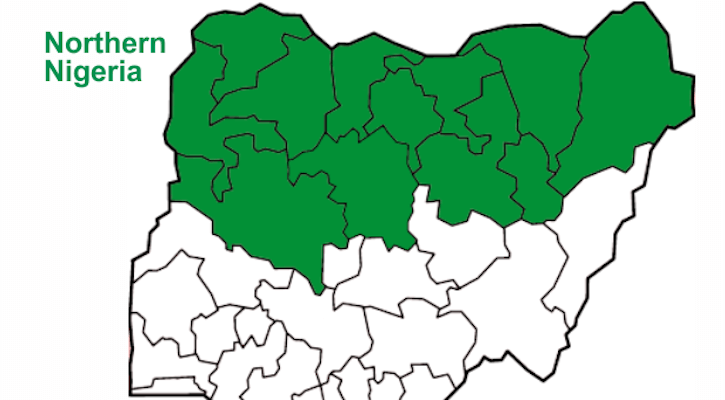
When I first wrote “Predator or Prey: Being Specific and Constructive”, my appeal was simple: that Nigerians must stop describing the North as a predator feeding on the rest of the country. I argued that the North, far from being the hunter, has itself become the hunted, a victim of poverty, manipulation, and systemic neglect.
Now, newly verified data presented on Arise News publicly on national TV by security agencies and experts confirms what conscience has long whispered: the unfolding tragedy in the North is not a war between Christians and Muslims but a humanitarian catastrophe that has claimed lives from both faiths.
The numbers behind the pain
Between 2021 and 2025, Nigeria recorded more than 700 violent incidents at religious sites: churches and mosques alike.

• Churches: 2021 and 2022 were the bloodiest years, with approximately 193 and 221 attacks, respectively. These included abductions, killings, and assaults during worship.
• Mosques: The same pattern appears with 94 and 163 incidents in those two years before tapering off after 2023 as limited security reforms began to take effect.
By 2025, total attacks on both categories had dropped by over 60 percent. Yet each statistic hides a personal story: a preacher silenced, an Imam missing, a family displaced, a community shattered.
Shared suffering, shared humanity
These figures explode the false narrative that one religion alone bears the pain.

Yes, Christians appear more represented in casualty numbers largely because most attacks occurred in the predominantly northern zones, where Christians live as minorities in mixed urban communities, more exposed to banditry and terrorism. But Muslims have died in nearly equal measure, often in mosques, markets, or during travel.
When a church in Owo is bombed and a mosque in Niger is attacked, the soil that absorbs their blood is the same Nigerian earth.
The tears of the victims’ families flow into the same rivers.
A dangerous foreign misreading
As we grieve, the world seems poised to misread our pain.
U.S. President Donald Trump’s recent threat to “re-examine” Nigeria’s internal crisis and consider punitive actions against Northern Nigeria has stirred dangerous excitement in some quarters.
But let us be clear: any foreign military strike, economic sanction, or embargo would not punish the guilty few; it would devastate the innocent millions.
The bombs of Washington will not distinguish between Christians and Muslims; they will fall on markets where both trade, on schools where both children learn, and on farms where both labour.
If Nigeria’s already fragile economy is further crippled, it will be the poor in Maiduguri, Jos, Ibadan, and Onitsha who will go hungry.
We must never allow the global community, out of misguided sympathy or political theatre, to turn our humanitarian crisis into another geopolitical experiment.
Beyond religion: Poverty, ignorance, and injustice
The real predators remain the same: the elite few who weaponise religion, ethnicity, and deprivation to preserve privilege.
The barefoot child in Katsina is not the enemy of the barefoot child in Abeokuta.
Both are victims of elite failure and state absence.
Poverty, not piety, fuels Nigeria’s violence.
Ignorance, not ideology, sustains it.
Read also: Predator or Prey: Being Specific and Constructive
Where there are no schools, the devil builds barracks.
According to UNICEF, over 10.5 million children remain out of school, eight million of them in the North. That statistic is a ticking time bomb. Each child denied education is one more potential recruit for hate.
The death of anyone diminishes us
As painful as these deaths are, they teach one sacred truth:
The death of any Nigerian, Christian or Muslim, Northern or Southern, diminishes us all.
Our humanity is measured not by the number of people who pray like us, but by the number whose pain we are willing to feel.
When we mourn only our own, we make strangers of our neighbours and partners of our tormentors.
Reading the data correctly
The post-2023 decline in attacks is a fragile success that must not be lost.
It suggests that communities became more vigilant, our security agencies more adaptive, and faith leaders more collaborative. But progress is reversible. One wrong policy, one reckless bomb, or one new round of sanctions could unravel it all.
The data, therefore, calls not for vengeance but for vigilance, for protecting every sacred space, every market, every child, regardless of creed.
Constructive pathways forward
1. Protect soft targets: Deploy trained community guards (we need to revisit state policing) and security patrols around worship hours in rural areas.
2. Faith-based intelligence: Build interfaith early-warning systems linking mosques, churches, and local vigilantes.
3. Education as defence: Every classroom opened in Zamfara or Bayelsa is a weapon laid down.
4. Economic revival: Invest in small industries, microcredit, and agro-processing so that idleness no longer feeds extremism.
5. Healing communication: Faith and political leaders must choose words that build bridges, not barricades. Can we organise a National Interfaith Peace Convention?
The socio-political cost of missteps
-If Nigeria succumbs to foreign coercion or internal retaliation, our already divided polity will splinter further;
-The fragile trust between North and South, Christian and Muslim, will erode; and
-Markets will close, investors will flee, and extremists will claim vindication.
The true threat to Nigeria’s unity is not from within our mosques or churches, but from the deliberate manipulation of our pain by elites who profit from division, foreign or local.
From condemnation to construction
The first article called for specific and constructive criticism: to punish the corrupt, not the poor, and to identify the guilty, not condemn a region.
This follow-up calls for specific and constructive action: to rebuild lives, restore trust, and reclaim faith in one another.
Our challenge is moral as much as it is material.
We must learn again to feel national empathy, the sense that the suffering of one Nigerian, anywhere, is the concern of every Nigerian, everywhere.
The data now speaks clearly: insecurity in Nigeria wears no religious colour.
Its victims bow their heads in different houses of worship but cry the same tears.
So let the conversation shift from who suffers more to why anyone should suffer at all.
Let us not count corpses by creed but by courage – the courage to keep believing in a united nation.
If the North continues to bleed, the South cannot sleep. If the poor continue to despair, the rich cannot dwell in peace. And if any foreign bomb falls on our soil, it will not only kill our people, but it will also destroy our fragile hope.
It is time for Nigeria to defend her humanity, not just her geography.
To stand together, not against one another.
To heal, not to hate.
Because in the end, if one part of Nigeria dies, the rest cannot live.
God bless Nigeria.
Sir Demola Aladekomo is the founder of Chams Group and SmartCity PLC and a passionate advocate for national unity, ethical leadership, and human-capital development in Nigeria.