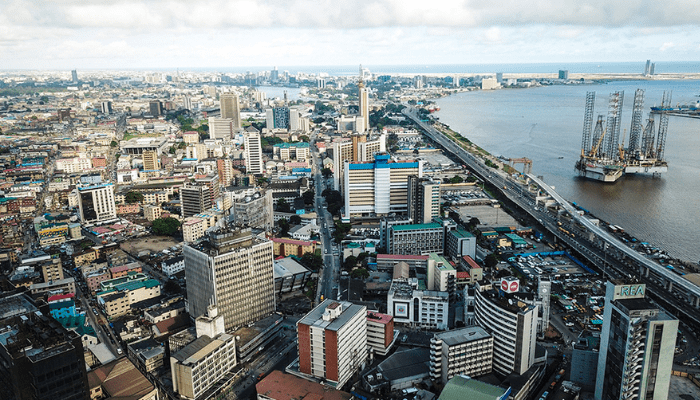
For millions of Nigerians, the dream of owning a home remains out of reach. Despite the growth in urban centres, Nigeria still struggles with a housing deficit of about 28 million units, increasing home prices, and almost no mortgage financing for most people. Yet, a recent policy, the establishment of the Nigerian Consumer Credit Corporation (CrediCorp), has injected new hope. Could this serve as the spark that helps not only families to own homes but also revives the economy?
Nigeria’s housing deficit has gone up from 14 million units in 2010 to 28 million in 2023, a national disaster unfolding quietly. Each year, the country builds fewer than 100,000 homes when it needs 700,000 to keep pace with demand. That gap leads to informal settlements, overcrowding, and increasing rental burdens.
Homeownership rates have fallen below 20 percent, placing Nigeria among countries with the lowest ownership levels worldwide. By contrast, even South Africa achieves about 68 percent homeownership, illustrating Nigeria’s deep structural shortcomings.
Incomes haven’t kept pace with rising home costs. A two-bedroom apartment now costs about ₦25 million, while the median national home price is about ₦107 million, outrageous sums for most households. Construction materials are expensive; cement and steel prices have increased by over 400 percent since 2019, and industry insiders warn that double-digit inflation and currency devaluation have made building housing even more challenging.

Most Nigerians rent, but rents are fast becoming unaffordable, especially for low- and middle-income families who earn ₦30,000–₦400,000 per month. Rent for a modest apartment can cost over 50–60 percent of a household’s income, making saving for a home nearly impossible.
Nigeria’s mortgage-to-GDP ratio remains under 1 percent, compared to around 30 percent in South Africa. High interest rates, often 18 percent–30 percent, and minimal access to long-term financing mean even professionals struggle to afford a mortgage. An architect who earns N180,000 per month could barely afford monthly payments on a N5-6 million loan, far below the N25–107 million price tag for most homes.
However, in May 2024, President Tinubu launched The Nigerian Consumer Credit Corporation (CrediCorp), a government initiative aiming to broaden access to consumer credit. The first phase, launched in September 2024, focused on federal civil servants; the second, rolled out in July 2025, extended reach to 400,000 young Nigerians, including NYSC members. CrediCorp offers interest-free loans of up to ₦2 million, plus other loans at low single-digit interest rates. While this isn’t housing-specific, such liquidity could enable eligible Nigerians to fund down payments or build
incrementally, bypassing the barrier of upfront cash. A low-rate loan of ₦2 million could put homeownership within reach for many; however, it needs to be scaled and sustainably financed.
CrediCorp offers a new pathway, but to translate into a big win for housing, it must be redesigned to accommodate long-term loans secured by a credit rating system and collateral such as land properties with title.

Along with this, some other proposals for systemic reform are listed below:
– Bringing inflation below 10 percent and stabilising the naira is critical to lowering mortgage rates.
– Housing Finance Expansion by Recapitalising FMBN, Channelling pension funds into long-term, affordable housing credit, and using CrediCorp as a bridge to future housing loans.
– Investing in building material hubs across geopolitical zones and supporting modular, prefab construction for speed and efficiency.
– Land Reform Overhaul by digitising land titling, setting up a National Land Commission, and empowering states to unlock land for housing.
– Multi-stakeholder collaboration by uniting federal, state, private sector, NGO, and international agencies around housing goals.
Housing must be a central pillar for job creation and economic recovery. Housing Minister Dangiwa points out that when a single home is constructed, it can create an average of 25 direct and indirect jobs. Now, imagine what an injection of ₦100 billion into housing construction will yield in returns through taxes and job creation.
Housing can be a powerful growth engine. Lagos State, as an example, reports that its housing schemes generated 5,000 jobs in 2024 alone; federal schemes also contribute to local supply chains and economic movements. Scaling up housing could mean thousands of businesses rising, such as plumbing, cement, transport, labour, etc., resulting in GDP growth and formal employment.
Nigeria’s middle- and low-income citizens are caught in a systemic trap. Without access to credit or affordable homes, they continue renting, unable to build equity. But with intentional solutions such as CrediCorp’s consumer loans, long-term housing finance, land reform, and material cost reduction, this crisis could be turned into an opportunity.
If housing becomes a national investment priority, supported and sustained across different administrations, then homeownership can rise from a luxury to a central pillar of economic growth. Housing is more than bricks and mortar; it’s an engine for economic recovery, jobs, and national prosperity.
About the author:
Olushola Adaramola is a real estate development professional and sustainability advocate with over 10 years of experience in green, affordable housing solutions across Nigeria and the United States. He is a LEED Green Associate, reflecting his commitment to environmentally responsible and resource-efficient building practices.