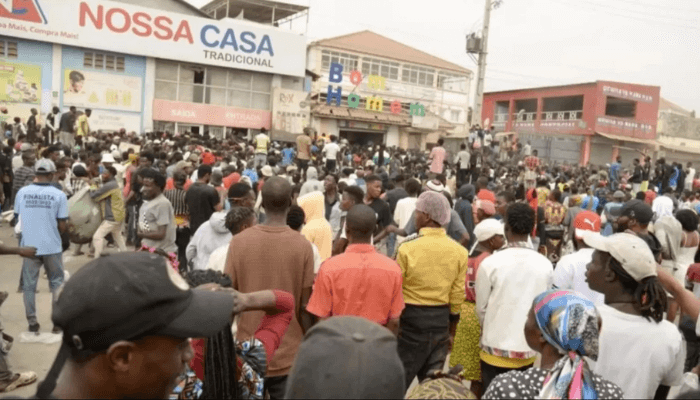
Angola is reeling from one of its deadliest waves of unrest in recent years after violent protests over a steep diesel price hike left at least 22 people dead and 197 others injured this week.
The violence, which erupted on Monday, began when minibus taxi drivers in the capital Luanda launched a three-day strike against the government’s decision to raise diesel prices by nearly 30 percent. What started as industrial action quickly spiralled into looting, vandalism, and clashes with police — spreading to at least six other provinces.
Read also: TotalEnergies flows first oil from two energy projects offshore Angola
According to a presidential statement released on Wednesday, 1,214 people were arrested in connection with the unrest, which saw 66 shops and 25 vehicles destroyed. Gunfire was heard in multiple neighbourhoods of Luanda and other cities through Tuesday, as security forces struggled to contain the chaos.

Manuel Homem, Interior Minister confirmed that a police officer was among the 22 people killed.
By midweek, the capital remained tense and subdued. Most shops remained shut, and although some public transport services resumed after a two-day halt, the city’s streets bore the imprint of fear and fatigue. A heavy military presence was visible around major intersections, petrol stations, and key public buildings.
The government defended the diesel price hike as part of a gradual process to phase out fuel subsidies, which last year accounted for up to 4 percent of Angola’s GDP. Authorities argue that subsidy reform is necessary to reduce public spending and redirect resources to critical sectors such as education and health.
But critics say the move is ill-timed and poorly handled in a country already grappling with widespread poverty, high unemployment and inflation. The opposition UNITA and Bloco Democrático parties issued a rare joint statement on Wednesday, warning that Angola was facing a “severe economic and social crisis” fuelled by policies “disconnected from the country’s reality.”
Read also:World leaders, business executives set for U.S.-Africa business summit in Angola

Human rights groups have also raised the alarm over the government’s heavy-handed response. Human Rights Watch said police had used excessive force during earlier protests this month, including tear gas, rubber bullets and beatings against mostly peaceful demonstrators.
This week’s events mark a troubling recurrence of unrest tied to fuel reforms. In 2023, a petrol price increase — also linked to subsidy cuts — triggered fatal protests across the country. The reforms are being encouraged in part by the International Monetary