|
Getting your Trinity Audio player ready...
|
Workers in the health sector in Nigeria have been urged to collaborate with governments at all levels, civil society, and international partners to ensure that environmental policies do not become instruments of exclusion or exploitation.
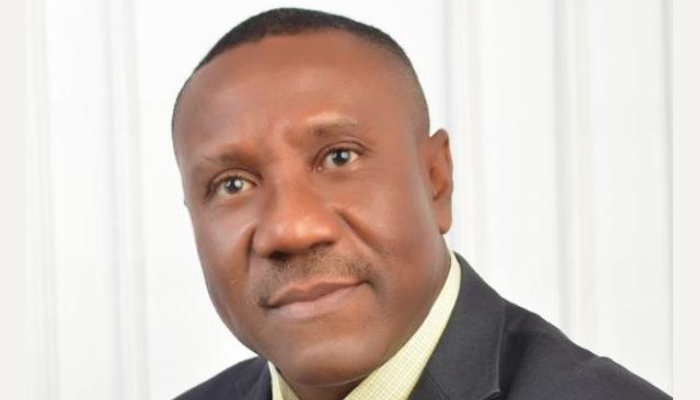
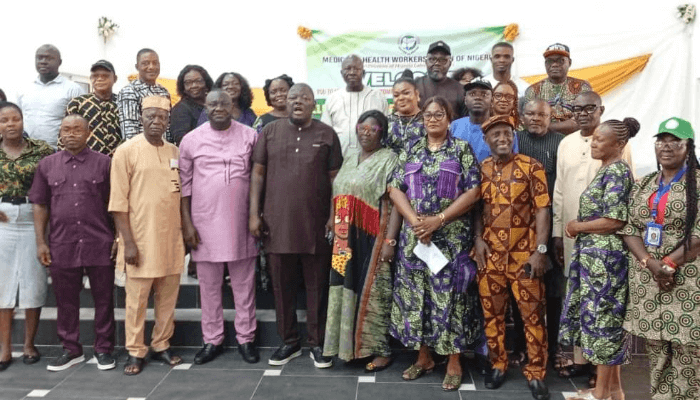
Ogbeide O. Osagie, Edo State chairman, Medical and Health Workers’ Union of Nigeria (MHWUN) made the call at the South-South zonal Women’s Medical and Health Workers’ Union of Nigeria capacity building workshop in Benin City, Edo State.
Osagie, who also urged the workers to be proactive added that they must be drivers of decent work, sustainable livelihoods, and community resilience.
The MHWUN chairman, who described the theme of the workshop, ‘Climate Change and Just Transition: Its Impact on Workers,’ as timely, opined that health workers are not isolated from the effects of global environmental changes.

“From increased heatwaves affecting health professionals in understaffed clinics, to floods displacing rural health posts, to the growing burden of climate-induced diseases, we are on the frontline of this crisis.
“It is therefore, essential that as a union and as a region, we understand what a ‘Just Transition’ truly means. It means equity in policy. It means inclusive planning for affected workers.
“It means ensuring that no one is left behind, particularly our women, whose roles as caregivers and service providers make them disproportionately vulnerable to environmental disruptions.
“Today’s gathering is not just a workshop; it is a call to action. It is a space to learn, to share strategies, and to build solidarity across our states and sectors.
“I urge every participant to engage fully, ask questions, and explore how we can strengthen our unions’ advocacy for climate justice and worker protections, he said.

In her remarks, Bisi Idaomi, the Edo State Commissioner for Women Affairs and Social Development, commended the South-South Zonal Women’s Medical and Health Workers’ Union of Nigeria for their foresight and unwavering commitment to the capacity development and professional advancement of women in the health sector across the geopolitical zone.
Idaomi, represented by Nwaozor Florence, a director in the ministry, noted that the workshop was relevant in the face of evolving leadership demands, workplace dynamics, and the ongoing need for inclusive reforms in the nation’s health system.
“The carefully crafted focus of this workshop-leadership, workplace ethics, gender inclusivity, and health sector reforms- touches on the core pillars required for sustainable progress in public servants’ labour representation.
“It sends a strong message that women are not just integral members of the workforce, but vital stakeholders in shaping ethical, inclusive, and progressive institutions,” she said.
Bernard Joman Egwakhide, Edo State chairman of the Nigeria Labour Congress (NLC), said that with the workshop theme, a period of economic structural change could leave workers, their families, and communities to bear the costs of the transition.
He posited that Climate change significantly affects the workforce or any organisation, whether in the private or public sector, as it affects the health, safety, and productivity of the workers in no small measure.
Earlier in her welcome address, Mercy Omokhodion, South-South Zonal coordinator of MHWUN, explained that the workshop is a purposeful and strategic platform, designed to empower, equip, and elevate the voices of women in the Union, workplace, and society at large.
“At a time when women continue to face economic, social, and leadership challenges across various spheres. This workshop offers us the opportunity to deepen our understanding, enhance our skills, and position ourselves as key drivers of change within the South-South Zone and beyond.
“To all women who gathered here today from Rivers, Akwa-Ibom, Delta, Cross River, Bayelsa, and Edo states, I celebrate you all. You are all agents of transformation.
“Your participation is a bold statement that South-South Women are ready to rise, ready to learn, and ready to lead. May the knowledge shared and the networks built during this workshop inspire us to return to our various states and workshops with renewed passion and purpose.
“Today, we can break barriers, set new standards, and leave an indelible impact on our union, our communities, and our nation,” she stated.
She commended the leadership of the union at the national, zonal, and state levels for their unflinching support and commitment to women’s development, empowerment, and capacity building.