|
Getting your Trinity Audio player ready...
|
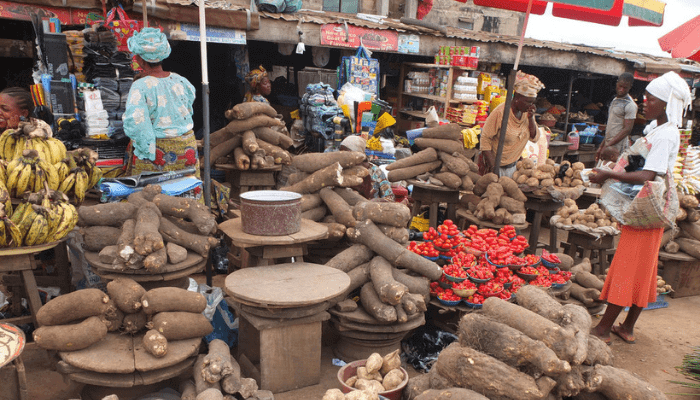
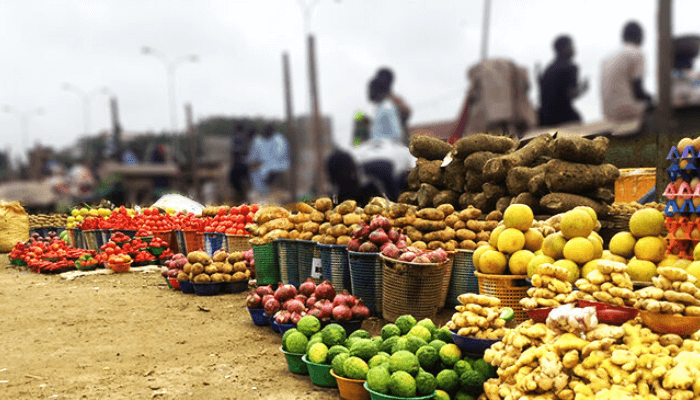
Nigeria’s agriculture value chain holds enormous wealth even though it has been bedevilled with myriads of risks. However, as old a tale as it sounds, how can it be fixed? This is a 94-billion-dollar-question, considering the value of agriculture at an estimated 25 percent of Nigeria’s GDP, which does not even fully reflect how much can be made from agriculture when the value chains are fixed.
“Without fixing the value chains, agric finance will be elusive,” said Adewale Raji, group-managing director/CEO, Odu’a Investment Company in a presentation at the Agrifin conference in November 2018. Raji, whose company has significant investments in agriculture, had explained that in order for agriculture to become an integral part of driving economic growth, the sector needs to unlock more finance, which will remain elusive as long as it is perceived risky on account of faulty value chains.
As Nigeria earnestly yearns for investments, both local and foreign, the potentials in agriculture remain under explored. Agriculture in Nigeria is still viewed through the lens of subsistence farming, where it appears there is dearth of innovation to rapidly create value and wealth.
Uzoma Dozie, CEO, Diamond Bank, told BusinessDay that “With the value chain fixed,” there would be a bright future in agriculture. While he said his bank has been lending to agriculture for a long time, it has been more from a large-scale perspective, not the primary end. He however expressed optimism in going all the way down to the smallholder farmers if the value chain fixes being promoted for instance, by the Nigeria Incentive-Based Risk Sharing System for Agricultural Lending (NIRSAL) can take effect.

Bolarin Omonona, an agricultural economist at the University of Ibadan, who also made a presentation at the Agrifin conference, described an agricultural value chain as the activities that bring a basic agricultural product from obtaining inputs and production in the field to the consumer, through stages such as processing, packaging, and distribution. It represents a key framework for understanding how a product moves from the producer to the customer.
According to him, the value chain perspective provides an important means to understand agribusiness relationships, mechanisms for increasing efficiency and ways to enhance productivity.
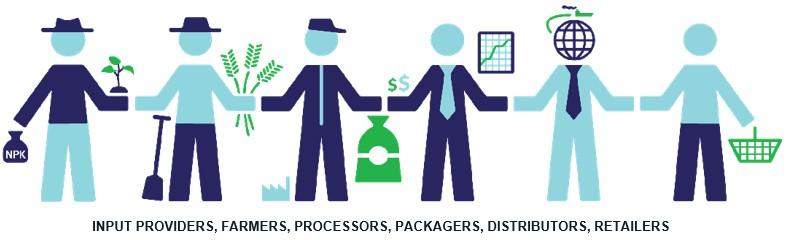

For Raji, links in the agric value chain, from farm to fork – input supply, production, post harvest handling, trading, processing, trading, retailing, consumption – all need to be fixed.
Omonona highlighted different activities/actors in the value chain, which include;
- Farmers and small agricultural entrepreneurs: producers and small entrepreneurs such as suppliers of inputs
- Actors along the value chain involved in: assembling, processing, storing, transportation, etc.
- Rural infrastructure: rural transport systems, irrigation systems, water supply, electricity, storage and telecommunication facilities
- Research and Development (R&D): especially in developing new products
- Exchange through marketing (wholesaling and retailing)
At present, a holistic value chain overhaul is required, to create an agric sector where real value is created along different segments. As emphasised by Dozie when asked what will attract his bank to do more, there have to be more investments in storage, processing, and even availability of farm equipment which improve the odds that farmers who take loans will indeed have an easy access to the market, and be able to pay back promptly.
For Goddie Ibru, principal, G.M. Ibru & Co, the significant returns and stable growth that agriculture provides to investors in other climes, is not being taken advantage of by the Nigerian financial sector. “And that makes all of us poorer,” he said.
As Raji noted, improving the agric value chain will require increased dialogue and collaboration among leaders from government, civil society and the private sector.
“We have no choice than to fix agric (value chains) and for agribusiness to be viable,” he said.
CALEB OJEWALE