|
Getting your Trinity Audio player ready...
|
Women entrepreneurs in Nigeria could claim a bigger slice of the trillion dollar digital trade market as the World Trade Organization (WTO) and International Trade Centre (ITC) launched a $50 million Women Exporters in the Digital Economy (WEIDE) fund.
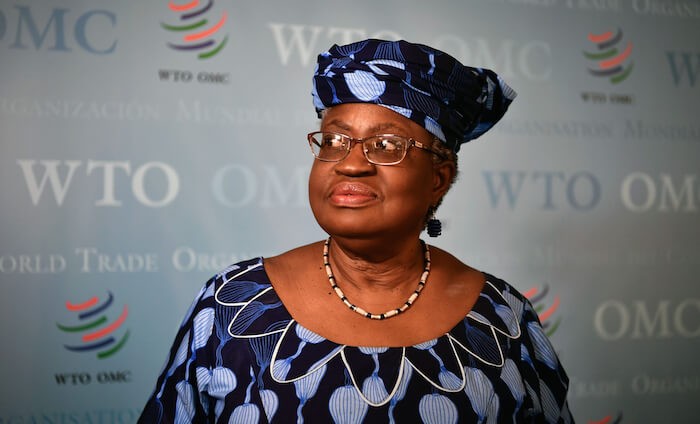
The initiative, unveiled by Ngozi Okonjo-Iweala, the director-general of the WTO in Abuja this week, will give women the tools, networks, and resources to compete and thrive in the fast-growing segment of digitally delivered services.
Digital trade, now worth $4.25 trillion globally, has quadrupled since 2005, but Africa’s share remains just 1 percent.
Okonjo-Iweala said the WEIDE Fund is a chance to change that, noting that women who trade internationally earn almost three times more than those who sell only locally.

Of 67,000 women who applied, 146 were selected for the first cohort.
Sixteen will join the “Booster Track” with grants of up to $30,000 and 18 months of technical support, while 130 will enter the “Discovery Track” with up to $5,000 each and a year of business coaching.
The winners, drawn from sectors such as fashion, tourism, agriculture, IT, and manufacturing, will be trained to sell on global platforms, navigate export rules, and connect with investors.
Read also: How tech-savvy Nigerian youths are driving Africa’s digital trade
The donors said the initiative will help these entrepreneurs “hire more people and create jobs in their communities, develop economic, social and leadership skills, diversify Nigeria’s export base and bring in more foreign exchange.”

Nigeria’s participation in this follows a competitive global process.
“Out of more than 600 business support organisations from around the developing world that competed to work with us, the Nigerian Export Promotion Council…stood out…earned its place through a strong, well-thought-out, and competitive application,” the WTO DG said.
Nigeria emerged as one of four winners alongside Jordan, Mongolia, and the Dominican Republic.
The WTO DG however stressed the importance of fast, affordable internet and reliable power in achieving the goals of the initiative.
“We know a great deal of the gap in internet access has to do with accessibility, reliability and affordability of power. No nation can truly digitize without a steady supply of electricity,” shae said, backing Nigeria’s plan for a $2 billion national fibre optic network while urging stronger collaboration between the power and ICT sectors.
Read also: WTO flags internet gap as threat to Nigeria’s share in $4.25trn digital trade
She also called for global support to extend the WTO moratorium on customs duties for cross-border digital trade, warning that new tariffs could raise costs and shut women-led micro, small and medium enterprises out of global markets.
“If countries start imposing custom duties on cross border digital trade, costs will go up, trade will shrink, and MSMEs especially women led firms would lose one of their best pathways into international markets.”
“Empowering women is not just a moral case, it is smart economics,” Iweala said. “When women succeed, communities succeed and economies succeed.”
The WTO chief challenged the awardees to use their funding to scale up, create jobs, and inspire the next generation of Nigerian women entrepreneurs.
“When I come back in two years,” she told them, “I want you to show me how many more people you have hired, how many new markets you have reached, and how you have inspired others.”