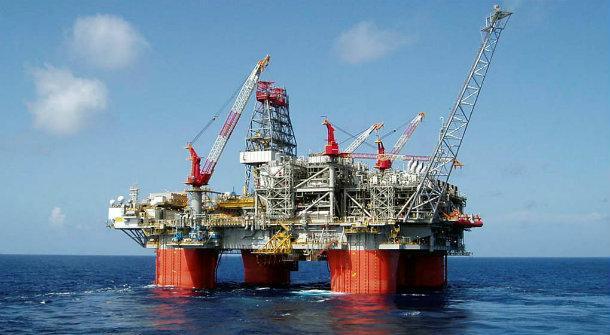
A bleak future seems to be ahead for Nigeria’s dwindling oil industry as 43 exploration companies which collected licenses have shut down operations over the threat of militancy, low oil prices and policy uncertainty .
This revelation was made when Ibe Kachikwu minister of state for petroleum resources paid a working visit to the Department of Petroleum Resources (DPR) Nigeria’s regulator of petroleum activities, in Abuja yesterday.

“Forty-two companies are functional at various exploration and production levels out of 85 Operating Exploration and Production Companies,” Nigeria’s ministry of petroleum tweeted on their official handle.
Nigeria’s upstream sector has experienced a dearth of investments and this has resulted in massive job cuts in the upstream industry. Vendors and service contractors are feeling the squeeze, as many now idle away due to the shutting of terminals affected by declarations of force majeure.
“There has not been any significant investment in Nigeria’s oil exploration in the past ten years. We are fast depleting our oil reserves and are not trying to explore new fields,” said Isreal Aye, oil and gas consultant and managing partner, SterlingPartnership, at a recent event in Lagos.
BusinessDay investigations reveal that the worse affected are marginal field operators and indigenous oil and gas companies whose operational costs have skyrocketed due to attacks by militant and dwindling oil prices. This has also tripled the cost of projects while high exposure to bank loans militate against securing further loans.
Upstream operators have been unwilling to complete on-going projects or start new ones, as joint venture cash call debts have risen to $7billion. The Federal Government is yet to articulate a pragmatic strategy to clear the debts.

Experts in the oil and gas industry have called for streamlining regulations in the sector to derisk the operation of marginal field operators. Aligning policies to avoid regulatory conflicts by different agencies was also identified as a core fiscal issue the Federal Government has to fix.
“We need clarity in the law that empowers the minister to allocate oil blocks, clarity as to the applicant’s track record before approvals are given and clarity in the existing fiscal regime,” said Sena Anthony, legal expert and former group general manager, corporate secretariat and legal division of the Nigerian National Petroleum Corporation (NNPC) at a recent event in Lagos.
The minister charged officials of DPR to diversify the organisation’s revenue stream and improve operating process as the country slipped into recession, largely due to poor revenue from oil.
While highlighting the achievements of the regulator, its officials said there has been an increase in oil reserves from 141.01 million barrels (2014) to 548MMbbl (in 2016) for Nigeria. Projected reserves for 2018 is 600MMbbl
Kachikwu was briefed on the activities of the upstream monitoring and regulations unit of the DPR and reviewed the activities of Basinal Assessment and Lease administration unit, including Oil Prospecting Licenses (OPLs) and Oil Mining Leases (OMLs) and coordination of new OPLs.
He also shared with DPR officials, some curve-turning process as regards profitability witnessed in Nigerian National Petroleum Corporation. The Efficiency component embedded in the proposed petroleum sector roadmap was also reviewed.
Nigeria’s economy plunged into recession largely on the back of renewed militancy that has seen over 1,600 attacks between January and August 2016 and low oil prices that have crimped government revenue by 46 percent.
Oil Gross Domestic Product figures released by the National Bureau of Statistics recently showed a contraction of 17.48 percent. Oil production for the second quarter was estimated at 1.69million barrels per day (mbpd), 420 barrels per day lower than first quarter 2016 production.
ISAAC ANYAOGU