|
Getting your Trinity Audio player ready...
|
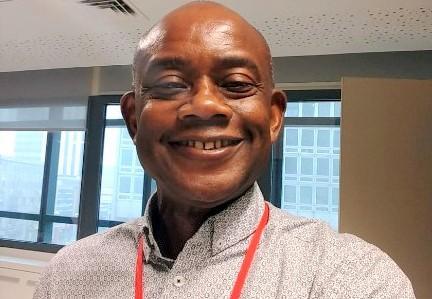
He is described as a globe-trotter who has coached editors and reporters in newsrooms in Nigeria and Ghana and trained journalists in Cameroon as well as introduced narrative writing at James Cook and Monash, Universities in Australia where is now a professor.
Significantly, he is a regular speaker at the Nieman conference on narrative journalism but before assuming such exalted positions and becoming a global brand, he was seen as fearless, bold and satirical in his writings when he was practising journalism. His columns in the Daily Times gave the military junta sleepless nights. That’s how he became one of the most sought-after journalists in the industry.
One can hardly forget his satirical pieces in major newspapers, his encounters with the powers that be, including the ‘motor park episode’ and the Rock and Rule years.
Because of courage in daring to tread where others dreaded, he was always at loggerheads with the authorities.

So, when we sat down together recently, the major topic of discussion was nothing else apart from journalism practice, its impact in the society and how it can be a tool for social development. He may have left active journalism practice but his love for the profession that brought him fame and recognition worldwide has not left him. This was displayed throughout our interaction.
He recalled his days at the Daily Times, one of the widely circulated daily newspapers then, how his boss then insisted that he had to go through his script before publication and how he stoutly rejected.
And why did you do that? I asked softly. “I could not have allowed him to go through my script, if it were a news report, I would have done so,’’ he answered in a low tone.
“Once, I interviewed an army officer and he asked sarcastically whether I have been taken care of; I told him I earn a salary which is more than his rank.’’
“I also had the opportunity to interview a ‘big man’ who insisted that I should accept something from him. As a way of showing respect, I reluctantly accepted but gave it to his gateman,” he said.

He recalled that after he left the Daily Times, a governor from one of the South South states invited him to revive a newspaper owned by the state government. He said after spending six months working for the state government, the governor did not fulfill his part of the agreement. He refused to pay for the services he had rendered. According to him, little did he know that it was a prelude for something big that was about to happen- a project that brought him something more substantial.
“Soon after that experience, I got another invitation to revive a newspaper in Port Harcourt, that was Sunray newspaper, because of the experience I had with the governor in the south-south, I insisted that I should be paid up front,’ they agreed and I got my money inintact.”
Uko, now a professor of narrative journalism, did not allow the journalism instinct in him of asking questions to go unnoticed. He threw a few questions at me, some of which I considered very profound to the growth of journalism and another indication of his enduring love for the profession.
“What are the challenges facing journalism today?” he asked.
I turned my eyes towards his face. Myriads of answers flooded my mind. An open-ended question, it was. The answer could be as many as possible depending on where the person answering is coming from.
“Journalists are not adequately remunerated,’’ I said.
“That is true,” he said. “In our days, it was difficult for journalists to buy and own good cars,” he said.
As we were talking, a journalist drove in. He was in a 1999 Toyota Camry car. I drew his attention to it and said it would be almost impossible for a journalist to buy a 2018 Range Rover being seen everywhere around the town.
As our meeting progressed, he reminded me of those values he has held on to over the years which he would continue to cherish.
“I will always keep and maintain old friendship,” he told me
Another was that of maintaining his integrity and not bothering his friends who have found themselves in government.
Uko read an online report of how a female journalist in Akwa Ibom was jailed by officials of the state sanitation and waste management agency for taking pictures while the officials raided road side traders in Uyo. He immediately called and asked about the travail of the female journalist.
His book, ‘Story Building’ published by University Press of America is one of the many books he has so far authored.
Arguably, a journalist’s delight and one whose indelible mark in the profession will be difficult to ignore even by generations unborn, it indeed a meeting that was worth the while with a man “who has been everywhere, thinking about journalism and practising.’’
ANIEFIOK UDONQUAK, Uyo