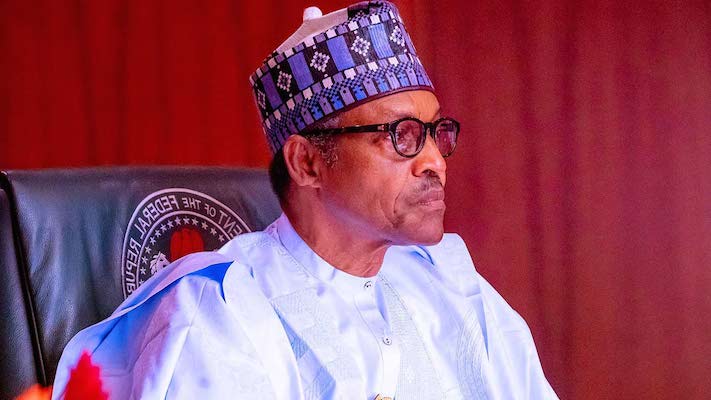
If President Buhari’s New Year’s message is his government’s New Year resolution, then it is, like most New Year resolutions: same old story. When President Buhari declared in his New Year’s broadcast that his government’s priorities for 2021 are Security, Economy and Anti-Corruption, termed “SEA”, the question is: what is new? The answer? Nothing!
First, take the acronym “SEA”. It suggests political seamanship. Political scientists make a distinction between two types of leaders: steersman and seaman. The political steersman acts as commander of the ship of state, providing political steering, articulating transformative visions and putting technocratic competence behind the visions to ensure they are followed by concrete actions and discernible outcomes and progress.
By contrast, the political seaman is a leader who provides no political steering, articulates no transformative vision, but is simply, like a seaman in a stormy weather, trying to keep the ship afloat and steady.
As Robert Jackson and Carl Rosberg said in their article on personal rule, political seamen, who are usually personal rulers, tend to be “old-fashioned, conservative system-maintainers rather than progressive nation-builders.” But as they further said, “the concept of governing as an activity of guiding a nation towards pre-selected, largely socioeconomic goals, is the primary standard against which contemporary governments are appraised.”

Since assuming office in 2015, the Buhari government has not acted as an instrumental agency of public policy by setting out great visions, backed by sound technocracy, to transform the socio-economic and political landscapes of this country. The World Bank, the IMF and foreign investors have repeatedly called for structural reforms to jolt the economy out of its sclerosis. However, what we have seen are some tinkering on the edges of reforms, such as the fiscally-driven removal of the oil subsidy and increasing of VAT rates, which, in themselves, will not turbo-charge economic growth.
What Nigeria needs is a truly competitive and open market economy, where business and investment confidence is robust, where economic activity is dynamic and high, where the private sector is the main driver of economic growth and where the government constantly creates an enabling environment for economic growth. But the fundamentals of Nigeria’s economy are weak, its structure is deeply flawed: it is too state-driven and state-dominated. What’s more, an economy that is 60% informal can’t generate growth and prosperity.
Read also: Buhari Seeks more Chinese support for infrastructure
If small businesses depend on Nigeria’s trade and commerce, how many of them have been destroyed by the over 15-month closure of the borders?
Yet, the starting point in transforming any economy, indeed any nation, is a leader who is a steersman, not a seaman, a leader who is a radical reformer, not a system-maintainer. Which is why political leadership, steering capability and consensus-building, to set strategic visions and effectively implement reforms, are key indicators of government effectiveness. But the Buhari government has failed to demonstrate these governance capabilities.
In his New Year’s speech, President Buhari kept using phrase “as your elected president”, as if Nigerians needed any reminding of that. But, despite being “elected”, he is still, nearly six years in power, blaming his predecessors for the current state of affairs in the country.

Recently, in his Christmas message that so irked the Presidency, Bishop Matthew Kukah, Bishop of Sokoto Catholic diocese, said that when Catholic bishops had an audience with President Buhari on assuming office in 2015, he shared his frustration over “the state of decay and rot that he had met.” According Bishop Kukah, “In frustration, I vividly recalled him saying that, from the decay and neglect, it seemed as if preceding governments had been doing nothing but just eating and going to the toilet!”
But, nearly six years on, Buhari still wants Nigerians to blame his predecessors for Nigeria’s current ills. In his New Year’s message, he said, “I call on all Nigerians to carefully recall the circumstances of our coming to office, the facts on the ground …”
Well, let’s recall two facts on the ground when Buhari took over in May 2015. One was that the economy was still growing, another was that Nigeria was not the poverty capital of the world. But his government’s misguided policies and lack of steering capacity pushed the economy into a recession, the first time in 20 years, and turned Nigeria into the country with the largest concentration of the extreme poor in the world!
President Buhari’s refusal to acknowledge that his government’s incompetence and policy failures have made the bad situation he inherited worse betrays an unwillingness to take responsibility, and be accountable, for his action and inaction in office. Buhari was elected to tackle the problems he met on the ground, not to complain and blame others for them after nearly six years in power! In Britain, he would be told politely: Get on with the job and stop whingeing! But he is not getting with it!
Which brings us back to his SEA agenda. The “S” is for security. In his New Year’s message, President Buhari promised “re-energising and reorganising the security apparatus and personnel of the armed forces and the police to enhance their capacity” to tackle the security challenges in the country. But one is entitled to ask: if reenergising and reorganising the forces is the solution, why hasn’t he done so over, at least, the past two years?
President Buhari refused, despite widespread public agitation, to replace the patently underperforming service chiefs because, according to him, the continuity of leadership is critical for success, even though that “success” has remained elusive. So, what do we make of his New Year’s “resolution”? Well, truth is, President Buhari is a system-maintainer, not a system-changer; therefore, the so-called “reenergising and reorganising” are likely to be a damp squib. So, the right response to that promise is: “I’ll believe it when I see it”!
Which brings us to the “E” in the SEA: the economy. President Buhari has been saying the economy was his priority since 2015 but virtually every policy of his government has undermined that promise. Take just one example. Buhari said in the New Year’s message: “With the recent opening of our borders, we expect that the pent-up demand of legitimate cross-border and international trade will boost the fortunes of many small businesses and agricultural enterprises that depend on Nigeria’s trade and commerce.”
The economic illiteracy behind that statement is mindboggling. So, if small businesses depend on Nigeria’s trade and commerce, how many of them have been destroyed by the over 15-month closure of the borders? Is business activity something you can turn off and turn on 15 months later without consequences? Where is the “pent-up demand”? Clearly, the president and government betray an utter ignorance of what it means to run a business, especially a small business!
The border closure was a bad policy, which has destroyed business activities in Nigeria. At best, it has driven several businesses into the informal sector. Opening the borders is welcomed, but it will not easily reverse the enormous damage already done. Sadly, there is nothing in Buhari’s New Year’s message that suggests his government will do anything differently on the economy this year, beyond more state intervention. It’s the same old statist agenda!
The last letter in the SEA – “A” – stands for anti-corruption. There’s no space to explore this, but it’s worth noting that, despite the anti-graft hype, Nigeria’s ranking on the Transparency International’s corruption perception index has not improved since 2015. And nothing in President Buhari’s New Year’s message suggests the situation will change this year.
So, if the Buhari’s New Year’s message is his government’s New Year’s Resolution, well, it followed the tradition of all New Year’s resolutions – a recycling of failed old promises, presented as new!
But President Buhari’s lack of ambition is regrettable because this is a year when, without political leadership and steering capacity, politicking for the 2023 elections will replace governing! What’s more, Buhari’s political seamanship will take Nigeria nowhere!