The year 2020 was a challenging one for the insurance industry like many other businesses, both in terms of growth expectation and business continuity due to the Covid-19 pandemic, a novel disease that threw the whole world into confusion.
The industry had started the year with high expectations from an ongoing recapitalisation exercise, with several plans to raise funds from the capital market to comply with the regulator’s requirement.
With the Covid-19, which led to a near shutdown of economies across the world and lockdown by different governments, the recapitalisation exercise suffered setback as there was paucity of funds and drop in investor appetite across all levels.
To salvage the situation, the National Insurance Commission (NAICOM) announced extension of the recapitalisation deadline to September 30, 2021, and segmented compliance into phases, stating that the objective of the recapitalisation had been eroded by the Covid-19 pandemic and could not be continued as planned.

The Covid-19 did not impact the recapitalisation alone, it also affected insurance consumption as individuals and households witnessed drop in standard of living, access to credit, low disposable income and of course low priority for insurance spend.
This affected growth of the business in terms of premium generation, profitability and returns on investment to shareholders, which will become more visible when the 2020 accounts of companies are concluded.
At the peak of the pandemic, a new challenge was thrown to insurance industry in terms of creating appropriate products for the new disease. This attracted attention to the need for health insurance, particularly frontline health workers that were directly involved with taking care of Covid-19 patients across the country.
More than ever, this rekindled the relevance of insurance to protection of life, with government now realising the need for insurance, particularly for healthcare workers and frontline respondents at time of emergencies like Covid-19.
Another challenge that followed the Covid-19 was the business continuity plan, again insurers being a service industry was forced by Covid-19 to begin to see the need for full technology adoption, as physical distancing and working remotely became the new normal. So, insurers were forced to make new investments in technology in other to remain relevant and also be able to serve their customers well.

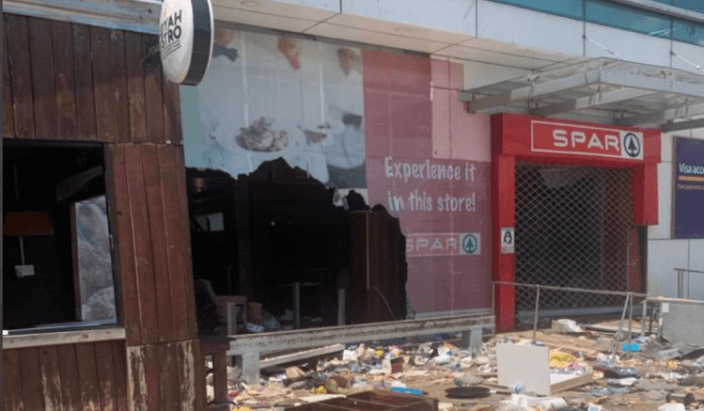
The year 2020 again cannot be complete without a mention of the EndSARS protest, which resulted in a huge loss for the insurance industry, looking at the level of damage and destruction of assets that followed the incident.
Though no value has been put as to what the worth of losses to businesses and institutions amounted to, but this should have been in billions of naira if the assets were insured or adequately insured.
But the experience of that incident, again has further rekindled the need for insurance and adequate insurance of assets and properties, which is expected will drive insurance uptake going forward.
Though insurers have expressed their readiness to pay all genuine claims that will arise from the EndSARS damages, but feelers are that most victims did not insure and where they insured, they were not adequately insured.
What this means is that most of the insurances were not with policy extension for riot and civil unrest, which should cover the EndSARS kind of losses.
Industry experts expect that purchase of insurance going forward will look at extension of covers so that in the event of such damages due to riot and civil unrest, victims can be compensated adequate. In the current situation, what many victims will enjoy is ex-gratia from insurers if they have been time-customers and willing to continue with their insured.
The NAICOM had on June 3, 2020, extended insurance companies recapitalisation deadline to September 30, 2021, with first phase to end December 31, 2020.
NAICOM in a revised circular sent to insurance and reinsurance companies titled: ‘Segmentation of minimum paid-up share capital requirement for Insurance and Reinsurance Companies,’ said, “The incidence of Covid-19 pandemic has made it difficult to proceed with the 31st December 2020 recapitalisation deadline earlier slated.”
The statement signed by Pius Agbola, director, Policy and Regulation in NAICOM, said a review of the recapitalisation deadline therefore became imperative in order to mitigate likely negative consequences of the pandemic on the exercise.
According to the Commission, the exercise will run in two phases as follows: 50 percent of the minimum paid-up capital for insurance and 60 percent for reinsurance shall be met by 31 December 2020, while they will be required to fully comply with approved minimum paid up capital not later than 30th September 2021.”
The segmentation shows life companies operating currently with N2 billion will increase to N4 billion by December 31, 2020, as first phase and to N8 billion by September 30, 2021; General business companies operating currently with N3 billion will increase to N5 billion by December 31, 2020, as first phase and to N10 billion by September 30, 2021; Composite business companies operating currently with N5 billion will increase to N9 billion by December 31, 2020, as first phase and to N18 billion by September 30, 2021; while Reinsurance companies operating currently with N10 billion will increase to N12 billion by December 31, 2020, as first phase and to N20 billion by September 30, 2021.