As Nigerian politicians intensify their campaigns and strategies to capture power in 2019, the lessons coming from China’s 40-year reforms have been propounded as the ultimate example that every genuine politician in Nigeria must embrace to transform the Nigerian political economy and redirect the nation towards its manifest destiny.
This was the crux of a One-Day seminar with the theme “China’s 40 years of Reforms and Opening Up: Significance, Implications and Lessons” organised in Abuja by the Center for China Studies (CCS), an intellectual think tank that has evolved various ways to deepen intellectual intercourse, economic, political and diplomatic ties between Nigeria and China.
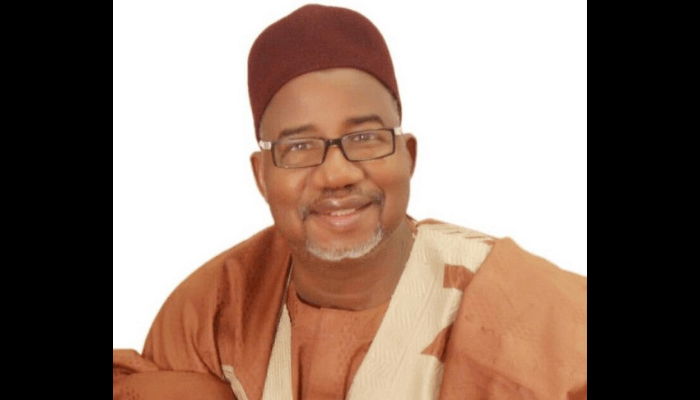
Experts under the chairmanship of former Minister of Foreign Affairs, Aminu Wali, used the occasion at the weekend to interrogate the political trajectory of Nigeria and bemoaned the myriad of crises bedeviling the nation potentially blessed but languishing at the bottom rung of civilized nations.
The 2019 elections according to the experts are a pointer to the need for those jockeying for power in Nigeria to look at the fundamental need of reforms on the political, social and economic spheres of the nation if Nigeria is not to plunge further into the dungeon of backwardness.

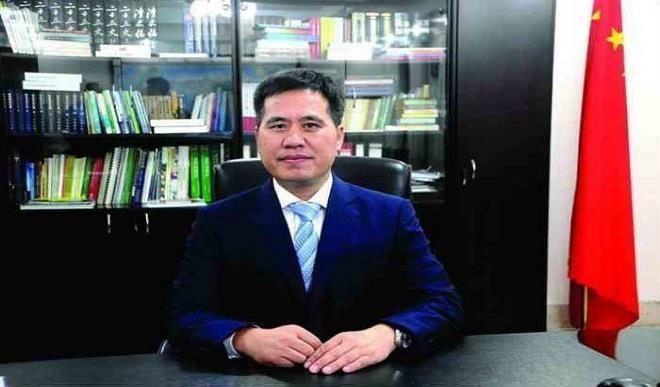
Making his remarks during the seminar, the Chinese Ambassador to Nigeria, Zhou Pingjian, noted that the reforms embarked upon by former Chinese leader, Deng Xiaoping in 1978 was China’s second revolution, saying “the reforms and opening –up drive over the past four decades has made great impacts on China. The Chinese people have turned China into the world’s second biggest economy. China’s share in the global GDP increased from less than 2 percent in 1978 to more than 15 percent in 2017, with an annual growth rate of 9.5 percent on average, dwarfing the 2.9 percent growth rate of the world economy during the same period.”
During this period, China’s import and export of goods have grown by 198 times and those of services by 147 times. China has attracted more than $2 trillion in FDI. China has become the world’s biggest trader of goods, the biggest tourism market and a major trading partner with over 130 countries. China raised its per capita disposable income by 22.8 times and lifted 740 million people out of poverty.
Also remarkable is that China’s poverty head count ration decreased from 97.5 percent in 1978 to 3.1 percent in 2017. China also succeeded in transforming a closed and semi-closed economy into a fully open economy. From “ bring in” to “going global’’, from WTO accession to the Belt and Roads Initiative, China has grown by embracing the world and the world has also benefited from China’s opening –up. In the years since the global financial crisis, China has contributed over 30 percent of global growth.
These remarkable achievements in China provoked a thorough assessment of Nigerian condition, which progressively degenerated in successive years. Nigeria’s GDP growth rate has plunged to 1.5 percent from 1.9 percent in the last two months; inflation remains at double digit of 11.28 percent, Foreign Direct Investment has reduced by half and capital in-flows have also drastically reduced. Nigeria is today rated the poverty capital of the world with 87 million of the population living under extreme poverty just as 10 million people are reported to have lost their jobs in the last three years of the current administration. Nigeria suffers serious infrastructure deficit and is heavily indebted today because most of its funds are looted in mindless acts of corruption.
These and many more unimpressive performances of once promising country had compelled the experts to seek better ways to reform the Nigerian political economy, reconfigure its social milieu and set new standards for people seeking political offices in the next political dispensation.

Making his submission during the event, the Director of CCS, Charles Onunaiju, said, “There must be something about Nigeria that should be efficient. That is the lesson from China’s reforms. Nigeria must start interrogating and looking itself in the mirror,asking serious question about the best way forward. When China started its reforms the world took very little notice but forty years down the line the world has taken full notice.
“We have to be serious about economic reforms. When China started in 1978, it decided to build several seaports, airports steel mills, power plants and it was focused on these. We need strong institutions, a strong state that cannot be compromised, that cannot be pocketed, that is not amenable by vested interests.
“But are we willing to deal with the vested interests that derail the best of policies, that ambushes policies and pockets it? Are we willing to deal with these vested interests that are a state within a state? These vested interests that talk about law in the day time and subvert it in the night, can we deal with it? This is the challenges,” he said.
He added that the lesson from China in the past 40 year is that Nigeria can also do something that is original by taking the belt from everywhere but ensuring that the imprint is ours. “The architecture should reflect our existential reality, our historical process, our national condition. It is only in that respect that we can get it right. So that is the lesson and significance and even the implication of China’s reforms,” he said.
Also reacting to the call for by some National Assembly members to return Nigeria to parliamentary system of government, Onunaiju noted that it was the instability of the parliamentary system that led to its demise even as he advocated for a political process that is more inclusive, more consultative and less confrontational.
“We can build institutions that are more inclusive. We can have more proportional representation in which any political force that meets a certain criteria enters the parliament and has a stake. We have not generated sufficient consensus to drive the process. So I think we can begin to develop a process that is consultative, a process that is inclusive, a process that is accommodative, a process that keeps into account every significant social force. No social force should be left behind, the working people, peasant, the academia, the professionals.
“We can have a second chamber of the people which represent ethnic nationalities; represent professional groups, represents religious groups, a second chamber that is not the Senate that is more inclusive and representative of the people. We can call it the Assembly of the people; it could become a consultative chamber that prepares the way for proper legislation. That is the way to go,” he said.