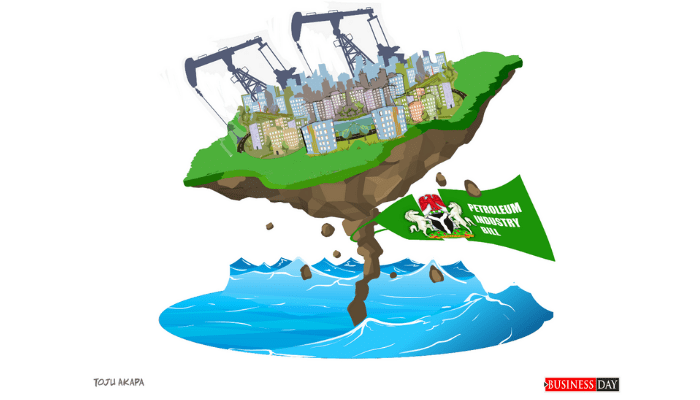
The Petroleum Industry Bill (PIB), supposed to rewrite Nigeria’s decades-old relationship with its foreign oil partners and alter everything from fiscal terms to the structure of the state-oil firm, has missed at least 20 deadlines since conception in September 2008, a BusinessDay analysis has revealed.
The bill is still stranded at the National Assembly in its infancy despite the new normal that is changing the course of global events, as most oil-producing countries are resigning themselves to the uncomfortable fact that a significant amount of their oil and gas reserves will end up totally worthless.
The PIB has become synonymous with missed deadlines.
In the latest setback on Thursday, South-South senators and others from the oil-producing states had a showdown as the Senate considered the report of the Joint Committee on Petroleum (Downstream) Petroleum (Upstream) and Gas Resources Petroleum Industry Bill, PIB.

The issue that triggered the rowdy session was the retention of the annual contribution of 2.5 percent actual operating cost by oil companies to the Host Community Development Trust Fund in the report that would be considered by the senators.
The Nigerian parliament is likely to need several days, if not weeks, to debate the hundreds of clauses in the lengthy and wide-ranging bill, but senators are due to go on recess in early July; so, if the package is not approved within the next two weeks, it cannot become law until September.
The last attempt to pass the piece of legislation was halted when President Muhammadu Buhari refused to give assent during the eighth Senate under ex-Senate President, Bukola Saraki.
A reason for the rejection of the bill was that there were some sections that sought to whittle down the powers of the Minister of Petroleum Resources and vest the same in some technocrats.
Read Also: June passage of PIB suffers fresh delay over increase revenue for host communities

“PIB is jinxed for the umpteenth time, following altercation and divergent views between members of the National Assembly, oil-producing communities, organised labour and various interests’ groups at the public hearings on the bill,” Kelvin Atafiri, who runs Cavazanni Human Capital Limited, an investment firm exposed to the oil and gas sector, says.
The first government official to promise passage of the PIB was late Umaru Musa Yar’Adua after the bill was first presented to the National Assembly for consideration in 2008, however, it never happened.
In 2009, the then-Senate joint committee headed by Lee Maeba, conducted the first public hearing on it in 2009, with the aim of passing it into law that same year, however, it failed to come into limelight.
When Vice President Goodluck Jonathan became acting President in February 2010, Nigeria’s minister of petroleum, Deziani Allison-Madueke, told Reuters in July 2010 that the PIB would be passed by the end of August 2010.
Then in October 2010, she said the bill would become law “well before the end of this year (2010).”
On a state visit in February 2011, Jonathan assured the Turkish President that he would sign the PIB 1 into law before May 29, 2011.
On March 11, 2011, the Nigerian lawmakers announced it delayed the PIB’s second reading until March 15, 2011, as some senators complained of inadequate time to look over the then-latest draft of the bill. By March 16, 2011, the lawmakers went on recess and did not return until after the elections.
Also, a seven-man task force was inaugurated in Abuja on January 19, 2012, tasked with reviewing each section of the draft PIB, in the hope of easing the passage of the new draft through the National Assembly, however, nothing happened.
On July 18, 2012, President Jonathan presented a new version of the PIB to the seventh session of the National Assembly for consideration and enactment.
Throughout August and December 2012 various stakeholders in the industry, including Nigerian labour unions and IOC representatives, were invited to review and comment on the committee’s new draft of the PIB, which suggested that a revised and final draft PIB was imminent, however, it was never passed.
On March 7, 2013, former President Jonathan claimed everything was going well and that the Bill would be passed.
Speaking during a visit to the Netherlands, Jonathan gave the assurance that PIB would be passed into law that year, however status quo remained.
“The National Assembly will pass the PIB in 2013,” Jonathan was quoted to have said.
When President Muhammadu Buhari came to power in 2015, the passage of the PIB was seen as “critical for the revival of investments into the sector,” according to a presidential report from the time seen by BusinessDay.
The administration’s plan had been to pass the PIB within 100 days of taking power, according to the report, which noted that “uncertainties over the fiscal terms from an unapproved PIB ” were a key issue in Nigeria’s oil sector.
Again in 2018, a version of the bill, the Petroleum Industry Governance Bill (PIGB) was passed by the eighth National Assembly; however, President Buhari refused to assent to it.
However, members of both chambers of the National Assembly, resuming work after their inauguration on June 11, 2019, pledged to break the “jinx” around the PIB and bring about reforms in the oil sector.
On January 1, 2020, Timipre Sylva, minister of state for petroleum resources, said the review of the PIB was at an advanced stage and full passage of the bill was expected mid-2020, however, nothing happened.
At the 178th Extraordinary Meeting of the OPEC Conference held in May 2020, Sylva switched the pendulum again to “later this year.”
In January 2021, the government once again failed to meet its previous targets as Sylva for the umpteenth time changed the goalpost to June 2021.
“We are hopeful that between now and June, they will pass the PIB, I don’t think we are far away with the passage of the PIB,’’ Sylva said in May 2021.
At the 2021 Nigeria International Petroleum Summit in Abuja, the president of the Senate, Ahmed Lawan, assured investors that the National Assembly expected the bill to be passed before the end of July.
“As I speak, our joint committee of both Senate and the House on the PIB are about to conclude writing the report, which will be submitted to both chambers of the National Assembly. Our expectation is that we will pass the PIB within this month of June by the grace of God,” he said
Despite decades of sluggish progress, experts say the PIB like the ones that have preceded it ignores an open secret concerning how the world is undergoing an energy transition from fossil fuels to a system based on renewable energy sources.