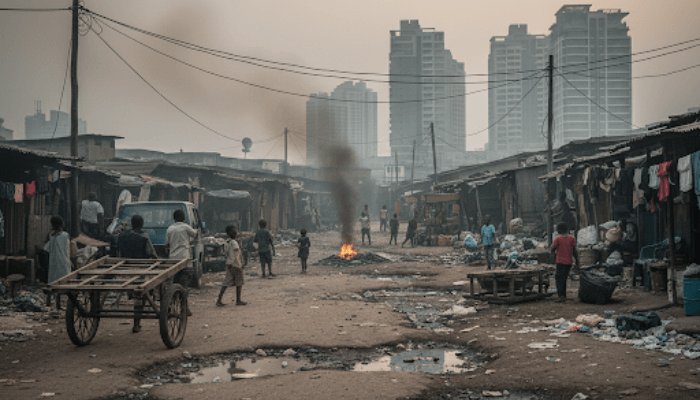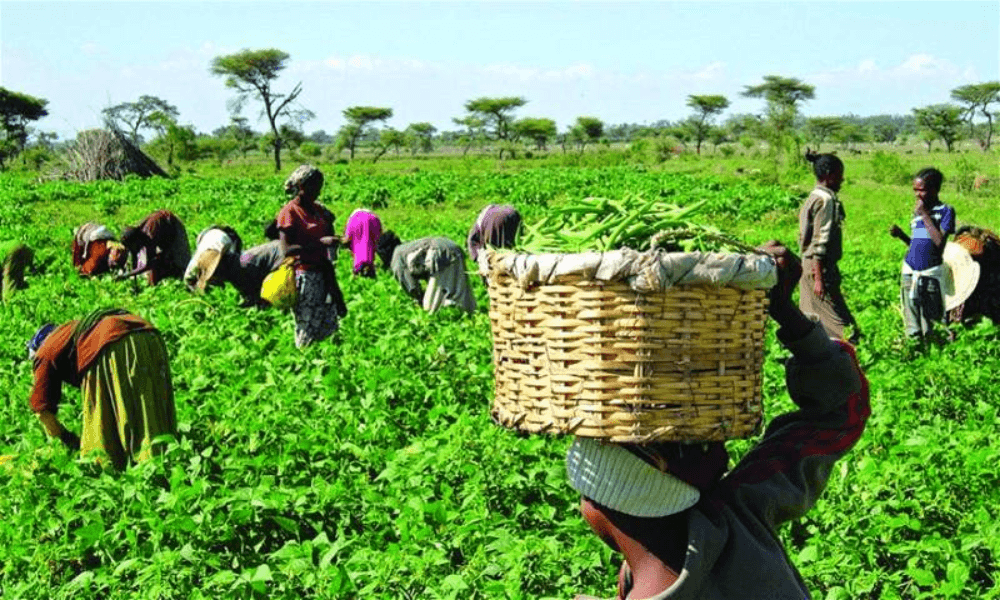
There is no planting season without safety. And there is no harvest without peace. That is the simple truth buried beneath the complexity of Nigeria’s deepening food crisis. For over a decade, policymakers have touted agricultural development as the path to economic renewal.
Yet across Nigeria’s Middle Belt and northern regions—once the breadbasket of the nation—the fields are falling silent. Not from drought, but from fear.
The problem is no longer theoretical. In Benue, Kaduna, Niger, Zamfara, and Plateau—key food-producing states—armed violence has turned farming into a fatal gamble. In June 2025, coordinated attacks in Benue displaced entire communities and claimed dozens of lives. The state, once proud to be called the “Food Basket of the Nation,” now struggles to feed itself.
According to the Internal Displacement Monitoring Centre, over 295,000 people were forcibly displaced by conflict in 2024 alone. These are not abstract numbers; they represent the crumbling spine of Nigeria’s food economy.

Farmers who flee do not plant. Livestock that cannot move do not breed. And markets that fear violence do not open.
The Myth of Agriculture Without Security
A dangerous assumption persists in our national discourse: that we can scale agricultural productivity without first securing the people who produce our food. This is a fallacy. You cannot farm on a battlefield. Agriculture depends not just on inputs like seeds and fertiliser, but on security, access, and institutional trust.
Yet, to suggest that we must wait for total peace before investing in farming is equally flawed. Some of the most effective food resilience programs in the world—from Colombia to Somalia—have been implemented in active conflict zones, precisely because food production can reduce tensions and restore livelihoods. The key difference is this: those interventions were adapted to the local security context and deliberately linked to peacebuilding efforts.
In Nigeria, we have instead pursued fragmented, uncoordinated solutions. Ministries announce new seed initiatives, while military operations push farmers off their land. State governments promote ranching, while federal silence allows open grazing to persist in contested areas. Donors fund local training programs, while national logistics chains collapse under banditry.

A System That Cannot Coordinate Cannot Feed
Nigeria’s food crisis is not just a product of violence; it is the consequence of policy incoherence, poor governance, and institutional fragmentation. A 2024 study revealed that over 52% of farmers in Niger State experienced food insecurity due to blocked routes, market disruptions, and fear of attack. Even worse, 84% of livestock farmers in North Central Nigeria reported production losses directly linked to insecurity.
And yet, the federal government continues to treat agriculture and security as separate silos.
Where is the national task force on rural food protection? Where is the rapid response strategy to defend displaced farmers during planting season? Why does Nigeria still lack a Food and Human Security Coordination Mechanism capable of linking military operations, local peace actors, market access agencies, and agricultural innovators?
Meanwhile, the price of beans has surged 282% year-on-year, and the FAO estimates 33 million Nigerians may face acute food insecurity in the 2025 lean season—a jump of seven million from the previous year.
Read also: Sowing in uncertainty: Why security is the soil for food security in northern Nigeria
Scaling What Works, Fixing What Doesn’t
The country is not without assets. Projects led by Sahel Consulting, Gates Ag One, and state ministries in places like Plateau, Adamawa, and Nasarawa are demonstrating the power of targeted seed systems, dairy development, and ranching policy reform. But these are small-scale interventions operating in isolation, not a coordinated national rescue.
The solution is not to wait. It is to scale what is already working—but within a structure that embeds human security into every agricultural investment. That means:
Deploying security corridors for farmers during critical planting and harvesting periods.
Creating a federal database of conflict hotspots affecting food systems, updated in real time.
Enabling a multi-stakeholder National Food Security and Peace Commission to drive coordination.
Funding early warning systems and farmer-herder dialogue platforms beyond pilots and into permanent infrastructure.
Auditing the National Agricultural Transformation Agenda for gaps in conflict sensitivity and implementation breakdown.
Food Security Is a National Security Priority
Nigeria cannot afford to treat food as charity or agriculture as a side hustle of development. In today’s world, food security is strategic power—just ask countries that use grain diplomacy as a weapon. If we fail to act, we risk mass hunger, rural collapse, and further loss of legitimacy by a government unable to protect its citizens from either poverty or predation.
Let us be clear: a seed is not a solution unless it is safe to plant. We must move beyond pilot projects and donor dependence toward a nationally owned, security-conscious, and scalable food policy framework. Until we do, Nigeria will remain a country where the land is fertile but the harvest is meagre.