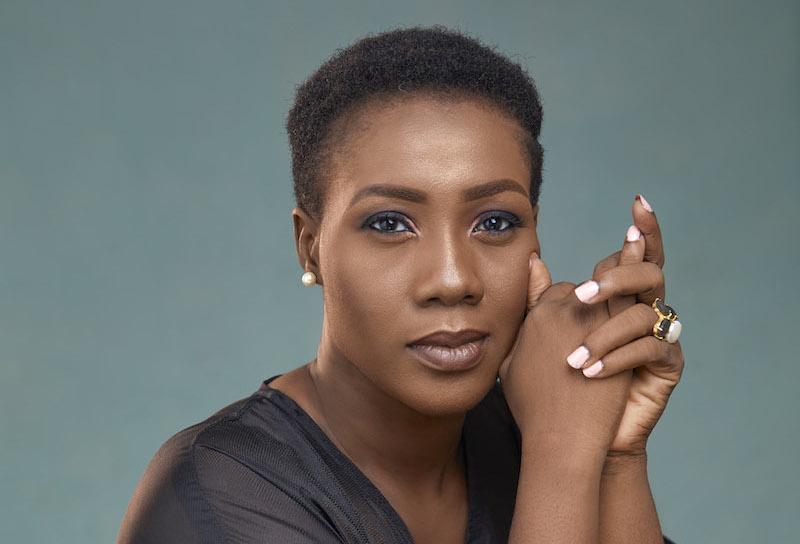
As Nigeria joins the rest of the world today to celebrate the International Women’s Day, someone is thinking how to make women more successful and value-adding to their families and the larger society. In this personality interview, Wunmi Olufeko, founder and creative director, Design for Love (DFL), shares with MODESTUS ANAESORONYE her passion, love for women independence, and starting a new business in Nigeria. Excerpts:
Who is Wunmi Olufeko?
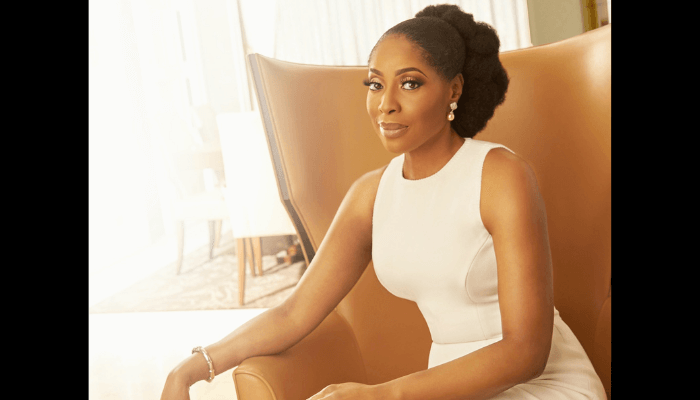
Oluwunmi Funbi-Olufeko is the founder and creative director, Design for Love, one of the fastest growing Nigerian fashion brand started fifteen years ago out of sheer love and passion. Wunmi is spurred by a desire to drastically reduce poverty and unemployment by expanding her value chain to include more women who produce local fabrics as well as increase factory production. Her desire to continue to challenge the statuesque has expanded her vision to infuse African prints into daily work wear by scaling up their current business through collaborations and investor opportunities on the African continent. Wunmi is as vivacious as the colours on her prints and is happily married with three kids, and because that clearly isn’t enough chaos, she also enjoys travelling and still manages to read one book a month

How was growing up like for you?
Growing up was fun as my parents actually allowed me have some level of artistic expression, and being the first, I was very independent. I was also exposed to business early in life as both parents were business owners. My dad had a fleet of buses and ran a transportation company while my mum was a trader at the Idumota market and every night she would let me count the money she made from her day’s sales. So, that was how I developed a flair for trade or selling which eventually led me to running DFL.
What or who inspired the creation of Design for Love (DFL) and why the name?
My inspiration simply to express myself differently in the workplace by creating African inspired fabric pieces that could serve as everyday work wear. The name was a play of words, being for the love of design because I have always loved anything that has to do with designing or creating.

Could you briefly share your startup story?
I started in 2014 in Abuja. Initially, I was selling Ankara fabrics and part of my selling strategy was showing my potential customers what they could make with my Fabrics, so I always had a sketch pad with me. This eventually evolved into me creating Ankara work wear shirts for both men and women. I was doing this and working a 9-5 and after a year and half of juggling both, I called it quits with my day job to learn pattern drafting at a tailoring school in Lagos. After my training, I just kept going one day at a time.
Asides financial value, what else was your mission from the outset?
I wanted to build a business for women, run by women. I was raised largely by my mom who was a single mom for the most part and I saw how financially stressful it was for her to raise 4 kids alone; and she gave up a lot to ensure we were all okay. So, when I started employing staff, I wanted more women because I realised that women needed to be more financially stable as the task of raising their children fell largely on their shoulders. I particularly want more young women to develop themselves and be independent. And this is what I have been able to do in the last 16 years, encouraging the young women that work with me and ensuring that I can be a motivation for them to achieve all they aspire to.
What would you say is unique about your brand?
Oh that’s simple. We have a keen eye for colours and patterns and we are able to mix prints and patterns effortlessly
So, DFL would be celebrating its 16th anniversary this year; what would you say is your greatest achievement so far?
I have got a couple. I was able to execute a contract for producing 1200 laptop bags at my factory in Lagos within one month. Our laptop bags are quitted and involved a lot of print matching and handwork. And this was important because of the time frame involved. By my estimation, it’s the same time it would have taken a small or medium Chinese factory to make and deliver the same bags to Lagos.
The second is setting up and managing 2 retail spaces in Lagos. Both of which stock our Ankara outfits and anyone can walk in to make a purchase.
Research has shown that most businesses fail within the first 2 years. How have you been able to stay in business in these 16 years and what has been your biggest challenge?
We have thrived by constantly studying the market in order to understand trends and competition. But really, it’s not about what others are doing. For the large part, it’s about staying focused and not being scared to reinvent oneself. As a business, you must experiment a lot and while some experiments will turn out bad, a few will be good and make up for the failed experiments
The biggest challenge has been government policies that are often times unfavorable to local businesses and then I think that the system can intimidate you, if you don’t know your rights. I’m referring to certain bogus taxes that you could be asked to pay for by local government officials.
What are your recommendations to the various governing bodies about the aforementioned challenges?
I think that stakeholder participation is required before certain policies are made. Our opinions need to be taken into consideration and they need to provide accurate information regarding things like taxation and government levies. Business owners should be able to access up to date information easily on agency websites because some government officials use this lack of information as means for extortion.
Can you share some success habits or tips that have helped you?
I constantly read and research. It doesn’t mean I always take myself seriously or feel the need to share the things I know but the truth is, I dislike being Ignorant so I am constantly learning.
Being in the industry this long, how were you able to cope with all the competition?
I literally face my front. Laughs. I have learned to just ‘do me’. I am my authentic self. Even though I am studying what competitors are doing, I don’t allow it derail me from what I want to achieve.
Have you at anytime had second thoughts on DFL or guessed its potentials?
Yes, definitely, many times. Business is never one smooth journey. It is a bumpy twisted trip. There are times I wish I could just throw in the towel but those times eventually pass and I have found that there is something to learn from your low moments. I guess the downs help you appreciate the ups. I mean, I have cried and I have been overwhelmingly happy too.
If you could offer a piece of advice to someone just starting out, what would it be?
Three nuggets: 1. Lean startup. 2. Test the waters and 3. Scale up.
If you weren’t in the fashion business, what would you have been doing?
I would have still been designing. May be, houses.
If you could have a do over, what would you do differently?
Nothing, everything in life has a reason for its happening
What are some long term projections you have for the business?
Expanding the retail space for made in Nigeria fashion and making it more accessible even outside Nigeria. My goal is to make DFL a global fashion brand. Hoping this does not sound cliché. But we are working hard at this even at the moment.
Entering the new decade, what should we be expecting from you and DFL?
From DFL, more options in terms of styles and service delivery. We keep encouraging people to shop via our website because the internet is the future of service delivery. From me, I guess being more vocal in the fashion industry and helping newer fashion businesses weather the challenges of running their business in Nigeria.