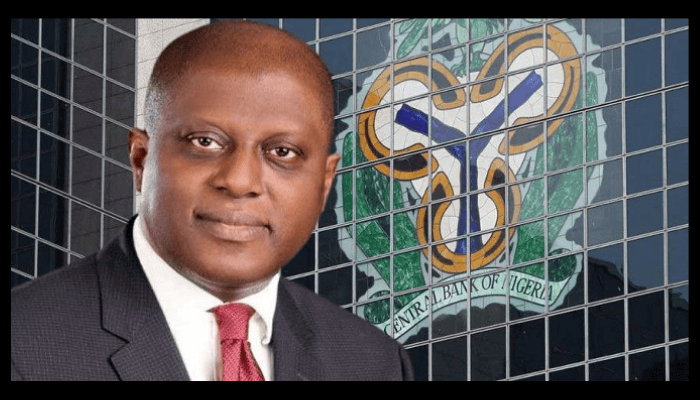
The Nigerian economy faces mixed consequences from the Central Bank’s 25 basis-point interest rate hike on Tuesday, with clear winners and losers emerging.
While higher rates are a powerful tool for taming inflation, they also raise borrowing costs, discourage investment, and risk slowing economic growth. Economists argue that although monetary tightening is necessary, its impact could be amplified by aligning with supportive fiscal policies. This policy shift creates both winners—such as banks and fixed-income investors—and losers, including businesses dependent on credit and sectors struggling with high input costs. The challenge remains for policymakers to strike a balance that controls inflation without hampering economic expansion.
Economic theory often describes interest rates as a double-edged sword, cutting both ways—helping to control inflation but also influencing economic growth.
On one side, raising interest rates can help tame inflation by discouraging borrowing and cooling down consumer spending. On the other, it risks stifling growth by increasing the cost of credit, potentially hindering investments and leading to higher unemployment. The balance is delicate: overly high rates can choke growth, while rates that are too low can ignite runaway inflation.

The International Monetary Fund (IMF) underscored this challenge in its 2023 Global Financial Stability Report, noting that “Central banks could keep interest rates higher for longer as they fight to curb inflation that remains stubbornly high in many countries—and slow their economies by doing so.” This tension is felt in developing economies and perhaps even more so in Nigeria, where the Central Bank of Nigeria (CBN) has taken an aggressive stance on interest rates.
Despite Nigeria’s GDP growth of 3.46% in Q3 2024 and a reduction in unemployment to 4.3% in Q2, inflation has risen to a worrying 33.88%. Many are beginning to ask if the CBN’s approach to interest hikes is effective, which is now 27.5 percent, especially considering that inflation could be driven by fiscal deficits, an area that monetary policy may not address directly. Some analysts argue that sustained rate hikes are necessary, but others warn that without fiscal policy alignment, these hikes may not yield the intended results.
Bismarck Rewane, managing director of Financial Derivatives Company Limited, cautioned during his October 2024 presentation at the Lagos Business School that prolonged tightening could discourage investments and potentially pull back economic growth. Rewane emphasized that while monetary policy is necessary, it’s not sufficient alone—alignment with fiscal measures is crucial for effective inflation control and sustainable growth.
Olusegun Omisakin, chief economist at the Nigerian Economic Summit Group (NESG), commented similarly on Channels television after the CBN’s last interest hike in September. He noted that while higher interest rates can be painful, inflation’s impact on the economy is even more devastating. Omisakin believes the CBN is on the right path, arguing that without controlling inflation, the economy would face worse consequences.
In any economic policy, there are always winners and losers. Policymakers must navigate these trade-offs, ideally striving for a “Pareto improvement” where at least one party benefits without leaving others worse off. Yet, as history shows, such outcomes are rare. More often, policies benefit some groups at the expense of others, and interest rate hikes are no exception.

The Losers
The real sector—which includes agriculture, manufacturing, construction, and mining—often bears the brunt of rate hikes. According to Lagos-based analyst Israel Odubola, “For sectors already facing currency volatility, high energy costs, and declining consumer demand, another interest rate hike feels like salt on the wound. It’s likely to discourage expansion in an environment already fraught with risk.”
Businesses that rely heavily on bank credit and individuals with personal loans will also face challenges. With borrowing costs climbing, consumers and businesses will have to make hard choices, cutting back on spending or postponing investments. This, in turn, could slow down the very economic growth that policymakers hope to foster.
The Winners
However, not everyone loses. Investors, particularly in fixed-income markets, stand to benefit. A fixed-income analyst noted, “Savers and fixed-income investors are among the biggest winners, as they enjoy better returns on savings accounts, fixed deposits, and government bonds.” Higher interest rates mean savers earn more on their deposits, while bondholders see an uptick in interest income.
Banks are also well-positioned to gain. With higher lending rates outpacing interest paid on savings accounts, banks can widen their profit margins. This scenario could prove especially advantageous for the banking sector, which thrives in high-interest environments.
Additionally, higher interest rates can attract foreign investors looking for strong returns, resulting in capital inflows that strengthen the local currency. This effect has benefited the CBN in the past, with Nigeria’s external reserves recently reaching $40.88 billion as of November 21, 2024.
In conclusion, the CBN’s continued rate hikes create a mix of outcomes across sectors and socioeconomic groups. While interest hikes may be an essential tool for controlling inflation, they require careful coordination with fiscal policies to avoid stifling the broader economy. For now, the winners and losers of this policy will watch closely to see whether the CBN’s strategy will achieve the delicate balance Nigeria’s economy desperately needs.