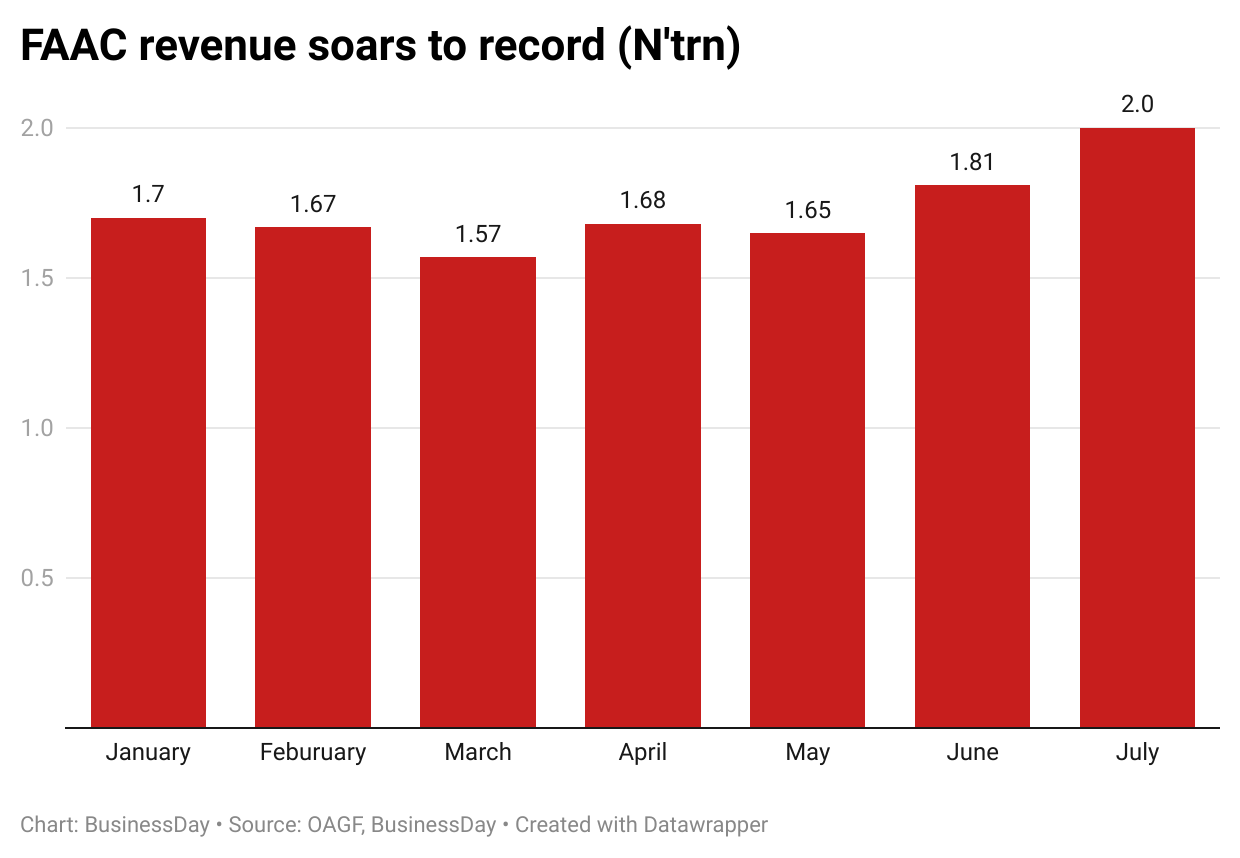
Nigerian states are swimming in more cash now than ever before, thanks to Federal Account Allocation Committee (FAAC) largesse that has swelled their purses and created more fiscal space to fund key infrastructural projects.
But while total distributable FAAC revenue in Africa’s most populous nation reached a record N12.08 trillion between January to July 2025, spending on these key infrastructural projects like schools and hospitals remains suboptimal.
The seven-month earnings represent 78.19 percent of the total federally generated revenue of N15.45 trillion recorded last year. With this momentum, the revenue is on track to hit the highest level on record this year.
Analysts at FBNQuest Merchant Bank said the “solid revenue outturn” reflects the impact of ongoing fiscal reforms and enhanced revenue mobilisation efforts by the President Bola Tinubu’s administration.

“These reforms—ranging from improved tax collection mechanisms and digitalisation of revenue processes to tightening controls on leakages—have significantly boosted government earnings,” the Lagos-based research and advisory firm said in a note on Monday.
Nigeria’s FAAC revenue surge came after two years the Tinubu’s government scrapped costly fuel subsidies, a policy shift that meant saving over $84 billion previously channeled to the erstwhile subsidies that evidently became unsustainable.
The three tiers of government have seen an upward move in revenues since 2023. Sub-nationals’ share of FAAC revenue has particularly seen a significant jump over the past three years. The combined revenue disbursed to the 36 states in the months through August soared to N4.08 trillion.
That’s far more than N3.58 trillion received throughout 2023 and accounts for 70.2 percent of the total N5.81 trillion last year, buoyed by an aggressive revenue mobilisation push, swelling oil receipts, and a windfall from exchange rate gains that’s gradually drying up.
The revenue distributed to the 774 local government councils also ballooned to N2.58 trillion in the period under review, but motorable feeder roads and quality basic education are scarce to come by.

The country accounts for 15 percent of the global out-of-school children, with 18.3 million children shut out of the four walls of the classroom due to worsening insecurity and deepening poverty, according to a 2024 report by the United Nations Children’s Agency (UNICEF).
The FAAC windfall is yet to trickle down to the country’s healthcare system, where its expenditure per person slumped from $102.4 barely 10 years ago to $90.92, according to the World Bank.
That dwarfs South Africa’s $569.84, nearly doubles Egypt’s $170.98, and almost triples the low and middle-income countries’ benchmark of $296, data from the Washington-based lender shows.
According to estate agent Knight Frank, Nigeria requires an extra 386,000 hospital beds at an estimated investment cost of $82 billion to bring the country up to the global average of 2.7 beds per 1,000 people.
Tajudeen Ibrahim, director of research and strategy at Chapel Hill Denham, said the bumper FAAC receipts may not immediately translate to investments in infrastructure due to a “gestation” period, stressing that key investments may be seen after a 12 to 18-month cycle.
“All of those savings have to pile up to a particular amount before being allocated and then approved for certain investments,” Ibrahim said, urging the government to brief the public “as effectively as possible” on project plans.
Meanwhile, states are embarking on infrastructure projects, but not the ones directly beneficial to the citizens they govern.
Ogun, with the worst road network in South West Nigeria, according to a BusinessDay’s survey in 2024, embarked on an $800 million cargo airport in what was described as the biggest investment in the country.
Zamfara, ravaged with insecurity and worsening poverty, also has an airport that will be in operation in less than four months, for a state that is about a quarter of the population of Lagos.
Critics argue that many of the airports being built do not reflect the realities of the citizens who have endured the worst economic downturn in recent times.
Embarking on capital intensive constructions such as airports could encourage foreign investors to come to the country, according to Ibrahim who is an economist.
“The first destination of any foreigner into your country, whether an investor or otherwise, is the airport and the kind of ambience that they see there in terms of infrastructure will give them a picture of what the inside looks like.”
He argued that key infrastructure such as airports will help lure in much needed foreign direct investments wherein investors will establish businesses, and Nigerians will benefit from it.
“I think the problem we have is that we want quick wins. And honestly speaking, I’m not sure there is any administration that can make that materialise in this current Nigeria.”
For Ikemesit Effiong, partner and head of research at Lagos-based consultancy and data analytics firm, SB Morgen Intelligence, the sub-nationals have not well utilised the record inflows flowing into their coffers via the rebound in FAAC revenue.
“This windfall should be treated as seed capital, not pocket money. States can use it to crowd in private financing and build long-term infrastructure rather than chasing short-term populist projects,” Effiong said.
“If managed wisely, today’s FAAC largesse can lay the foundation for tomorrow’s growth.”