The International Monetary Fund’s (IMF) “Great Tightening” has ushered in an era of rising interest rates and stricter monetary policies, forcing economies worldwide to grapple with surging inflation.
For Nigeria, this comes at a precarious moment, as the country struggles with a heavy debt burden, inflationary pressures, and an over-reliance on oil revenues. But as the global tide shifts, the real question is: how will Nigeria respond?
Inflation is no stranger to Nigeria, but the current 32.7 percent rate in September 2024, as reported by the National Bureau of Statistics (NBS), has pushed millions deeper into poverty.
“Inflation is no stranger to Nigeria, but the current 32.7 percent rate in September 2024, as reported by the National Bureau of Statistics (NBS), has pushed millions deeper into poverty.”
Many Nigerians’ livelihoods are being negatively impacted by rising food and energy prices, which are made worse by increased petrol prices and currency depreciation. Even the middle class—once seen as the backbone of the economy—is feeling the pinch, shrinking as costs of living skyrocket.

But while these inflationary pressures are partly driven by global factors like the Russia-Ukraine war and pandemic disruptions, Nigeria’s situation is worsened by long-standing structural issues.
Inadequate infrastructure, inefficient agricultural supply chains, and a weak manufacturing base make the country more vulnerable to external shocks.
The IMF’s warning on tightening monetary policies may help cool down inflation, but it also risks stifling growth if structural reforms are not implemented.
Nigeria’s debt crisis looms large. In 2023, the government spent over 90 percent of its revenue on servicing its debt, leaving little for critical investments in sectors like healthcare, education, and infrastructure.
Read also: IMF recommends tight monetary policy for Nigeria, others

By mid-2024, public debt had swollen to N121.67 trillion ($91.46 billion). The IMF’s tightening only raises concerns further as global interest rates rise, increasing the cost of refinancing Nigeria’s debt.
But the real issue is not just the numbers—it’s the impact on future generations. With so much of the national budget tied to debt servicing, Nigeria risks missing out on long-term investments that could diversify its economy and create a more stable future.
Simply put, every naira spent on debt is a naira not spent on building schools, hospitals, or roads.
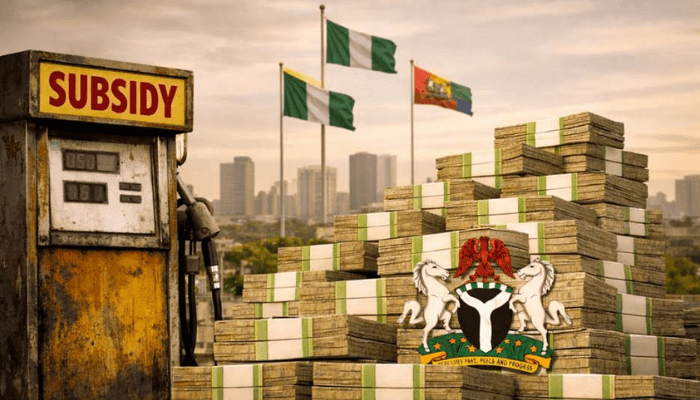
Nigeria’s reliance on oil exports has been both its blessing and curse. While oil revenues have historically propped up the economy, global oil price volatility exposes the country to external risks.
The government has made strides in boosting non-oil exports, but diversification remains sluggish.
For sectors like agriculture, technology, and manufacturing to become true engines of growth, Nigeria needs significant infrastructure development, skilled labour, and investment-friendly policies.
Agriculture, in particular, holds promise. With the right investment in modern farming techniques and processing industries, Nigeria could not only feed its population but also become a major player in global food markets.
Likewise, technology and manufacturing could provide much-needed jobs and drive innovation, reducing the over-reliance on oil. However, these sectors will not flourish without robust policy support and an enabling environment for business.
The IMF has made it clear: inflation control through tighter monetary policies is necessary, but without deeper reforms, Nigeria risks stagnation.
Bold, not political, reforms are essential if Nigeria is to survive this era of global tightening. What does that look like? Prudent fiscal management, better debt oversight, and a clear plan to diversify revenue streams.
Nigeria must also prioritise governance reforms. Too often, well-intentioned policies are derailed by corruption, inefficiency, or lack of political will.
Strong institutions are needed to implement and sustain reforms. The window for action is closing, and failure to seize this moment could leave Nigeria more exposed to future crises.
The IMF’s “Great Tightening” is a wake-up call for Nigeria. The global economic landscape is shifting, and the country must adapt if it is to thrive. This is Nigeria’s opportunity to build a more resilient, diversified economy—one that can withstand external shocks and provide a sustainable future for its people.
The path ahead will not be easy, but it is necessary. Nigeria stands at a crossroads, and its response will determine whether it merely survives or prospers in the years to come.