The fight over Palestine didn’t start yesterday, it’s a story more than a hundred years in the making. Now, in 2025, that story has taken a dramatic turn. Countries like the UK, France, Canada and Australia have finally recognised Palestine as a state, breaking away from America’s long-held stance. It may not change life on the ground right away, but it sends a powerful message — one that can only be understood by looking back at how this struggle began.
History of the Occupation
The history of Palestine’s contested statehood begins more than a century ago. For centuries, the land was ruled by the Ottoman Empire. That ended with the First World War, when Britain took control under a League of Nations mandate.
Read also: UK formally recognises Palestinian state in bid to revive two-state solution
At the time, Arabs formed the majority population, with Jews a minority community. Britain then issued the 1917 Balfour Declaration, pledging support for a “national home for the Jewish people” in Palestine, while also promising to safeguard the rights of the existing non-Jewish population. It was an ambiguous commitment that sowed the seeds of conflict still felt today.

As Jewish migration increased, fuelled by persecution in Europe and the trauma of the Holocaust, tensions with the Arab population deepened.
Partition, Israel’s birth, and Palestinian displacement
In 1947, the United Nations proposed splitting Palestine into two states: one Jewish, one Arab, with Jerusalem designated as an international city. Jewish leaders accepted the plan; Arab states rejected it, arguing it unfairly favoured the Jewish minority.
Read also: Trump threatens Canada trade talks over Palestinian statehood recognition
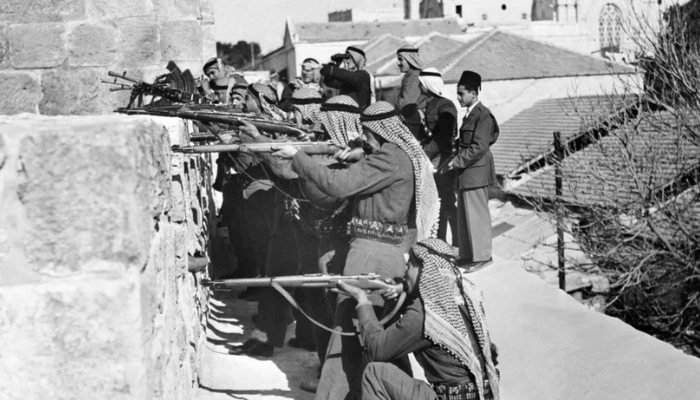
When Britain withdrew in May 1948, Jewish leaders declared the independent state of Israel. Neighbouring Arab nations went to war, and hundreds of thousands of Palestinians fled or were expelled from their homes. Those refugees and their descendants, today nearly six million still live across the Middle East, many holding on to the demand of a right to return.
The six-day war and the occupation
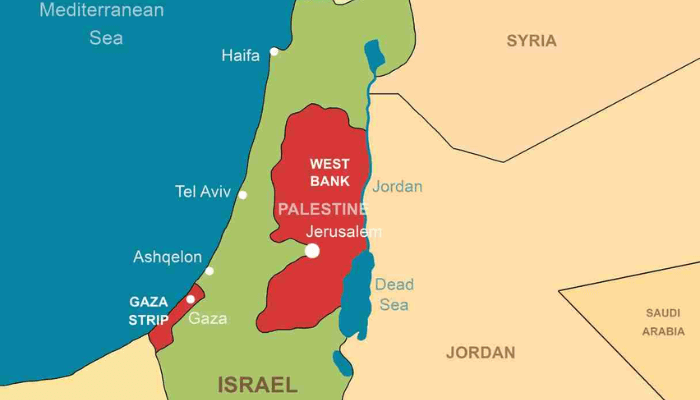
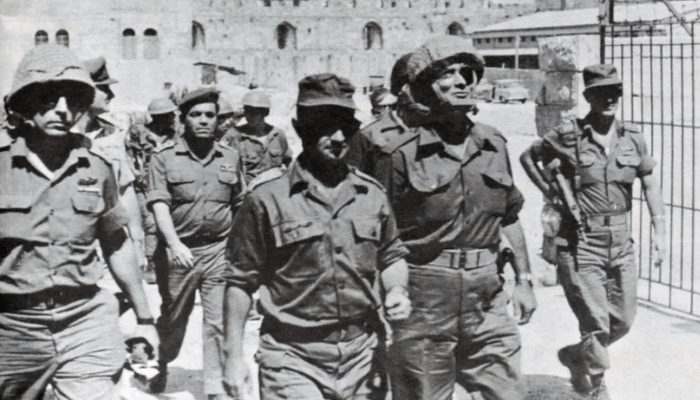
Twenty later, in 1967, another turning point came. Israel launched pre-emptive strikes against Egypt and Syria, triggering the Six-Day War. By the time the fighting ended, Israel had captured Gaza and Sinai from Egypt, the Golan Heights from Syria, and the West Bank—including East Jerusalem—from Jordan.
This was the birth of what is now called the Occupied Palestinian Territories. More than a million Palestinians suddenly found themselves under Israeli control. Israel began building settlements, which today house over 700,000 Jewish settlers. These settlements are considered illegal under international law, but successive Israeli governments have treated them as permanent.

The two-state solution
Since the 1990s, peace efforts, most notably the Oslo Accords have revolved around the “two-state solution”: an independent Palestinian state in the West Bank and Gaza, with East Jerusalem as its capital, existing alongside Israel.
Read also: France to recognise Palestinian State at UN, defying Israel and U.S. Opposition
The Palestinian Authority (PA) was established to govern parts of the West Bank, while Hamas seized control of Gaza in 2007. But the vision of two states has steadily eroded. Israeli settlement expansion, political divisions among Palestinians, and repeated breakdowns in negotiations have left the plan more slogan than reality.
Yet, internationally, the two-state solution remains the blueprint for peace.
A symbolic but significant recognition in 2025
For years, the question of Palestinian statehood has sat at the heart of the world’s most enduring conflict. Palestine is already recognised by more than 150 United Nations member states and, at the UN itself, holds the status of “non-member observer state.” Yet many Western powers, long seen as key allies of the United States and Israel, have resisted extending recognition, arguing it could only come as part of a negotiated peace agreement.
Read also: Nigeria reiterates 2-state solution to end Israel-Palestine conflict
That long-held position shifted dramatically in September 2025. In a coordinated move, the United Kingdom, France, Canada, Australia and Portugal announced they would formally recognise the State of Palestine. Other European states, including Belgium, Luxembourg, Malta, Andorra and San Marino, are widely expected to follow.
The announcements were presented as both symbolic and strategic. UK prime minister Keir Starmer said recognition was a way to “revive the hope of peace and a two-state solution.” France’s president Emmanuel Macron declared that “the time for peace has come,” pointedly condemning the ongoing war in Gaza. Canada and Australia echoed this sentiment, framing recognition not only as a moral obligation but also as a necessary step to keep alive the two-state formula that has guided international diplomacy for decades.
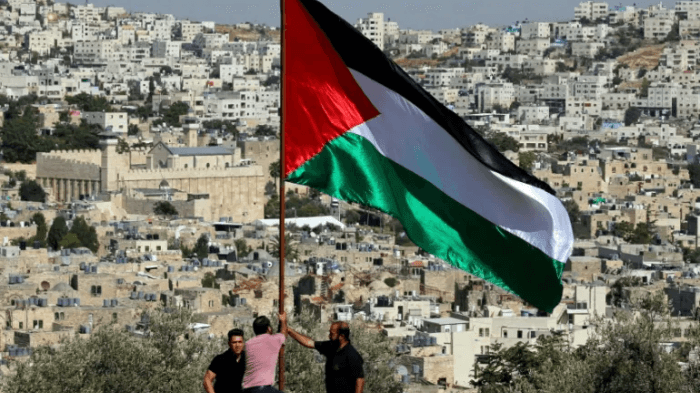
These recognitions are historic because they mark a break within the Western alliance. With Britain and France joining China and Russia, four of the five permanent members of the UN Security Council now back Palestinian statehood. Only the United States stands apart.
Israel’s rejection and America’s caution
Benjamin Netanyahu, Israeli Prime Minister called the recognitions “a reward for terror,” warning they undermine Israel’s security and encourage Hamas. His government insists the West Bank is part of Israel’s historic homeland, and that statehood for Palestinians must come only through direct negotiations not unilateral international recognition.
Read also: Palestine, my heart bleeds!!!
The United States echoed Israeli concerns. Washington maintains that recognition should be tied to a comprehensive peace deal, not granted in advance. President Donald Trump has openly dismissed the two-state solution, aligning his policy closely with Israel’s positions.
This leaves the US increasingly isolated on the world stage.
The Palestinian response
For Palestinians, recognition is a moral victory. The Palestinian Authority hailed it as a “courageous step,” saying it helps preserve the possibility of two states. Hamas also welcomed recognition but insisted it must come with concrete measures to end the war in Gaza and address refugee rights.
At the same time, divisions remain: Hamas does not formally accept Israel’s right to exist, while the Palestinian Authority does. Recognition by foreign states cannot bridge those internal fractures.
Why now?
The timing is no accident. Several dynamics pushed governments towards this moment.
First, the war in Gaza has brought unprecedented destruction and a deepening humanitarian crisis, sparking worldwide calls for accountability and peace. Second, Israel’s rapid settlement expansion in the West Bank has convinced many observers that the window for a viable two-state solution is rapidly closing. Third, after decades of failed negotiations, some governments see recognition as a way to break the deadlock, inject momentum into the peace process, and put pressure on Israel to engage.
Read also: Israel attack on Palestine can be likened to apartheid says Ramaphosa in UNGA speech
Implications and limits
The recognitions do not change daily life for Palestinians on the ground. Israeli forces continue to control checkpoints, borders remain undefined, and millions of refugees are still without a state. Yet the symbolic impact is significant.
Diplomatically, Palestine gains greater legitimacy and Israel faces mounting international pressure. The United States, which continues to withhold recognition, risks greater isolation on the issue. Legally, recognition strengthens Palestine’s position in international courts and UN agencies, providing new avenues to challenge occupation policies.
There are also risks. Israel could retaliate with measures such as annexing parts of the West Bank or accelerating settlement construction. Rising Palestinian expectations, if not matched with real change, may also fuel frustration and instability.