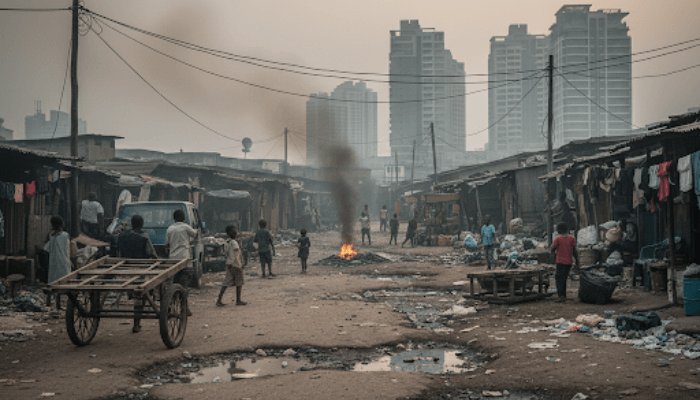
Nigeria is under mounting strain. Over the past decade, insecurity has intensified while development outcomes have remained stagnant. Terrorism in the Northeast, banditry in the Northwest, farmer-herder conflicts across the Middle Belt, and rising criminality in parts of the South have forced the state to allocate unprecedented resources to defence. Economic indicators tell a sobering story: poverty deepens, real incomes fall, infrastructure gaps persist, and public confidence in governance continues to erode. The challenge is not spending alone; it is the state’s failure to reliably convert expenditure into public value.
Fiscal data illustrate the scale of the problem. Defence spending rose from roughly ₦375 billion in 2015 to over ₦3 trillion by 2025, a staggering 700 percent increase. Security is, in principle, a defensible investment: without it, private enterprise contracts and transaction costs rise, and productivity suffers. Even so, Nigeria’s experience highlights a critical efficiency gap. Despite soaring allocations, violence persists, displacements grow, and insecurity continues to weigh heavily on economic activity. World Bank estimates suggest insecurity suppresses GDP growth by several percentage points annually. Some analysts argue that without such spending, threats could have escalated further, underscoring that the impact of defence expenditure is not always immediately visible.
Read also: Bullets and bread: Nigeria’s security spending and the economics of a governance trap
Civilian development spending tells a similar story. Education budgets remain below 10 percent of national allocations, short of UNESCO’s recommended 15–20 percent. Health expenditure lags, while critical infrastructure, electricity, transport, and housing remain inadequate. Nigeria is not a low-spending state: trillions of naira are appropriated annually for both security and development. The problem is conversion: resources do not reliably translate into outcomes. Economists would describe this as a state-capacity trap, where institutional inefficiency, leakage, and weak accountability dilute fiscal effort.

Recent fiscal events underscore this challenge. Nigeria’s 2025 budget, the largest in history at ₦54.99 trillion, has faced credibility concerns, from delayed performance reports to conflicting revenue figures. The cancellation of about $1.42 billion and ₦5.57 trillion of legacy NNPC liabilities sparked criticism over transparency and fiscal prudence. These developments erode fiscal discipline, complicate reforms, and heighten the cost of future governance interventions.
The macroeconomic consequences are increasingly visible. Rising debt-service obligations, limited fiscal space, declining real incomes, inflation, and high unemployment converge to create a crisis of legitimacy. Citizens bear the burden of higher taxes, subsidy removals, and currency adjustments, yet see little improvement in security or public services. Weak outcomes undermine the social contract: compliance falters when trust in government effectiveness is low.
This dynamic risks becoming a self-reinforcing trap. Insecurity justifies higher defence spending, weak oversight limits its impact, and the cycle continues. Development expenditure suffers a similar fate, producing minimal growth while reinforcing poverty, a poverty that fuels further insecurity. This is not merely a security–poverty spiral; it is a broader political economy trap, sustained by weak institutions.
Read also: Easing inflation boosts Nigerians’ Christmas spending power
Breaking this trap requires nuance and patience. Security spending must be outcome-driven, with transparent procurement, credible audits, and measurable impact metrics. Civilian development budgets should prioritise projects with demonstrable social and economic returns rather than symbolic or politically visible initiatives. Regional differences must guide strategy: interventions that work in Lagos may fail in Borno or Kaduna. Local governance, traditional authorities, and community initiatives can complement federal spending, improving the likelihood of success.

Institutional strengthening is central, but it is a long-term endeavour. Public financial management, accountability enforcement, and elimination of opaque quasi-fiscal operations are necessary, but they require political will, citizen engagement, and sustained reform over the years. Complementary solutions, public–private partnerships, technology-driven monitoring, and targeted social programmes can enhance the impact of expenditure in both security and development.
Nigeria’s challenge is not a choice between guns and butter; it is a test of governance. Security and development are complements, not substitutes, and both require state capacity to convert fiscal effort into outcomes. Without these reforms, higher budgets will coexist with weak performance, and citizens will remain trapped between rising costs and declining trust. Breaking the governance trap is the only sustainable path to security, development, and economic legitimacy.