The “Nigerian Tribune” newspaper has entered the fray with its front-page editorial on October 2, 2019. Headline: “Substandard private schools everywhere!”
“Since the progressive rot in the education sector in the country commenced, particularly following the military interregnum in politics and governance in this country, there hasn’t been any let or hindrance to private intervention in the sector. It progressed steadily from the primary school level and now quite expectedly, it has reached its peak at the tertiary level. The intervention of private investment in the education sector in any liberal democracy is a welcome development, especially from diverse interest groups like religious and secular sectors of the society. But the development also places a burden on the same society to ensure proper control and standardisation.
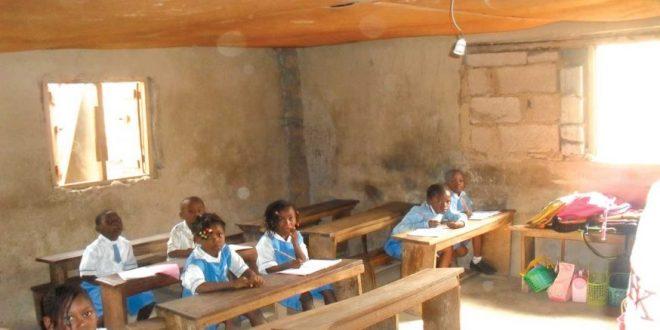
A recent survey by a national daily revealed that these schools, especially the private ones at the level of primary and secondary education, are at different stages of deterioration, existing merely to buoy the income of their proprietors. The inspectorate section of the various ministries of education are virtually on perpetual leave, with officials looking elsewhere after receiving some form of gratification. Many of the schools in the country’s 36 states are housed in substandard buildings in various stages of disrepair, endangering the lives of pupils. A lot of these schools’ lack recreational facilities which are expected to improve the learning process and environment. Aside from the facilities and environment, these schools also lack qualified teachers and teaching aids.
The report even claims that in Enugu State, there is a private school in every 10 houses, with the sole purpose of profiting from deliberate defaults in the society. The teachers are not trained professionals, so their salaries are poor and this compromises the quality of tuition being delivered in the schools. The state governments being the highest employers of professional teachers at that level have since a long time ago stopped employment and the private schools have only employed teachers that are barely literate in order to minimise costs and overheads. The results of these weak foundations are reflected in the abysmally poor quality of the pupils that eventually enrol for secondary education.

Invariably, these same conditions persist in the secondary level of education and the tertiary institutions are eventually constrained to recruit their respective undergraduate students from these detective pools of weak students with severely compromised foundations. Little wonder then that former President Olusegun Obasanjo once quipped that Nigerian graduates were unemployable. Unfortunately, the deterioration of the education sector has been at the instance of successive leaderships in the country, of which the former president is an integral part. State-owned institutions having been serially starved of funds to pursue qualitative research, it became apparent that investment in that sector would yield returns, and many of the country’s political leaders quickly cashed in on the situation.
It has got to the point that an emergency should be declared on primary education in the country. If this very absurd situation is not addressed comprehensively, the country will be in very serious danger of producing future generations of illiterates who are ill prepared to confront the challenges of modernity
At the end of the day, the quality of human capital in the country suffers from the compromise occasioned by the extremely weak foundations in the schools. The report also pointed to the proliferation of these schools, almost to the total obliteration of the government public schools. It has got to the point that an emergency should be declared on primary education in the country. If this very absurd situation is not addressed comprehensively, the country will be in very serious danger of producing future generations of illiterates who are ill prepared to confront the challenges of modernity.
There must be a deliberate attempt to improve the performance of the inspectorate division of the various ministries of education in this country so that sanity can return to the schools, both private and public. There should be more to establishing a school than the profit motive and the various state governments must ascertain quality control.
At Harvard Business School, graduating students are regularly divided into two groups – the
Observers (who just flow with the rest) and the Initiators who are driven by the urge to venture into unchartered territories. They are the ones who have changed the course of history and thereby made America great in various spheres of human endeavour – business, technology, science, engineering, agriculture etc.

Even more intriguing is the division between those who do not know much (but insist that they know it all) and those who really do know but prefer to pretend that they know nothing and have learnt nothing.
As parents, the least we can do is to share the wisdom of Professor Robert Collier of Oxford University (who has delivered several lectures in Lagos and Abuja) with our children:
“Success is the sum of small efforts, repeated day in and day out.”
Perhaps, for good measure we should borrow a leaf from the great (perhaps the greatest)
heavyweight boxing champion, Muhammad Ali who declared in his CNN interview: “The best way to make your dreams come true is to wake-up.”
Alas, we must all (whether young or old) wake up as matters have reached frightening proportions and dimensions. Our country is in a mess.