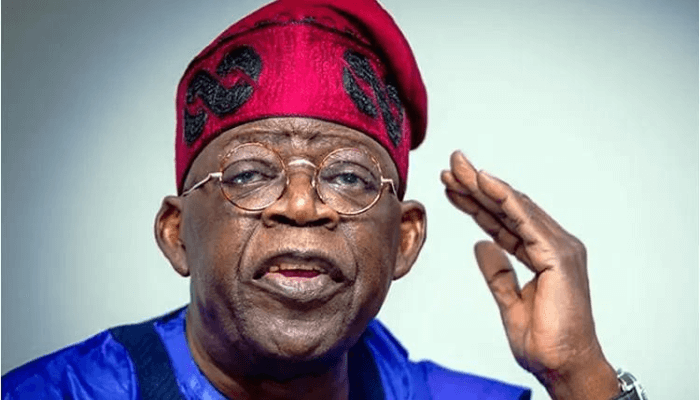
The recently submitted ambassadorial list by Bola Ahmed Tinubu has triggered waves of criticism across Nigeria, with opposition parties, civil society, and former diplomats raising serious concerns about the nominees.
Opposition parties and critics say the list contains the names of many people, politicians, and public officials, who are widely perceived negatively by Nigerians and the global community, for their alleged integrity deficit.
Many believe that ambassadors should be eminent citizens who can represent the country beyond being rabble-rousers.
Analysts say the inclusion of these individuals would lead to the sidelining of career diplomats who have invested decades building the capacity needed to represent Nigeria effectively on the world stage.

Kingsley Enwelim Nwanze, director General/CEO, Centre for Leadership and Creative Entrepreneurs in Africa, told BusinessDay that significant number of nominees were individuals rewarded for political allegiance, rather than those with proven diplomatic expertise or long-standing service to the nation.
Nwanze pointed out that such practices weaken the institutional strength of the nation’s foreign service and diminish Nigeria’s credibility in international engagements.
Also, among the controversy trailing the ambassadorial nominees list is that it is dominated by names of people from the South-west, against other regions fueling questions about President Tinubu’s respect for national character and quota.
Read also: Ambassadorial nominees: Withdraw, present fresh list, Ndume tells Tinubu
Who was appointed?

Former chairman of the Independent National Electoral Commission (INEC), Mahmoud Yakubu, a professor;ex-presidential aide, Reno Omokri and former aviation minister, Femi Fani-Kayode are among the non-career nominees on the list whose nomination has been raising dust in the polity.
Also appointed were former Abia State governor Okezie Ikpeazu; Ifeanyi Ugwuanyi, a former governor of Enugu State; Senator Jimoh Ibrahim, among many other controversial names.
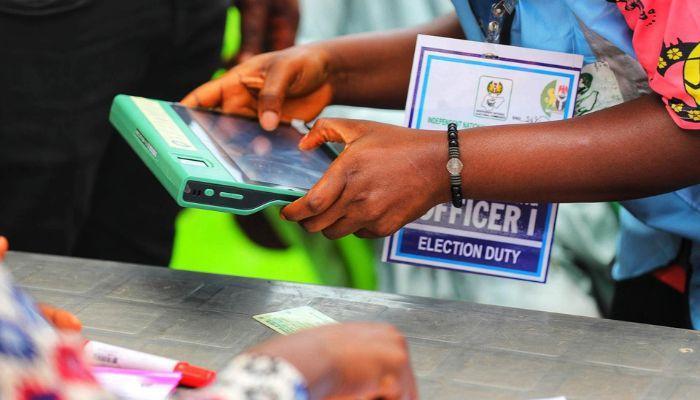
Yakubu chaired INEC from 2015 to 2025 and supervised the 2023 election that produced Tinubu as President.
Omokri had spoken to the media severally that he was a vocal critic of Tinubu before later becoming his supporter. According to the former presidential aide, he initially opposed Tinubu over doubts about his academic credentials and alleged links to drug-related activities.
Similarly, on December 4th in a two-separate letters to the Senate President, Godswill Akpabio, President Tinubu also asked the Senate to consider and confirm 15 nominees expeditiously as career ambassadors and 17 nominees as non-career ambassadors. This expanded the ambassadorial nominees from 32 to 65. The list now contains 34 career ambassadors and 31 non-career ambassadors.
Integrity and credibility concerns
Many Nigerians have argued that several of the nominees by President Tinubu have records tainted by controversy and questionable integrity. For example, the inclusion of former INEC chairman Mahmoud Yakubu is particularly controversial, given lingering questions over the conduct and outcome of the 2023 general election.
Activist lawyer, Maduabuchi Idam, warned that Nigeria may suffer greater international damage with some of those who made the ambassadorial list.
Idam said some of the names have vindicated the stance of some Nigerians that Tinubu’s administration is a joke.
According to him, with some of the names on the list the current administration risks suffering even greater international damage than it is already experiencing.
“The names on the list of ambassadorial nominees have vindicated many Nigerians who believe President Tinubu’s government to be a joke.
Similarly, former presidential aide, Lauretta Onochie, in a social media post expressed outrage over what she described as “blatant nepotism” in Tinubu’s distribution of ambassadorial slots.
But hey, you are solidly in bed with nepotism,” she wrote, insisting that the South-West was disproportionately favoured.
Onochie also accused the president of compensating individuals who allegedly worked against the APC-led Buhari government.
“We will overlook the glaring fact of rewarding those who mobilised hostilities against the late Buhari’s administration. Let’s just have ambassadors,” she stated.
Analysts say at a time when Nigeria faces intricate global challenges, economic repositioning, security coordination, and regional diplomacy; the country cannot afford a diplomatic corps driven by partisan interests rather than national objectives.
Nwanze further argued that ambassadorial appointments must be anchored on merit, patriotism, and technical competence, stressing that Nigeria must urgently reform this process to ensure that its representatives abroad embody professionalism and unwavering commitment to national interest.
Read also: FULL LIST: Tinubu appoints Ibas, Dambazau, 68 others for ambassadorial positions
Like 2016, can NASS reject controversial nominees?
The Nigerian Senate can and does reject nominees when there is credible public objection, or when constitutional requirements like equitable state representation are not met.
For example, in November 2016, the Senate declined to confirm the 46 non-career ambassadorial nominees submitted by the then President Muhammadu Buhari. Instead, the list was returned to the Presidency for “rejigging.”
The reason given was serious public concern
The then Senate Committee on Foreign Affairs, chaired by Monsurat Sunmonu, said it had received over 250 petitions against the nominees reflecting widespread objections from citizens, interest groups, and stakeholders.
As a result, none of the 46 non-career nominees was approved, though 47 career ambassadors on a separate list were confirmed.
Political analysts say this demonstrates that the legislature, if truly independent, can exercise its power and be a safeguard for accountability, fairness, and public will.
So, amid the current controversy trailing the current list, many Nigerians are expecting the National Assembly to rise and uphold their power by rejecting names which would put the name of the country into disrepute.
However, with the history of the current 10th legislature- known to be rubber-stamp of the executive, few Nigerians are optimistic that public opinion would be respected leading to the dropping of nominees that do not merit to be in the list.
Ubong Uko, public policy analyst, said the current lawmakers appear not to be aware of their powers and only keen to impress President Tinubu.
The analyst expressed doubt that the National Assembly would have the guts to drop any of the controversial ambassadorial nominees.
“The current 10th National Assembly is perhaps the worst I have seen in the current republic. Check back during Obasanjo’s or Buhari’s era, it was not this bad that they didn’t have any voice to stand on any issue against the President. Don’t forget they are representing Nigerians interest”, Uko told BusinessDay.
“The nominees would be cleared, but it is a setback for our democracy that the President can do what he likes and nobody can call him back,” he further said.