Following the 15 years Boko Haram insurgency in the northeast region and shrinking of Lake Chad Basin, the climate change has exacerbated as a result of bush burning, land degradation, desert enforcement, desertification and recent floods disasters that ravaged Maiduguri and its environs.
Aside these factors plastic pollution has increased astronomically which has fast becoming the major challenges contributed to climate crisis not only in northeast region but the entire continent. The climate crisis worsens the insurgency conflicts and the impact of climate change in the BAY states is huge.
According to the United Nations, over 430 million tonnes of plastic are produced globally each year, two-thirds of which are used only once. The economic and environmental cost is estimated at over $300 billion annually.
The epicenter of the climate change crisis is the Borno, Adamawa and Yobe (BAY) states because of the impact of the resources are restricted. For example, the shrinking of the lake Chad region has worsened conflict. People are looking for land farms, water for their farms, the fishing activities have halted.

However, if Urban environments are not spared. Discarded plastic waste clogs drainage systems, especially during the rainy season, contributing to severe flooding.
‘Plastic waste menace threatens environment, public health’
Aliyu Usman, an environmental experts, warned that one of the most significant impacts of plastic pollution is land degradation, “Plastic waste has become a growing environmental menace, posing serious threats to land, water, wildlife, and public health due to its non-biodegradable nature.
Usman continued unlike organic waste, plastic persists in the environment for hundreds of years, accumulating in alarming volumes and creating long-term challenges.
He explained that plastics that accumulate in soil disrupt the natural structure and composition of the land, reducing soil fertility and hindering agricultural productivity.

“This degradation also affects plant life, as plastic particles can penetrate root systems, ultimately causing plant death and stunted growth. Wildlife, particularly livestock, is also at risk. Animals often mistake plastic for food, which can entangle their intestines and lead to fatal blockages. In many rural areas, grazing animals have died after ingesting discarded plastic bags and wrappers,” he said.
In the recent flooding in Maiduguri, flood has been worsened by the accumulation of plastic waste in drains. These floods not only damage infrastructure but also spread a mix of plastics and pollutants into city centers, posing a direct threat to public health and hygiene.
Environmental experts also warn about the leaching of toxic substances from colored plastics. Over time, chemicals from these materials can seep into groundwater, contaminating drinking water sources and posing long-term health risks to humans and animals alike.
He maintained that, “When drainage channels are blocked, water stagnates, creating ideal breeding grounds for mosquitoes and rodents. This not only exacerbates the risk of vector-borne diseases like malaria and dengue but also poses a serious sanitation hazard to residents.”
Adamawa moves to tackle plastic pollution
As the global community commemorates the 2023 World Environment Day, the Adamawa State Government has unveiled strategic initiatives aimed at ensuring a cleaner, healthier environment for its citizens, with a strong focus on combating plastic pollution—the theme for this year’s celebration.
Speaking on the state’s environmental efforts, Muhammed Sadiq Muhammad,the Commissioner for Environment and Natural resources development, revealed that the government, in collaboration with the World Bank and various non-governmental organizations (NGOs), has finalized plans to establish a recycling plant that will transform plastic waste into useful products.
“We have concluded negotiations to install a recycling plant that will harvest the plastics littering our environment and convert them into reusable items such as chairs, beds, and interlock tiles,” he said.
The state government has since signed a Memorandum of Understanding (MoU) with key stakeholders to relocate the recycling facility to Yola, the state capital.
In an effort to curb plastic use at the source, the government is also engaging with major beverage producers including Adamawa Beverages and Coca-Cola to encourage the adoption of paper-based packaging as a sustainable alternative to plastics.
“We are working on ways to reduce plastic consumption at the industrial level, and one step is encouraging our manufacturers to shift from plastic to paper packaging,” he added.
Another major step includes the reintroduction of the monthly environmental sanitation exercise, a practice that had been dormant for over three decades. This initiative, under the leadership of Governor Ahmadu Umaru Fintiri, is aimed at fostering a culture of cleanliness across the state.
The Ministry has also taken steps to streamline waste management by registering and monitoring all waste handlers. “We have summoned all the waste managers across the state and documented their details to ensure they dispose of waste only at designated sites,” the Commissioner stated.
Importantly, the government has issued a stern warning against the use of child labor in waste collection and recycling activities.
With a holistic approach that combines waste-to-wealth initiatives, industrial collaboration, public awareness, and government policy, Adamawa State is taking decisive action to make its environment cleaner and more sustainable for future generations.
He said the ministry has been able to successfully reintroduce monthly sanitation exercise, banning cutting of trees and also training of youths on making barricades for cooking.
CATAI pushes for action plan on plastic pollution
Also, as part of efforts to tackle the rising threat of plastic waste, the Centre for Advocacy, Transparency and Accountability Initiative (CATAI) has urged the policy and decision makers to savage the future of the children in the region
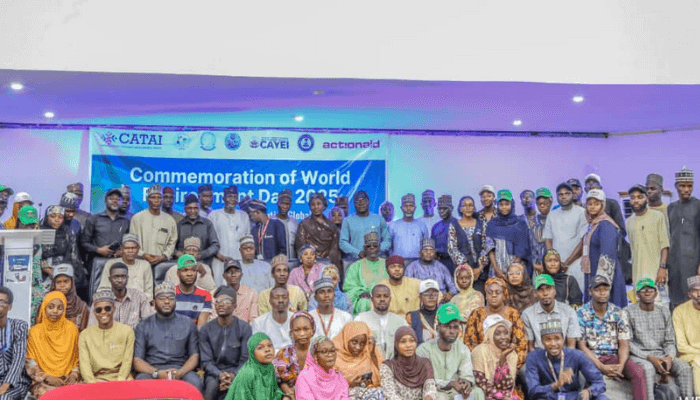
Speaking, Sadiq Abubakar Mau’zu, the Executive Director CATAI, lamented during year’s commemoration of Word Environment Day in Maiduguri, with the theme “Ending Plastic Pollution Globally”, brought together government agencies, youth-led organisations, civil society actors, and development partners to raise awareness and advocate for sustainable environmental action across the state.
He joined the youth climate advocates to review the implementation of the Borno State Climate Action Plan and the recently approved Environmental Bill.
He urged, “Plastic pollution remains one of the most pressing environmental issues in Nigeria and globally, with millions of tonnes of waste ending up in water bodies, soil, and food systems. we need strong policy and political will to tackle plastic waste pollution in the region. I think strong collaboration between governments and CSOs would go along way to reduce the effects of plastic pollution in our communities.”Sadiq said.
Flood destroys portable water, latrines in communities – Residents
Communities affected by the September 9, 2024, flood disaster in Maiduguri metropolis and Jere local government of Borno State have appealed for urgent support by providing potable water, latrines and sanitation tools.
The devastating floods, caused by the collapse of the Alau dam, have left hundreds of thousands of people in dire need of assistance, and latrines and water facilities have been destroyed.
The residents highlighted the pressing needs of the affected communities, which include water and sanitation, as well as access to clean water, toilets, and sanitation tools to prevent open defecation and reduce the risk of waterborne diseases.
Narrating their ordeal, Bulama Modu, a community leader from the Gangamari area of Jere local government, described the flood’s massive impact on the people, lamenting how water channels were blocked and children’s education was disrupted.
Another community leader, Bulama Jubrin, raised concerns over water scarcity and worsening hygiene conditions in their area, noting that residents spend a lot of money per trip for water, sometimes twice daily.
From Almeskin II in Jere local government area, Aisha Ahmed expressed worries over open defecation, attributing it to insufficient toilet facilities and damaged boreholes during the flood.
One of the major causes of rampant open defecation is that children and even the elderly don’t have regular access to toilets,” she said.
We need to sustain interventions to fight ecosystems
Abubakar Mohammed Kareto, a public affairs analyst said plastic waste has been one of environment problems because of it’s nature being non biodegradable, it causes numerous environmental problems such as land degradation, destroying soil structure and profile.
He said it also reduces soil facilities, degraded the land; cause death of both plant and animals because some of the plastic waste can be chewed by livestock which entangles their intenstines and cause death to them.
“For plant, the root penetrate through the plastic and because of it’s non biodegradable nature, it cause death of plants.”
He warned destroy the beautiful scenery of the environment as well as blocking drainage system. You will see plasty waste entaculate with soil or sand, their blocking our drainages which normally cause flooding during raining season
He noted, “So you can see, it has numerous kinds of threat to our environment, which most is clocking drainages, causing flooding as well as reducing our soil facility. It also destroy the beautiful scenery of our environment when polluted.”
He advised that “Without immediate and sustained intervention, the continued accumulation of plastic waste will only deepen its toll on ecosystems, human health, and urban resilience.”
The growing plastic waste problem calls for urgent action from both authorities and citizens. Measures such as improved waste management, public education, stricter regulation of single-use plastics, and the promotion of sustainable alternatives are essential to mitigate the crisis.
Stakeholders advocated for collaboration among stakeholders to support youth-led climate action and scale innovative solutions that can drive lasting impact in Borno State and beyond.
Experts therefore, called for stricter enforcement of policies, public education, and investment in circular economy models to reduce dependency on single-use plastics.