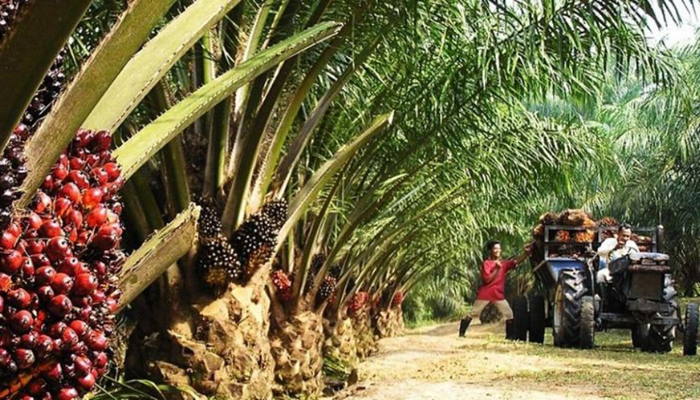
The success of Presco and Okomu, two privatised companies in Nigeria’s palm oil industry, offers a compelling case for Imo and Cross River states to embrace privatisation.
Adapalm Plantation, owned by the Imo state government, is the oldest and largest palm oil estate in the country and was once hailed as the country’s most promising agro-industrial venture. It sprawls about 6,000 hectares of palm plantations.
However, years of mismanagement and corruption have caused the oil palm estate’s output to decline from a peak of 16,000 tons yearly to less than 30 percent, according to industry sources.
Adapalm’s story is similar to Dakkada Oil Palm in Akwa Ibom State, which cuts across several communities and occupies 3,000 hectares. Years of mismanagement and abandonment have left it in ruins.

“The government has never run any business efficiently in the country. The palm oil estates owned by states are poorly run with gross mismanagement and inefficiency,” said Alphonsus Inyang, president of the National Palm Produce Association of Nigeria (NPPAN), in a telephone response to questions.
“You can imagine the number of jobs and increased production volume the country would have benefited from if Adapalm and Dakkada were run like Okomu and Presco,” Inyang said.
Read also: Okomu Oil Palm: Another rewarding year for investors
Okomu has come a long way since it was established in 1976 as a federal government pilot project aimed at rehabilitating oil palm production in Nigeria. In 1990, through an initial public offering (IPO), the government privatised Okomu and incorporated it as a limited liability company.
It was listed on the Nigerian Stock Exchange in 1991 and has since grown to become Nigeria’s leading oil palm company with a current share price of N1,110 and a market capitalisation of over N1.06 trillion as of September 2025.

Presco Plc, on the other hand, acquired and developed several large estates, including former state government-owned assets such as the Cowan Estate.
Today, both companies have transformed into an economic success, earning commendations and recording over 100 percent rise in profit after tax (PAT) from H1 2025 fiscal year.
“Privatisation is the only way because it allows the injection of private capital, which makes it run as a business,” said Celestine Ikuenobe, former executive director of the Nigerian Institute for Oil Palm Research (NIFOR), in an interview with BusinessDay.
“We have seen it in the case of Okomu and Presco,” Ikuenobe said, noting that the lack of political will of the state governments of Imo and Cross River has stalled the privatisation of the AdaPalm Plantation and the Dakkada Oil Palm Estate.
Also, in 2010, PZ Cussons Nigeria, in a joint venture agreement with Wilmar of Malaysia, acquired the defunct Calaro Oil Palm Estate, formerly owned by the Cross River government. The oil palm estate has been revamped and has become productive.
So far, these privatised enterprises in Nigeria have been able to achieve the desired objectives of increased efficiency and productivity, and this is reflected in the appreciated market prices in the now public companies.
“Private operators often bring more disciplined governance, clearer return-orientation, robust agronomic systems and market focused business models -alternatives to chronically underfunded state-run palm estates,” said Joe Onyiuke, national president, Oil Palm Growers Association of Nigeria.
“Such professional management is key to ensuring long-term viability and avoiding cycles of neglect,” Onyiuke added.