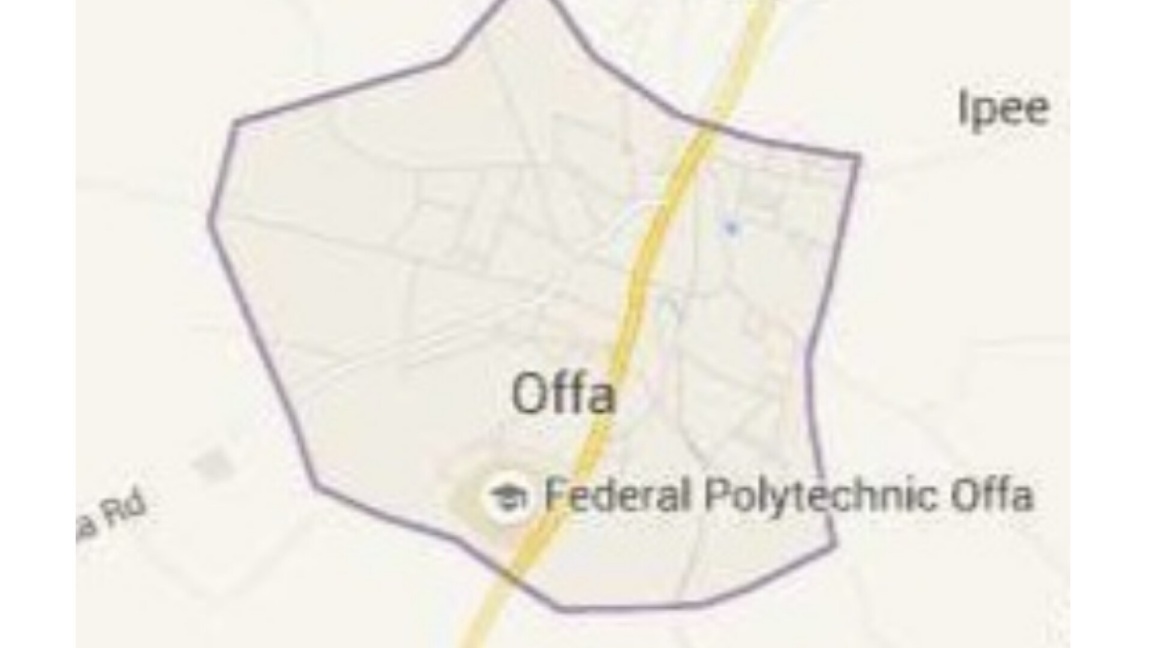
Residents of Offa in Kwara State were thrown into fear and confusion late on Christmas night after multiple explosions and the fall of metallic object were recorded in different parts of the town.
This incident has since been linked by a retired Nigerian Air Force engineer to a missile “staging” event rather than a direct attack on the community.
The incident occurred barely hours after
Donald Trump, President of the United States announced that U.S. forces had carried out airstrikes against ISIS targets in parts of North-West Nigeria, including Sokoto State.
Read also: US military carries out ‘deadly’ strikes on ISIS terrorists in Northwest Nigeria

However, security authorities have said no link has been established between the Offa incident in a predominantly Muslim community and the U.S. military operation.
It was learnt that no casualties had been recorded as of Friday morning, while security agencies had commenced investigations to determine the source and nature of the blasts.
Residents told newsmen that the explosions occurred at three different locations within the town.
The first blast reportedly affected several buildings around the Eid praying ground area. A second explosion was recorded near Solid Worth Hotel, about a five-minute walk from the first site, while a third blast occurred shortly afterwards within the same vicinity.
Further findings revealed that an undetonated explosive device was later recovered at the second location, prompting security operatives to cordon off the affected areas to prevent further danger to residents.

Confirming the development, Abiola Babatunde, Chief Press Secretary to the Chairman of Offa Local Government Area, said the council was aware of reports of a suspected ordnance-related incident around the Offa Yidi praying ground.
In a statement, the local government disclosed that security agencies had secured the affected locations and launched investigations into the explosions.
It added that Suleiman Omituntun, Chairman of Offa Local Government Area, visited the scenes shortly after the incident to assess the situation firsthand.
The council chairman urged residents to remain calm, vigilant and law-abiding, advising them to rely on credible and official sources of information to avoid panic and the spread of rumours.
Offa Local Government further assured residents of its commitment to their safety and pledged continued collaboration with relevant authorities until investigations are concluded.
Meanwhile, a retired Nigerian Air Force engineer has offered a technical explanation for the mysterious object that reportedly fell in Offa, suggesting it may not have been an explosive attack on the community.
In a video cited by BusinessDay Newspapers, the retired officer described the object as a spent fuel tank detached from a long-range munition launched from naval platforms operating in the Gulf of Guinea.
He explained that modern long-range munitions are designed to shed excess weight mid-flight through a process known as “staging.”
According to him, the object witnessed by residents of Offa was likely not a warhead, but a discarded component that had exhausted its fuel during the missile’s flight.
He said such munitions are typically launched with external fuel tanks or booster rockets that provide the initial thrust required to travel long distances.
Once the fuel in these components is depleted, they are automatically jettisoned to reduce weight and improve the speed, stability and accuracy of the remaining warhead as it continues towards its intended target.
Read also: America vows more pounding for terrorists in Nigeria after first Christmas day strikes
“What the people of Offa saw was a routine staging event. When a long-range missile reaches a certain point in its flight, the empty fuel tank or booster is released. The warhead then proceeds independently to its destination”, the engineer said.
The retired officer noted that Offa lies along the geographic drop zone of that stage of the missile’s flight path, describing the incident as unfortunate but technically unsurprising given the straight-line trajectory from the launch point to the target.
He disclosed that the munition was launched from naval platforms in the Gulf of Guinea, near the coast of Ghana, and followed a direct inland flight path towards the Sahel region, a route that passes over parts of Nigeria, including Kwara State.
“The Gulf of Guinea to the Sahel is almost a straight line, and Kwara State sits directly under that corridor. When staging occurs, whatever is jettisoned must fall somewhere along that line. In this case, Offa was simply in that drop zone”, he said.
While stressing that such staging events are common in long-range missile operations worldwide and do not necessarily indicate a malfunction or misfire, he acknowledged that falling debris can pose risks to communities located beneath established flight paths, especially where adequate communication and precautionary measures are lacking.