These days, everyone is talking about “sustainability”. But to many Nigerians, it still sounds like a foreign word, something for politicians, scientists, or people in shiny suits at global conferences.
But really, sustainability is just common sense. It means not wasting what we have today so that our children will not suffer tomorrow. It is about using our land, water, and energy and yes, even education, in ways that last.
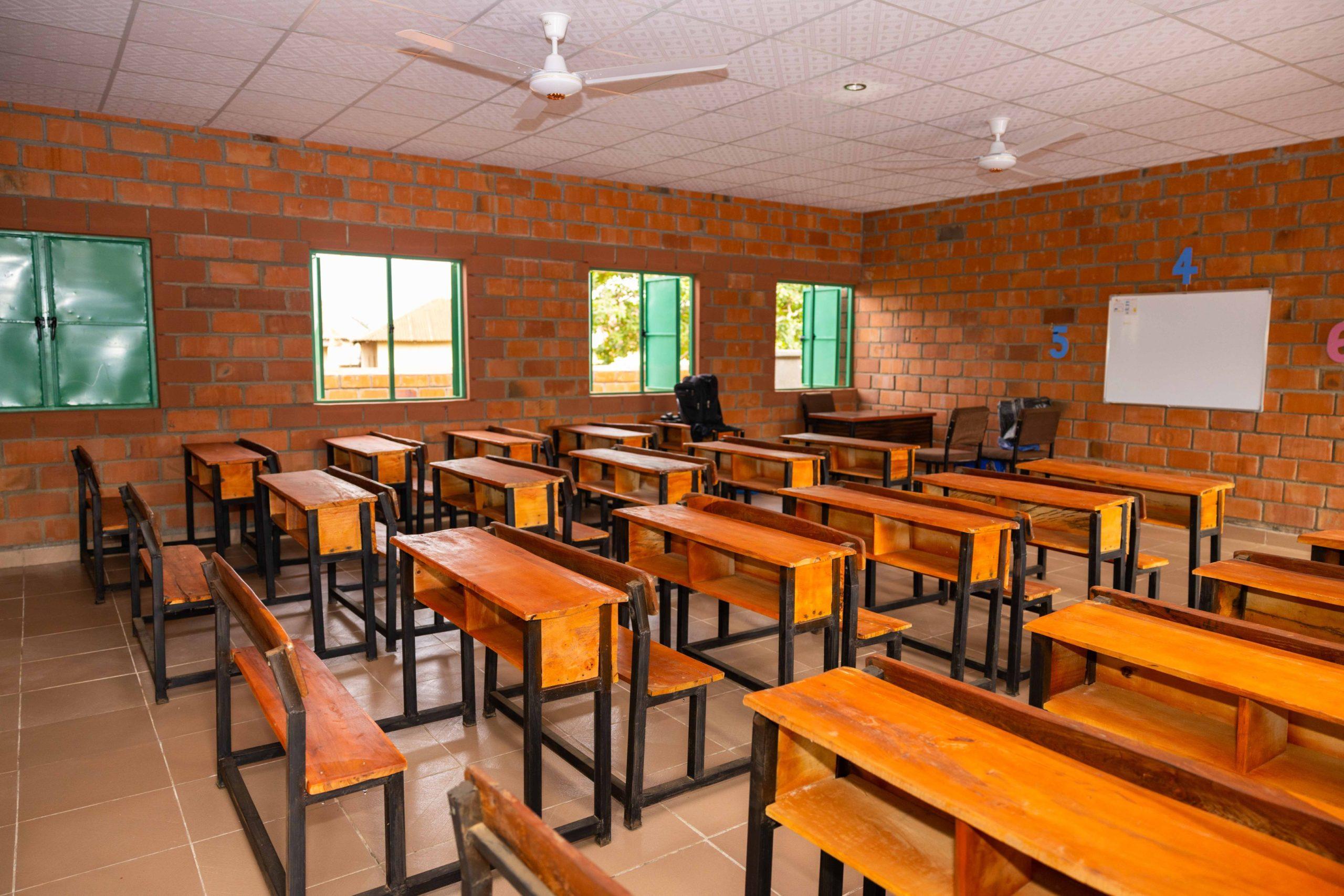
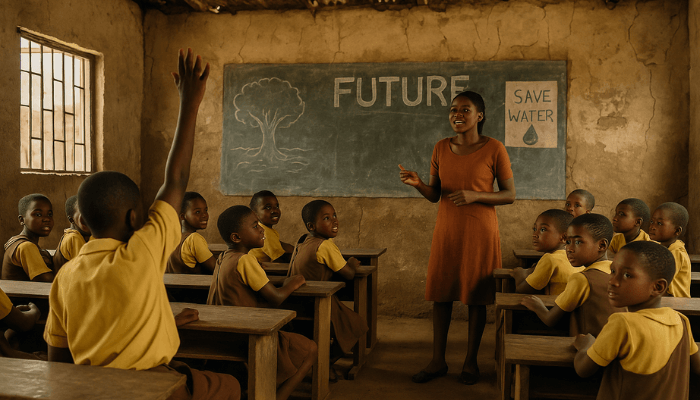
And believe it or not, real change does not have to start in Aso Rock or billion-naira projects. It can begin in a small classroom. In that hot, crowded room where a teacher with a stick of chalk tells a story. That is where children can learn to care for their environment, solve problems in their communities, and protect their future.
Because sometimes, the power to change Nigeria does not lie in big offices but in the hands of an English teacher in Makoko… a school principal in Owerri… or a group of students reading Chinua Achebe’s Things Fall Apart under a leaking roof.

Read also: Mini container classrooms to rescue as southeast’s basic schools in shamble
The crisis is here. And it is ours.
Floods have destroyed homes in Bayelsa. Farmlands in Jigawa have dried up. Young people everywhere are battling joblessness and hopelessness. These are not just climate issues; they affect food, livelihoods, and security. Everything is connected.
“Here is the hard truth: we cannot build a better Nigeria without changing how we teach.”
So in Nigeria, sustainability must go beyond planting trees once a year. It must mean finding smart, local ways to live and learn that can survive the storms: whether they come as floods, hunger, or rising costs. And that must start in the classroom. This is because education is the one tool that can lift anyone, rich or poor.

The classroom: Nigeria’s hidden weapon
Here is the hard truth: we cannot build a better Nigeria without changing how we teach. And no, it is not just about rewriting the curriculum or launching another government policy. It is about using what we already have: words, stories, and songs to spark new ways of thinking.
Hope in the classroom
For instance, a class debate on oil spills in the Niger Delta or a school project where students turn discarded sachet water bags into durable mats, all of these events may seem small, but they lay the foundation for deeper understanding and lasting change.
Why English teachers matter
English teachers in Nigeria have a unique role. Because words shape thought, and stories reflect the world around us.
Through poems about erosion, essays on flooding, or discussions using words like waste, heat, and loss, English teachers can help students not just understand the crisis but feel it. And act on it.
Think about students writing about how flooding affected their homes in Bariga; or role-playing how to stop illegal logging; or performing skits on why we should not waste food. That is not just English; that is real education.
It takes a whole school and a whole community
But teachers cannot do it alone. School leaders must stop treating sustainability as a side project and start seeing it as central to good education. Schools should work with local artisans, parents, NGOs, and anyone with ideas to solve real problems.
Campaigns, competitions, and clean-up days should not be one-off events. They should be part of school culture. Sustainability must stop being a nice word in a speech. It must become a habit.
So what can we do now?
There is a simple tool called the Sustainability Framework for English Language Teaching. It focuses on four goals:
Teach useful knowledge
Build strong values
Spark creative ideas
Push for change
You do not need a projector or foreign funding. You can start with a cardboard chart, a reading circle, or a discussion in local languages. A book club about water issues. A drawing project about reusing household items. These small actions help students see the world differently and act differently.
Read also: Federal Unity Schools ex-students storm Port Harcourt for USOSA sports
A call to courage
We must stop waiting for the government. We must stop thinking classrooms are too small to make a difference.
Because here is the truth: the classroom is the only place where the future can truly change; one mind at a time.
To English teachers, curriculum planners, parents, and school heads: the time to act is now. If we do not prepare the next generation to face climate and economic challenges, we will not just fail as educators; we will fail as a nation.
Let “sustainability” stop being just another word in a textbook. Let it echo from every school wall, shine through every child’s pen, and ring through every teacher’s voice.
Because in the fight for Nigeria’s future, the classroom is not too small. In fact, it is the only place where hope begins.