Mahmoud Alfa, a prominent Nigerian political analyst, has called for the inclusion of political economy experts in the formulation of Nigeria’s foreign policies, arguing that their absence has led to missed opportunities for the country in international negotiations.
According to Alfa Nigeria’s foreign policies lack the inputs of political economy analysts, putting the country at risk of unfavourable outcomes.
In a statement during the latest instalment of his weekly series titled “Who Speaks in Our Stead?”, Alfa noted that Nigeria’s global engagement is expanding rapidly, with investment roadshows, bilateral agreements, and high-level summits, yet representation in these critical spaces often lacks the insight of political economy analysts.
“This gap means our negotiating posture tends to be transactional, focusing on short-term outcomes rather than on strategically aligning international projects with our long-term national interests”, he said.

Read also: Tinubu calls for global partnership to defeat terrorism
The former World Bank adviser noted that Nigerian technocrats and negotiators often possess technical expertise but lack the analytical tools required to grasp the deeper economic and geopolitical implications of international agreements.
“When we engage with global partners, whether in manufacturing, energy or finance, they come to the table with integrated teams of economists, strategists and policy experts. By contrast, our negotiators frequently lack equivalent capacity, leaving Nigeria disadvantaged and often compelled to offer more while receiving less,” he observed.
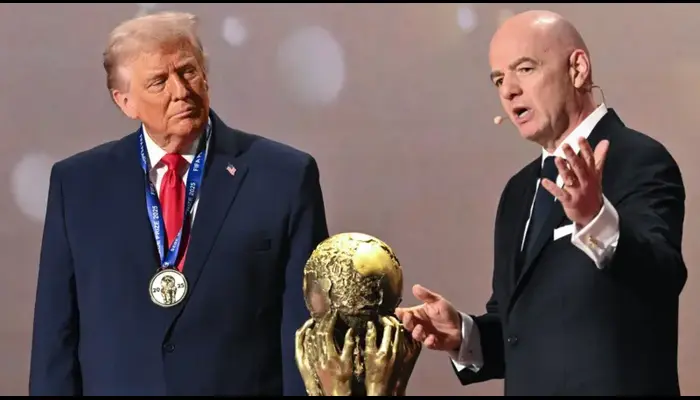
Alfa drew parallels with the United States’ approach to foreign policy under former President Donald Trump, which he characterised as unapologetically driven by economic self-interest. “Trump’s America was about dealsdeals that advanced the economic interests of the United States. Nigeria can learn from this,” he said.
He argued that Nigeria’s foreign policy should deliberately promote domestic economic growth and private sector competitiveness, stressing that the country’s intellectual capital should be fully harnessed in shaping foreign engagements.

Alfa, therfore urged the government to establish a Political Economy Co-ordinating Unit (PECU) within the Presidency to institutionalise political economy analysis across major policy and diplomatic engagements. According to him, such a unit would ensure coherence between economic policy, foreign policy and national security decisions.
“The PECU would help Nigeria anticipate the long-term implications of agreements on sovereignty and competitiveness, while enhancing our bargaining capacity and strategic clarity in international negotiations,” he explained.
“If Nigeria fails to match the analytical capacity of its partners, it risks being blindsided—speaking in numbers while others speak in strategy”, he further said.
He added that foreign policy decisions should be informed by an understanding of how economic power and production shape global trade. “Too often, those who speak for us abroad are fluent in the language of transactions but not in the grammar of political economy, the grammar of power and production that defines the global order,” Alfa said.
Describing recent international deals as “instruments of leverage and windows into the future”, he argued that Nigeria needs analysts who can interpret how a loan facility or trade agreement today might affect sovereignty tomorrow. Citing examples such as the stalled Mambila Power Project and controversies around the Ajaokuta Steel Company, he said these outcomes underline the cost of weak political economy insight at the decision-making level.
“A political economy analyst reads beyond numbers. Such understanding must no longer be optional; it is a form of national infrastructure. It can make the difference between a country being empowered by agreements or trapped by them”, he said.
“Nigeria is rich in human resources; we have the expertise. What remains is the political will to appoint our best minds to represent us at the negotiation table. We need people who can interpret the language of global trade, the dynamics of power and production, and align them with our national priorities”, he further explained.
He also urged policymakers to take advantage of Nigeria’s current standing in global trade circles, particularly with Dr Ngozi Okonjo-Iweala serving as Director-General of the World Trade Organisation (WTO). “Nigeria cannot afford to be absent from the top of the list in global trade discussions. Given the right foreign policies, we can move from being an import-dependent nation to one of the world’s key exporting economies”, he urged.
Alfa stressed that Nigeria must define its interests clearly or risk having them defined by others.