Nigeria needs to break away with exporting raw materials to the global market and must rather increase the quantity of value added, manufactured products it ships out of the country.
This is because Nigeria is earning peanuts from export of raw products which are usually raw materials for European, American and Asian factories.
In 2013, non-oil exports data from the Nigerian Export Promotion Council (NEPC) showed that total earnings by the end of the year were $2.97 billion. Of this, cocoa and its preparations comprised $758.64 million, amounting to 26 percent of the total non-oil exports value within the year. The global cocoa beans market was estimated at $9.94 billion as of 2018, according to a work done by Grand View Research. On the other hand, the global chocolates market was estimated at $140 billion as of the end of the same year, according to another research work by Research and Market.com. This shows that the chocolates market is 14 times the cocoa beans market.
This means that Nigeria exports cocoa and then imports finished beverages and chocolates. The country then loses foreign exchange, jobs and ancillary industries that should have sprouted from such value chains.

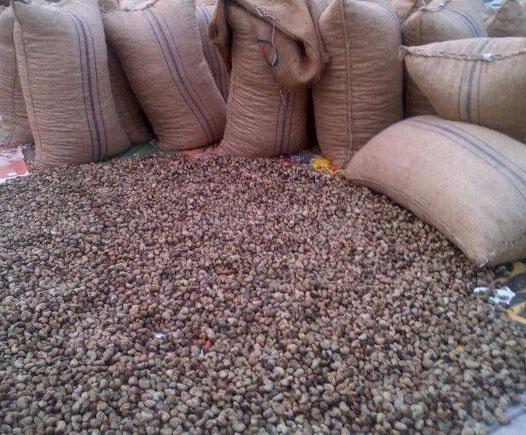
“If I am sending cashew nuts in a raw form, I get $800 per ton, but if it is processed, I get close to $2000 per ton. So the money-making thing here is value addition,” Attah Anzaku, CEO of AgroEknor, an international commodity trading firm said.
“Why most people are not so interested in exporting value-added products is that they are just satisfied with the little dollar they get from raw products. But if that is what you want out of life, good for you. If you go abroad to all the shelves and retail stores, you see most of the things we sell to them. I was in Barcelona recently and I saw tiger nuts bar. A tiger nut was selling for 20 euros. If you are selling that in a raw form, you will not get as much as that,” he explained.
Nigeria’s 2013 NEPC data revealed that cocoa was followed by sheep, goat skin and leather, sesame seeds, aluminium, rubber, tobacco products, cotton yarn and woven fabrics. Also on the list were copper, cashew nuts, edible nuts, prawns, shrimps, fish and crustaceans.
In 2013, Italy, known widely as producer of quality shoes and leather products, spent $355.63 million on purchasing sheep and goat skins from Nigeria.
Also, Spain bought sheep, goat skin and leather valued at $51.67 million from Nigeria while India spent $24 million on buying them from Africa’s largest economy. In a similar fashion, China, world’s fastest-growing country, bought Nigeria’s leather worth $93.8 million. Evidence shows that Italian and Spanish leather products, regarded as superior to Nigerian counterparts, are in various Nigerian markets and are often patronised by the rich class as they are expensive and durable. Some of the leather inputs used in making these foreign leather products might have come from Nigeria. While tanneries are exporting processed animal skins, shoemakers in Aba, Abia State industrial capital, travel to China and several African countries in search of skins.

“What happens is that the tanneries in Kano and Kaduna process animal skins and sell them as leather in the global market, earning foreign exchange,” said Chinatu Nwagbara, coordinator of Made-in-Aba Project, who produced shoes for Olusegun Obasanjo in 2016.
“So we go to China and other countries to buy. Sometimes, we buy our products and re-import,” he said.
While export of skins is a business decision, merely exporting raw products to Europe and the Americas while local industries starve of the same inputs is not be the best industrial strategy any nation should pursue. Even though the situation is slightly changing, the change is still insignificant.
Lack of value addition is already hurting Nigeria’s mono product economy. In 2018,Nigeria’s total non-oil export earnings from more than 25 commodities in 2018 were $3.3 billion, according to the NBS, but Bangladesh, once one of the poorest countries on earth, earned 10 times that amount ($33 billion) from exporting only one product—textile.
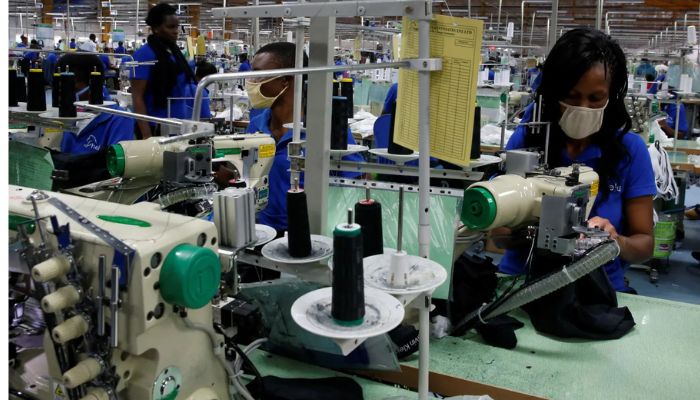
Bangladesh has 5,000 garment factories, employing about 20 million people, mostly women, pushing the extreme poverty index down to 12.9 percent, according to the World Bank, as against Nigeria’s nearly 50 percent. Nigeria does not have any full-fledged textile firm today.
Yale economist Ahmed Mushfiq believes that Bangladesh’s recent economic success is attributed to the flourishing garment manufacturing industry.
Similarly, between January and December 2018, Vietnam earned $244.72 billion from export of finished products from garments and shoes to smart phones, according to General Department of Vietnam Customs.
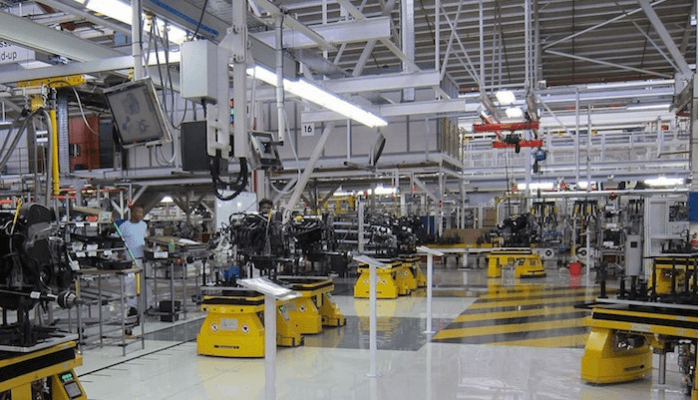
Giant phone makers such as Samsung, Intel and LG produce smart phones in Vietnam today and export from there.
In 2018, the country fetched over $50 billion from export of phones and their components— the biggest turnover among export items— according to the country’s General Statistics Office. It earned $27.3 billion from phones between January and July 2019.
The Southeast Asian country attracted Foreign Direct Investment of $16.74 billion between January and July 2019, according to the country’s Foreign Investment Agency. In the whole of 2018, Nigeria’s FDI was $2.2 billion, from $3.5 billion the previous year, according to the United Nations Conference on Trade and Development.
According to Vo Tri Thanh, a Vietnamese economist, key to Vietnam’s growth was market reforms.
The country worked on private business right; macroeconomic and social stability, while opening and integrating its economy into the regional and world economy, especially in the areas of trade and FDI.