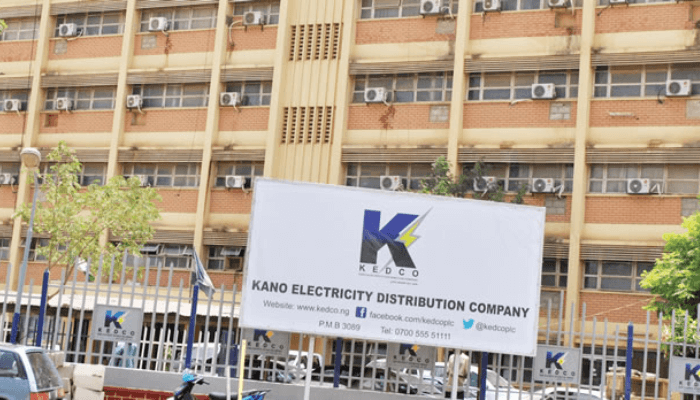
In Kano, Nigeria’s historic commercial capital, a quiet battle over electricity supply is playing out. The Manufacturers Association of Nigeria (MAN) in the state, representing hundreds of factories that anchor the region’s economy, is pushing to bypass the local utility, the Kano Electricity Distribution Company (KEDCO), in favour of direct power purchases from the Niger Delta Power Holding Company (NDPHC).
At first glance, this looks like another story of consumer frustration with Nigeria’s creaking electricity sector, where frequent blackouts, high tariffs, and poor service have become defining features.
Yet, underneath the heated rhetoric, Kano DisCo handling of the dispute sheds light on why the utility is emerging as an unexpected model among Nigeria’s 11 distribution companies (DisCos), and why its approach may offer lessons for reforming one of Africa’s most complex energy markets.
An Unlikely Contest

The latest flashpoint came after a delegation of Kano manufacturers, led by Ali Madugu, managing director of Dala Foods, approached NDPHC’s leadership in Abuja. Their request: direct access to generation under the federal Eligible Customer Programme, a 2017 policy that allows large consumers to bypass DisCos and buy electricity directly from producers.
The manufacturers say they are desperate. “Power shortages are crippling local industries,” Madugu told the NDPHC’s management. His group argues that direct supply would reduce costs, stabilise production, and save jobs in a region where manufacturing has historically provided employment for millions.
KEDCO’s response was swift
In a statement, the company accused the manufacturers of unfairly antagonising it despite enjoying some of the most favourable tariffs in the country. It revealed that, over the past year, it had granted exclusive discounts worth N3 billion to Kano industries, effectively subsidising energy for manufacturers who were simultaneously resisting tariff increases.
Yet, according to Kano DisCo, its goodwill has been met with widespread defaults, including what it described as “energy theft” that costs the utility N2.5 billion every month on key industrial feeders.

“Attempts to have MAN Kano support an aggressive stance against members and partner with us on an energy theft reduction programme proved unsuccessful,” said Sani Bala, Kano DisCo’s head of corporate communications.
The company further noted that MAN had previously dragged it to court to resist tariff increases approved by the regulator, the Nigerian Electricity Regulatory Commission (NERC), a case the manufacturers lost.
Still, despite the rancour, KEDCO insists its industrial customers enjoy 20 hours of power daily, one of the highest service benchmarks in the country. It argues that no other northern DisCo comes close in terms of market remittance or industrial support.
Read also: Stop discouraging payment of approved electricity tariff, Kano DisCo tells MAN
By the Numbers
Exclusive data seen by BusinessDay supports part of Kano DisCo case. In 2024, Kano’s DisCo achieved a market remittance rate of 84 per cent (excluding force majeure months), ahead of its peers in Port Harcourt and Enugu, and far stronger than Kaduna’s 30.7 per cent. On a full-year basis, it delivered 74.9 per cent — again one of the highest compliance levels outside Lagos and Abuja.
Perhaps more tellingly, in the first quarter of 2025, Kano hit a 100 per cent remittance to the Nigerian Bulk Electricity Trading (NBET) company, placing it in the same bracket as Abuja, Ikeja, Ibadan, Benin and others, but far ahead of laggards like Jos and Kaduna.
On the supply side, Kano DisCos’s technical performance also shows improvements that are unusual in Nigeria’s troubled grid. Internal data reviewed by this paper reveals that top industrial feeders in Kano — including the 33kV lines serving Coca-Cola, Mayuda, and Dangote — averaged between 22 and 23 hours of power daily in the first quarter of 2025. Even secondary industrial feeders, such as those serving Dala Foods, Funtua Textile Mill, and Challawa Water Plant, maintained average supply above 21 hours.
These figures exceed NERC’s benchmark of 20 hours daily for “Band A” feeders, and ensured that none of Kano’s industrial supply lines faced downgrades in classification between January and April 2025.
For industries long accustomed to running costly diesel generators, this represents a significant improvement.
A Sector Under Siege
Nigeria’s electricity system is in chronic crisis. Despite 13,000 megawatts of installed generation capacity, only about 4,500MW reliably reaches consumers daily , a fraction of demand. Losses along the value chain, from gas shortages to transmission bottlenecks and non-payment, mean DisCos operate under severe financial stress.
Since privatisation in 2013, the 11 DisCos have been criticised for weak performance, poor service delivery, and mounting debts. Investors complain of tariff shortfalls, while regulators accuse utilities of inefficiency. The result: a system where customers distrust DisCos, and DisCos distrust their customers.
Against this backdrop, Kano’s DisCo is notable. Covering Kano, Katsina, and Jigawa , a region of over 20 million people, Kano DisCos was for years one of the worst-performing utilities. But under new management installed in 2022 after a government-led restructuring, it has slowly reversed its fortunes.
A Tense Symbiosis
The clash with manufacturers highlights a paradox at the heart of Nigeria’s power sector: DisCos cannot thrive without industrial customers, who provide the largest and most reliable revenue streams. Yet industries, facing high tariffs and poor supply, increasingly seek alternatives.
KEDCO’s willingness to grant discounts, even at significant cost, shows recognition of this interdependence. Its frustration with MAN’s stance reflects a deeper problem: the absence of trust between utilities and consumers.
The DisCo insists that its data proves it is meeting commitments, remittance discipline, industrial feeder reliability, and targeted discounts. MAN counters that day-to-day experience on factory floors still involves costly backup generation.
“If KEDCO can sustain 20 hours of supply to industries, then it should be commended,” said one Abuja-based energy analyst. “But if manufacturers are still running generators, then something is wrong with either the service delivery or the relationship. Either way, the breakdown of trust is the real issue.”
The Bigger Picture
The dispute in Kano mirrors broader tensions in Nigeria’s industrial policy. The federal government has long promised to revive manufacturing in the north, where once-thriving textile mills have collapsed. Power is central to that vision.
For Kano DisCo, securing industrial demand is not just a business imperative but an economic one: without stable supply to factories, unemployment and economic stagnation could worsen in a region already struggling with insecurity.
A Model — With Caveats
So, can Kano’s DisCo truly be a model for others?
The numbers suggest progress: top-tier remittance compliance, strong industrial feeder reliability, and a willingness to subsidise industries even at significant cost. But the tensions with manufacturers show that financial discipline and technical improvements are not enough. Trust, collaboration, and customer engagement are equally vital.
KEDCO has demonstrated that a DisCo can move from being a laggard to a relative leader through transparency, prioritisation of industrial clusters, and tariff innovation. Yet sustaining such gains in a fragile market, where theft and non-payment remain endemic, will require deeper structural reforms.