Port Harcourt or Rivers State seems to define political progress or otherwise in Nigeria. This is more so that in the past 15 years, Rivers State has either witness steady non-participation of a ruling party in elections in the state or outright state of emergency where key democratic institutions have been suspended.
Worse, the Supreme Court has had to review and hand down rulings on more disputes than in any other state of the federation.
The result is that global focus has returned to Port Harcourt after the furor of caused by the hanging of the international playwright, Ken Saro Wiwa, and his Ogoni 9 team.
Rivers State seems to be about dirty oil and what comes out of the state seems to be dirtier than crude oil.

Now, politics seems to cause much more furor in the state and Port Harcourt seems to have emerged as the epicentre of dirty political narrative feasted upon or moved as merchandise by the media, especially the print (press). International election observers devote more men and resources to observe elections in Rivers State. This seems to decide what the report on Nigeria would look like.
This must be why the International Press Centre (IPC) with regional headquarters in Lagos resolved to get down to Port Harcourt to begin the task of restoring competence and credibility in election coverage.
IPC, led by Lanre Arogundade, working with De Gratia Centre for Media Rights and Education led by Paulinus Msirim, a communications expert, media veteran, and recently a commissioner of information in Rivers State, sought to bring in over 70 media practitioners considered as the leading media operators in the PH zone.
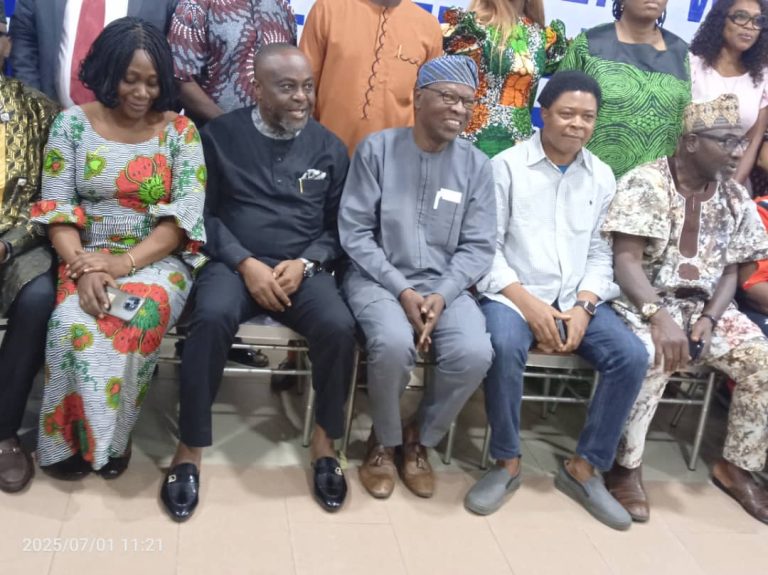
Msirim led the hall for print and online media while Klems Ofoukwu, head of Rhythm FM station in the Garden City, took the hall for the electronic media for both radio and television journalists. Susan Serekara-Nwikhana, head of the women journalists (NAWOJ) in the state, played heavy background roles to ensure the workshop that was expected to reshape election coverage in the state and deliver reports the world can trust.
The De Gratia Centre for Media Rights and Education has emerged as the only body watching the media in the Port Harcourt zone, seeking to empower news writers through training and re-orientation, especially in the face of a new desire to focus reportage of Rivers State away from consummate violence to development-focused reporting.

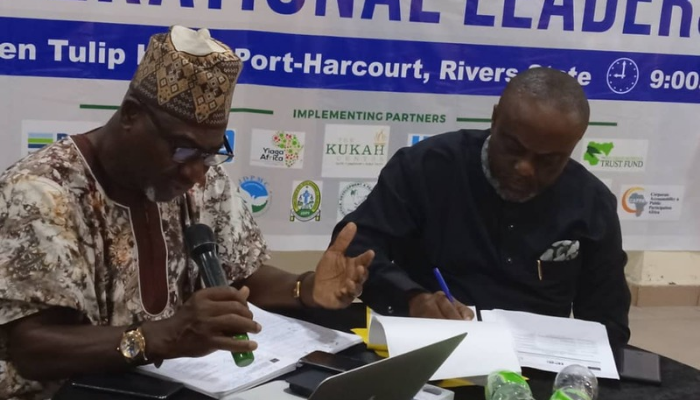
In the highlight of the one day training at the Golden Tulip Hotel in Port Harcourt, the Executive Director of De Gracia (Msirim) said the engagement was organised by the International Press Centre (IPC) and Centre for Media and Society (CEMESO) as part of a sustained programme funded by the European Union under the Support to Media Component of the EU-SDGN II Programme.
He reported that the programme aimed to deepen the role of the media in promoting transparent, inclusive, and accountable democratic governance in Nigeria through fair, ethical, and inclusive coverage of electoral processes.
The report gave the objective of the engagement to include fostering strategic dialogue with media operational leaders to reflect on editorial and managerial bottlenecks hindering agenda-setting around electoral issues.
The other, he reported, was to promote shared understanding of editorial leadership’s role in inclusive, public-interest journalism; and to co-create practical action plans for aligning editorial priorities with democratic values—particularly inclusivity, accountability, and electoral transparency.
As a method, the media leaders mainly editors and news managers were allowed to reveal why they did what they did during elections and the pressures on political reporting.
In the process, participants identified several challenges facing the media landscape, the most urgent being lack of editorial policies and codes of ethics ruling the newsrooms. There was also absence of house style impressed on the psyche of the news corps nor regular editorial meetings to deal with issues.
The harms of inadequate financing and rising production costs coupled with government policies, editorial interference, and professional complacency were stressed.
Impact of social media, scarcity of human-interest stories, and decline in investigative journalism were highlighted along with corruption, self-censorship, commercialisation of news, threats to journalists’ safety, and cultural biases.
It was realized that since the emergence of commercial policy whereby most stories were to be paid for, it seems to have fallen into the hands of news managers to decide what is commercial news or what is not. From their statements, a thin line seems to exists in this decision.
The tendency of most mediapreneurs to hand out identity cards as meal tickets seems to have created a new media practice where news is defined by payment, oftentimes gifts to Reporters.
It was observed that political chess players who are not known to create jobs or boost legitimate earnings anywhere let alone in the media have exploited this scenario to place many Reporters and news managers on payroll to do their bidding.
Electoral laws seem to gag the media from reporting correct results except what passed through official channels, when most Reporters covering elections know better. This brazen change of results seems to create a new crop of Reporters who do not respect the results they dish out nor respect the winners of elections due to the wholesome corruption they witnessed and even helped to suppress.
The experts at the workshop made what they called strategic recommendations whereby participants and facilitators jointly proposed actionable steps to address the challenges and strengthen media practice.
They suggested establishing special desks for reporting on women, youth, and people with disabilities (PWDs), who seemed highly disadvantaged in electoral processes. There was need to combat stigmatisation of persone with disability (PWD) and promoting continuous enlightenment to amplify women’s voices.
It was agreed that there would be need to engage political parties to reform approaches to participation; and to organize town hall meetings as well as conducting regular interviews with women in politics as mentors.
News managers were urged to critically interrogate campaign promises and strategically set the media agenda for 2027 through research, interviews, articles, and opinion polls. In this approach, the media should table what should be campaigned upon, and not allow the politicians to set the agenda of what should be done. This approach would make it easier for newsmen to turn around every year to score the cards instead of waiting for scorecards handed to them by the political office holders who now become judges in their own cases.
There was a call for locally funded fellowships and awards for journalists; and need to leverage technology, fostering collaboration, and adopting intentional house styles that prioritise inclusive reporting.
Other recommendations touched on promoting editorials on accountability, advocating for better funding of information agencies, and strengthening investigative journalism.
There is also the need to conduct refresher courses on fact-checking and ensuring continuous online training for journalists. There is need to encourage the Nigerian Union of Journalists (NUJ) to work with the Independent National Electoral Commission (INEC) to curb quackery during elections. Also, there is need to enhance awareness and use of the Freedom of Information (FOI) Act to support transparent reporting.
Msirim stated: “This engagement underscores our shared commitment to building a resilient media sector that prioritises ethical standards, amplifies underrepresented voices, and contributes meaningfully to Nigeria’s democratic development.
“We thus thank all participating media leaders and partners for their dedication to strengthening democracy through robust and inclusive journalism.”
Most editors and news managers who attended the engagement series called for more of such so that a new thinking would emerge in the media in the Port Harcourt zone. It was agreed that though political pull may be very forceful but that a bold press could stand its ground and tell the political actors the truth and thus allow them (politicians) to carry their burden on integrity and truth. What they understand it to be is that the media should stick with the truth at all times and allow the politicians to do what pleased them, knowing that at the long run, the truth will always bend the politicians to what is right.