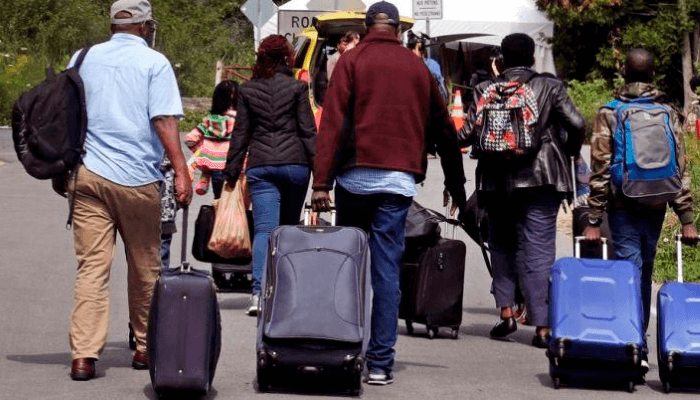
…What FG should do through NiDCOM
At a recent conference on environmental and wildlife conservation in Abuja, a South African academic, who schooled at the University of Ibadan on the federal government’s scholarship in the early 80s, recalled his days in Nigeria with nostalgia.
“We were taught by good Nigerian professors, we ate the same food, stayed in the same hostels, followed some school mates home to celebrate with their families and had a great time. Back then, it was a true African rising reality,” he said.
Moreover, Ademola Oyemade, an architect and landlord, enthused that then, Nigerians were truly respected for their support for other African countries.

“We were in Southern Africa to help in the fight against apartheid and the liberation movement in Central Africa and other countries. They said our foreign policy then was Africa First, and probably, that earned us the Giant of Africa. We were really respected then,” 83-year-old Pa Oyemade said.
Like the octogenarian said above, warring countries cannot forget in a hurry the huge part played by Nigeria, through ECOMOG and other peacekeeping missions, to restore peace in their countries.
Read also: ‘Japa’ wave declining despite harsh economy, heightening insecurity
Then, Nigeria’s billing as the giant of Africa was obvious. Then, Nigeria Airways was worth beholding at foreign airports and Nigerian citizens were sought-after and highly welcomed on their arrival at any destination.
Of course, those were the days people travelled to London without a visa and to the United States of America without harassment.

Those were the good old days as most elderly people like Pa Oyemade will say, and like the South African academic, they recall them with nostalgia.
Today, the reverse is the case as Nigerian citizens seem to be hunted abroad like the endangered Pangolin.
From Europe to Asia, the Americas to other African countries, including West African neighbours, Nigerian citizens have become persona non grata in some places, amid inhuman treatment at airports.
An investigation by BusinessDay revealed that the most targets and losers of any xenophobic attacks in Africa are Nigerians, especially in South Africa. Apart from Southern Africa, Nigerian citizens are also targeted in East Africa and, surprisingly, in Ghana, with a recent “Nigerians Must Go” chant, though now fading.
As well, the most inhuman treatments at airports across the world are meted out on Nigerian citizens with the green passport, making those with dual citizenship always switch passports at foreign airports.
“Foreign immigrations cannot easily spot Nigerians among other African nationals, but the green passport gives us away. There is something strange about it, the moment you flag your passport and the colour is green, the friendly immigration officer will become harsh,” Efemena Ochuko, a frequent traveller, decried.
But the reasons some countries give for their resentment of Nigerian citizens abound.
Read also: Otti charges Nigerian Diasporas to build their fatherland, host countries
Offensive lifestyle
Many countries that resent Nigerians allege that their lifestyle offends them.
“You guys are loud everywhere, at clubs, parks, and even in places of worship. We are the opposite of all that and wonder if we are the ones to copy your lifestyle or you who is a visitor, copying ours,” Lydia Kimuta, a Kenyan, said.
For Tubman Ochen, Nigerian showmanship is too much for an average Ugandan.
“I love my Nigerian people, but they have money and can flaunt it. We do less of that in my country. If you stay low key, nobody will dislike you,” he said.
For Lubanzi Bongani, a South African serial investor, the aggressive nature of Nigerians in business always puts him off.
The investor, who admitted being unable to beat the ones in Johannesburg in business, said that he cannot think of going to Lagos to invest, though he wished he could because of the fear that Nigerians back home would be more aggressive in business.
Others think that using money to lure their women and peddling hard drugs are worse.
Tendency to commit crime
The growing number of Nigerians in foreign prisons is alleged to be alarming.
But, while there are some bad eggs who are being prosecuted for committing crime abroad, observers noted that some countries are capitalising on that to maltreat innocent and law abiding ones at any opportunity, in a bid to curb crime rate or to extort money from them.
Though the Nigerians in Diaspora Commission (NiDCOM) confirmed that most are for minor offenses, the development has made some countries to put some Nigerians on watchlist, a sad development that paints many bad.
“As sad as it may sound, there are some die-hard Nigerian criminal elements abroad. But the good thing is that sought-after Nigerian professionals and entrepreneurs far outnumber the bad eggs. Again, bad news sells and that is why foreign countries always pick on the bad ones among us here,” Samuel Onikoyi, a Nigerian academic in Brussels, said.
Read also: Nigerians in Diaspora worry hardship may reduce remittances – Report
Onikoyi decried that when a Nigerian athlete or footballer wins gold in Europe, the description is usually a Nigerian British-born, or Nigerian-born French, but when caught in crime, it is a Nigerian international footballer.
“Yes, a few do drugs, but many earn legitimate living here; they are law-abiding and impacting the economy of the host countries. Nigerians are great people, but need serious image rebranding campaigns,” Onikoyi said.
Realities at home
But Simon Odita, a Canadian-based Nigerian medical doctor, thinks that Nigerians are ill-treated abroad because of the less regard for human life, killings and corruption at home.
“We are in a global village now. Other countries get the bad news from the Nigerian media every day. The worst is corruption, which has made some countries indirectly place restrictions on some sensitive organisations, except you were born here and never left for Nigeria in your life,” Odita said.
He decried that the successive governments have not made substantial commitments to fighting corruption, hence the country is regarded as very corrupt, which is a bad image and negative for Nigerian nationals abroad.
“Every Nigerian here is trying to get citizenship. Our children don’t want to identify with our culture or country because they also read about the bad news. We need to change as a people and as a country to stop the ill-treatment abroad. I don’t see it stopping until Nigeria’s image is rebranded positively,” he said.
Poverty at home
Onikoyi thinks that the billing of Nigeria as one of the poorest countries in the world is working against the citizens.
“No country wants to attract the poor because they will put pressure on their infrastructure, food security, amid fear of rise in crime rate.
“Officially, the world ranks Nigeria as a poor country. This is despite the thriving creative sector, despite our crude oil, despite Dangote and others.
“We should leave sentiments, tribalism and religion to harness and optimally deploy the wealth in the land for the general wellbeing of the people. We are not doing that, and that is why the West does not regard your Dangotes. They need them to help grow the countries and continent out of poverty, dependence on foreign aid and not to take advantage of the systems in their countries,” Onikoyi said.
Toeing Onikoyi’s line, Odita noted that immigration is on alert when Nigerians are coming based on the realities at home and will deny them entry at the slightest mistake.
Read also: Nigeria’s diaspora is a great economic asset: Value it!
“Even Ghana is asking Nigerians to go, South Africa don’t want Nigerians, East Africans are beginning to think the same way and the West is using diplomacy and high visa denials to check our influx. Some send Nigerian citizens to jail for bailable offences.
“So, it is obvious that these countries are acting based on our situation at home.
If Naira regains strength, healthcare and education improve, salaries become inticing and the killings stop, we will all return to Nigeria because these are the reasons we left,” Odita said.
Huge remittances
Foreign countries are aware of the huge remittances Nigerians are sending home and are looking for ways to at least reduce them.
In 2019, Diaspora remittances amounted to US$25 billion, which was 6 percent of the Gross Domestic Product (GDP) then.
The amount has been rising every year, apart from 2020, due to Covid-19.
“Those billions are capital flight for the host countries, though they leave legitimately. These countries are not fools, they will stop the remittances if they can, and the surest way is to deny you visa, ill-treat you and take other strict measures that amount to resentment of Nigerian citizens abroad,” Onikoyi said.
Way forward
In an attempt to curb the ill-treatment of Nigerians abroad, the federal government established the Nigerian in Diaspora Commission (NiDCOM) in 2017 to provide for the engagement of Nigerians in Diaspora in the policies, projects and participation in the development of Nigeria and to utilize the human capital and material resources of Nigerians in Diaspora towards the overall socio-economic, cultural and political development of Nigeria and for related matters.
NiDCOM was necitated because the embassies were not doing enough.
But many Nigerian Diasporas have severely criticised the commission headed by Abike Dabiri-Erewa, for failure in protecting their welfare, especially in times of critical need abroad.
Chijoke Umelahi, an Abuja-based lawyer, thinks that the commission has not done enough to gather and coordinate the activities of Nigerians abroad to guarantee their welfare, ensure respect for the host countries and most importantly, reduce their tendency for crime.
“They keep talking about the many Nigerians in foreign prisons. How did they get there? I have handled some cases for Chinese and Lebanese communities here. They are proactive at safeguarding the welfare of the citizens here and do everything to keep a positive image of their country.
“When there is a case involving Nigerians in China or Malaysia, the authorities keep quiet as if those are not Nigerians. But the swiftness with which they handle some other cases makes you think otherwise. If you don’t sue for the release of your citizens in foreign prisons, nobody will do that, and they will die in some cases.
Read also: Diaspora voting, independent candidacy stir national debate
“So, the regard you give your citizens is the same other countries will accord them. The United States of America is a perfect example, and that is why everyone wants to be a US citizen, including neighbouring Mexicans,” the lawyer said.
Some also suggested that the government should request that some Nigerian prisoners serve in the country in some cases.
However, most Nigerians at home and Diaspora insisted that the most sustainable solution is for the government to be sincere with sustainable development and good governance, which would impact the country positively, restore her lost glory and curb the ill-treatment meted out to Nigerians abroad.
“An average Nigerian wants to stay back home, but travels the world on holiday and business. If the government improves the economy, standardises healthcare, ensures quality education for all and security, foreign countries, including Ghana, will see less Nigerians to ill-treat, deny entry or imprison,” Onikoyi concluded.