Conflict. Confusion. Comedy.
The Nigerian social media has overflowed with these characteristics in the news over the last month. Politics dominates. The situation in Nigeria today, as captured in the media, is cloudy. Will someone send down the rain? Highlights.
1. Sandra Duru (Prof Mgbeke) deepens Natasha Akpoti-Uduaghan vs. Godswill Akpabio drama.
UK-based citizen Sandra Duru, popularly known as Prof Mgbeke, has thrust herself into the ongoing political tensions between Senator Natasha Akpoti-Uduaghan (PDP, Kogi Central) and Senate President Godswill Akpabio (APC, Akwa Ibom), adding a new layer of intrigue to Nigeria’s political landscape.
Prof. Mgbeke claimed that Senator Natasha Akpoti-Uduaghan verbally offered her N200 million to join the anti-Godswill Akpabio band of critics and crusaders. She displayed voice notes and involved former minister Dr. Oby Ezekwesili. She claimed:

• Akpoti-Uduaghan fabricated the claim of sexual harassment against the Senate President.
• The senator confessed the falsehood to her during their phone conversations.
• Akpoti-Uduaghan offered money to her supporters, including former education minister Dr. Oby Ezekwesili and Arise TV.
• Duru broadened the contentious issues by adding the matter of an alleged accusation of organ harvesting against the Senate President by the suspended senator Akpoti-Uduaghan.
• She additionally accused Akpoti-Uduaghan of orchestrating a wider plot to destabilise the Bola Tinubu federal government and manipulating media coverage for her advantage.
• Duru claims she has submitted her evidence to the Nigerian police and unnamed international bodies and has called for a formal investigation.
Natasha Akpoti-Uduaghan’s Response
Akpoti-Uduaghan has categorically denied all allegations made by Sandra Duru, calling them false and questioning the authenticity of the alleged recorded calls.
Dr Obi Ezekwesili put her reputation and record on the line and dismissed Duru’s claims. She asserted that no amount of money is sufficient to sway her from her course of defending Senator Akpoti-Uduaghan.
The Akpoti-Uduaghan versus Akpabio conflict has been a topic of discussion in the media since February 2025. Currently, there are at least three defamation lawsuits, an invitation to a conflict resolution meeting by a former president of the Nigerian Bar Association, which was rebuffed by

Akpoti-Uduaghan, along with further threats of lawsuits.
Social media is divided into platforms that support Akpoti-Uduaghan and those that favour Akpabio. Both sides highlight the unedifying records of Prof. Mgbeke and Natasha, referencing previous allegations they made against influential men.
2. GTB is not an ethnic bank
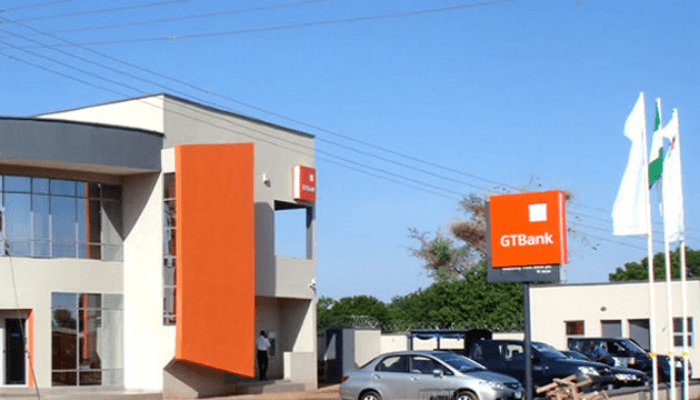
Social media buzzed throughout the first weekend of May over the alleged detention of influencer VeryDarkMan by GTB to facilitate his arrest by the EFCC. Some citizens began a campaign urging people to close their accounts. The situation soon took a tribal turn, with some claiming that it was an anti-Yoruba move. Citizen Chukwudi Iwuchukwu wrote to debunk this claim.
“GTB is not a Yoruba bank. It is not an Igbo bank or a Hausa bank either.
It is a national bank with a presence in all 36 states of the federation and beyond.
This attempt to diminish one of the finest brands to emerge from Nigeria into a Yoruba bank due to ethnic politics is a sad commentary to witness.
The late Herbert Wigwe got his biggest break working for GTB, and it was in the same bank that he met his co-founder, AIG, before they left to acquire Access Bank.
I’m not sure that Herbert would have gotten that big break if GTB were to be a tribal bank.
We need to do better with the knowledge that there are some boundaries when it comes to this stupid tribal politics that we play on social media, which diminishes us as a people.
GTB did not come this far with over N11 trillion in customer deposits for ethnic jingoists and barely educated tribal warriors to reduce it to a Yoruba bank.”
3. Who negotiates with a weather vane?
Commentary on Trump’s tariffs
Vietnam-born Sonny Thang:
Donald, you just gave the world another reason to never trust a deal with you. One breath, it’s 125%. Next breath, it’s 10%.
Today it’s “effective immediately,” tomorrow it’s “paused.”
Who negotiates with a weather vane?
This isn’t strength—it’s instability. No serious country bets its future on the mood swings of a man who treats global trade like a slot machine. *You talk about “lack of respect,” but what exactly are you showing the world?*
Discipline? Honor? Predictability? *You’ve reduced the U.S. position to a coin toss between tantrum and concession.* That’s not policy—it’s pathology.
Let’s be clear. China didn’t “rip off” the U.S.—you handed over your industrial base willingly. You outsourced for profit, gutted your working class, and blamed the mirror.
China built. You speculated. *China planned. You printed*. And now, because the *empire can no longer compete, you threaten like a drunken gambler blaming the table*.
Your “pause” isn’t mercy—it’s leverage that has gone limp. You had leverage once. But after years of burning bridges, tearing up treaties, bullying allies, and contradicting yourself every 48 hours, all you’ve proven is this:
You’re not a partner. You’re not even a reliable enemy. You’re an unstable liability in a collapsing system.
And the world sees it.
You say 75 countries called you. But they didn’t call you because they trust you—they called because they’re trapped in a global system your empire built, and they’re trying to survive it. They don’t retaliate because they don’t want the kind of instability you export.
Not respect—fear.
Not cooperation—hostage management.
So, the real question is: Who in their right mind would make a deal with someone who talks like this? One minute it’s war, the next it’s “thank you for your attention.”
You don’t sound like a leader. You sound like a warning. History won’t remember this as a strategy. It’ll remember it as the moment the empire started speaking in tongues—loud, erratic, and irrelevant.
China won’t bend to your incoherence. No civilisation that has survived 5,000 years gets lectured by one that can’t even survive one election cycle without civil breakdown.
And when your 90 days run out and nothing moves, you’ll blame China again. But deep down, you know what this is. *_You’re not punishing China. You’re projecting your decay_*.
We see it. The world sees it. And *_you can’t tariff your way out of decline._*
4. It’s not all lamentations.
Born Again Christian Police DCP who Never Took Bribes Transformed His Part of The Nigerian Police.
This is the real revolution. A case study of DCP Francis Erhabor, a born-again Christian.
According to thenewsguru.com
DCP Francis Osagie Erhabor, who retired from the Nigeria Police Force after 35 Years,
He is widely known as a Police officer whose claim of having never taken a bribe was not contradicted by anyone during his career.
His words: “When I entered the job, I took a strong vow. I knew my system thrived in corruption, and I said to myself, ‘If I would not in any way corrupt myself, I told the Lord, don’t humiliate me in secret; show me on big-time televisions like NTA, BBC, and CNN if I take a bribe or corrupt myself.”
From bribes of millions of naira, threats, career stagnation, and countless temptations and opposition, every challenge came his way. Yet, he stood firm.
“From dismantling illegal operations to transforming community policing, Francis proved that one person, armed with integrity, can rewrite the rules.
His defiance earned him accolades, including the Public Service Integrity Award from President Muhammadu Buhari.
His tenure at the Itam Police Division stands out for his unwavering refusal to accept bribes and his commitment to ensuring that bail is free and fair.
Erhabor’s integrity is not an isolated incident but a testament to his lifelong commitment to ethical policing. When offered a bribe of N6 million to compromise security operations as a pipeline commander in Edo State, Erhabor firmly rejected the offer, demonstrating a resolve that has defined his career.
Erhabor’s influence extended beyond his professional responsibilities. He transformed the infrastructure of the Itam Police Division by funding improvements through a network of friends and supporters, which enhanced the division’s operational capabilities.
Erhabor’s reputation for integrity is well earned, shaped by his consistent ethical conduct throughout his career.
-Edidiong Esara on a WhatsApp platform
5. Growing concerns with misinformation and fake news as social media dominates
Former NNPCL MD, Mr. Mele Kyari at the weekend cried out, stating that news of his alleged arrest and detention by the EFCC is untrue. He cautioned the media to be wary of the growing incidence of fake news.
Minister of Information and National Orientation Mohammed Idris Malagi, a few months ago unveiled a national campaign to combat fake news. He advocated media literacy as a first step and line of defence.
While unveiling the plan at the 48th National Council of Information and National Orientation in Kaduna, the minister emphasised the efforts to strengthen inclusive governance in Nigeria. Idris highlighted the need for the transformative potential of accurate, transparent, and accessible public information to society.
“In an era where fake news, propaganda, and biased reporting can significantly influence public opinion and decision-making, media literacy fosters critical thinking. It helps individuals analyse the intent behind media messages, understand the context in which they are presented, and assess their accuracy and relevance,” the minister said.
To demonstrate the readiness and implementation of the project, the minister announced the immediate operationalisation of the UNESCO Media and Information Literacy Institute in Abuja. He pointed out that the institute, which is the first of its kind globally, will equip Nigerians with the tools to identify credible information and discredit misinformation.
Social Listening captures the social media scene concerning issues of fake news.
• Disinformation and Fake News: There is heightened concern about misinformation spreading on social media, especially related to health (vaccine hesitancy, fake cures), elections (false claims about voter suppression and rigged results), economic issues (scams disguised as government palliatives), and communal conflicts. AI-generated deepfakes and influence-for-hire campaigns are increasingly used to manipulate public opinion and exacerbate social divisions.
• Political and Electoral Tensions: Ahead of key elections like the Anambra gubernatorial poll in November 2025, social media is a battleground for disinformation campaigns that threaten to undermine trust in the electoral process and fuel ethno-religious tensions.
• Cybersecurity and Data Privacy: Nigerians are increasingly concerned about data privacy and security on social media platforms, with calls for stronger regulations and greater transparency from tech companies. Cyberbullying and online harassment remain significant challenges.
• Rise of AI and New Technologies: AI-powered features, such as chatbots and content creation tools, are transforming social media engagement and marketing. Short-form videos prevail on platforms like TikTok and Instagram Reels, while virtual spaces and metaverse concepts are gaining traction.
• Influencer Marketing Trends: Authenticity and transparency are emphasised, with micro-influencers gaining prominence for their targeted engagement. Social media has become a major shopping and marketing channel, with brands leveraging influencers and video content to connect with consumers.
• Mental Health Awareness: Discussions about social media’s impact on mental health, including issues such as comparison anxiety and online harassment, have gained attention, leading to calls for solutions that mitigate negative effects.
• Cultural and Youth Trends: Nigerian social media continues to thrive with viral dance challenges, catchy phrases, and creative content that reflect the vibrant youth culture and creativity of the country.