It has been 28 months since Nigeria performed what many described as surgery on its economy, painful but, according to President Bola Tinubu and many analysts, necessary. The operation came through bold reforms such as the removal of fuel subsidies and the unification of exchange rates.
“The removal of subsidy on petrol was a painful but necessary decision I took for the future of this country,” President Tinubu said in August 2024, reaffirming his government’s resolve to prioritise long-term stability over short-term comfort.
These decisions, though aimed at restoring long-term stability, triggered immediate discomfort across the economic landscape. Three key agents, the government, firms, and households, fell ill from the shock. Today, the signs of recovery are uneven.
The government, strengthened by higher oil receipts and rising FAAC allocations, appears to be healing well. Firms are gradually regaining confidence as foreign investments begin to return.

Olayemi Cardoso, the Central Bank Governor, recently stated that “the exchange rate stabilized, and investor confidence is returning,” underscoring the early gains of tighter monetary coordination and more transparent FX management.
Yet households, the smallest and most vulnerable of these agents, remain unwell. The wounds from the policy shocks are closing, but the scars are visible. Inflation, though easing, still eats deeply into household incomes.
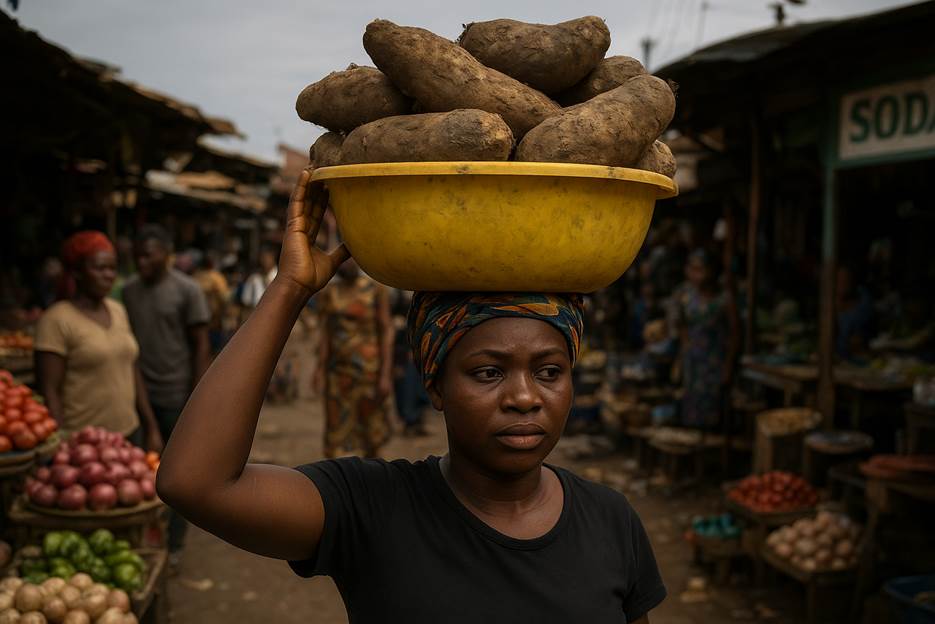
The prices of food and transport, the two largest expenses for most Nigerians, remain stubbornly high. The World Bank observes that “food inflation disproportionately affects poor households who spend up to 70 percent of their income on food.”
For many families, these numbers translate into daily struggle. “For my eldest child, the fees have jumped from N250,000 to N470,000. Even my child in primary school has seen their fees double from N150,000 to N310,000,” said Yaya Kareem, a Lagos parent speaking about the growing cost of education.
His experience reflects a broader reality in which macroeconomic recovery feels distant from household relief. While indicators tell a story of progress, the lived experience for millions of Nigerians speaks of resilience stretched thin.

When governments heal faster than households
The irony is hard to ignore. Government revenues have risen sharply through higher FAAC disbursements supported by improved exchange-rate management. According to the Nigeria Extractive Industries Transparency Initiative (NEITI) FAAC Quarterly Review (2023), total disbursements from the Federation Account Allocation Committee (FAAC) amounted to N9.18 trillion in 2022, the last full fiscal year before the 2023 reform cycle that included fuel subsidy removal and exchange-rate unification.
In 2023, allocations rose to N10.9 trillion and further to N15.26 trillion in 2024, representing a 43 percent year-on-year increase, driven by higher oil revenues, subsidy savings, and exchange-rate adjustments.
Yet despite this surge in allocations, poverty and hunger continue to rise. The question is not how much is being shared but how effectively it is being used. Nigeria’s fiscal structure has long favoured distribution over delivery.
“Many state governments still spend a large share of their allocations on overheads and political patronage instead of strengthening food supply chains, rural roads, or transport systems that directly affect household welfare,” said Yusuf Oladimeji, a former councillor in Ogun State. The result is a growing structural imbalance; the government is healing faster than the people it serves.
Lessons from Indonesia and South Korea
Nigeria is not the first country to undergo painful reforms. In the late 1990s, Indonesia implemented drastic adjustments following the Asian financial crisis. Like Nigeria, it initially faced a sharp rise in poverty.
But instead of relying mainly on cash transfers, the government tackled costs at their roots by investing in rural road networks, improving logistics for farmers, and encouraging local food processing. These actions cut distribution costs and helped reduce food inflation over time.
South Korea offers another lesson. During its post-war recovery and the 1997 crisis, it linked economic rebuilding to household welfare through efficient public transport, affordable energy, and rural industrialisation. By making it cheaper for people to move, work, and feed their families, Korea built social resilience that later powered its industrial rise.
What Nigeria can do differently
Nigeria can draw from these experiences. Rather than short-term relief payments that vanish quickly, the focus should shift to reducing structural costs by making food and transport cheaper. First, rural investment must go beyond policy statements. Building and maintaining rural roads and storage facilities will reduce post-harvest losses and lower the cost of bringing food to markets.
Second, urban transport should be seen as a growth enabler, not a revenue stream. Public-private partnerships can subsidise and modernise mass transit systems, making daily commuting affordable without reviving the inefficiencies of fuel subsidies.
Third, energy reforms must prioritise reliable and affordable power for small businesses, especially in agro-processing and manufacturing. Lower production and logistics costs will ease retail prices and strengthen household welfare.
Healing all three agents
Economic recovery cannot be declared complete until all three agents, government, firms, and households are healthy. The current trajectory shows progress at the top but fragility at the base. A growing economy that leaves households behind risks eroding the very social trust needed to sustain its gains.
If Indonesia could use rural investment as a tool for poverty reduction, and South Korea could link infrastructure to welfare, Nigeria too can rebuild its social contract by aligning economic recovery with household relief. The wounds from reform may be healing, but unless households are part of that recovery, the healing will remain incomplete.