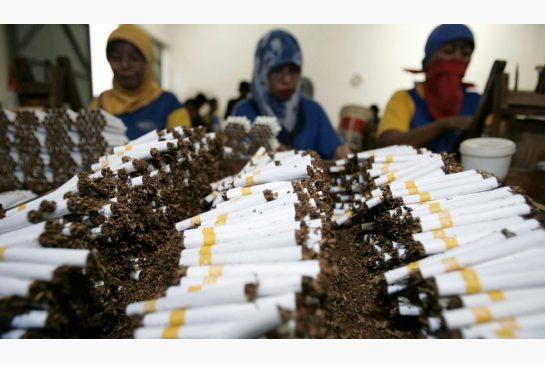
 The World Health Organisation (WHO) on Tuesday said more governments should raise taxes on tobacco, warning that smoking-related deaths would increase to eight a year by 2030 unless further measures were taken.
Tobacco consumption currently kills six million people globally each year, more than the combined fatalities from AIDS, malaria and tuberculosis.
“Although the percentage of smokers is falling in many countries, the overall number of smokers is rising because of the overall global population increase,’’ the WHO said in its Report on the Global Tobacco Epidemic.
Currently, 33 of WHO’s 194 member countries have levies amounting to 75 per cent of the overall sales price as recommended by the Geneva-based UN health agency.

“Raising taxes on tobacco products is one of the most effective – and cost-effective – ways to reduce consumption of products that kill, while also generating substantial revenue,’’ WHO Director General Margaret Chan, said.
The report cited research showing that increasing tobacco prices by 10 per cent reduces tobacco consumption by four per cent in wealthy countries.
“The effect is five per cent in low- and middle-income countries, which are home to 80 per cent of the world’s one billion smokers.
“In France, cigarette prices have risen sharply since the early 1990s, while the lung cancer death rate has dropped since the middle of that decade,’’ the WHO said.
Besides causing lung problems, smoking also raises the risk of diseases including cancer, heart disease and diabetes.

The WHO pointed to the Philippines as a model, where the government has steadily increased tobacco taxes and earmarked 15 per cent of the new levies to support tobacco farmers and workers in building new livelihoods.
The U.S. Chamber of Commerce has lobbied against anti-smoking policies in the Philippines and various other countries, according to a recent New York Times investigation.
Vera Luiza da Costa e Silva, who heads the WHO section overseeing a 2003 international tobacco control treaty, said WHO has warned that this was one of the ways in which the tobacco industry was trying influence governments.
“Front groups such as chambers of commerce and international think tanks engage with governments to prevent, dilute, delay or derail taxation policy development,’’ Vera added.
(dpa/NAN)