Africa’s investment scene has certainly seen its fair share of frenzied activities most of which were led by venture capitalists (VC) firms. In 2018, VCs ploughed $725.6 million across 458 deals – representing a 300 percent growth in the total funding amount and over 126 percent increase in the number of deals as compared to 2017 – into startups on the African continent according to data from WeeTracker’s Venture Investments Report 2018.
Read More : Silicon Valley is not for Africa, early stage investors tell startups
Grants and private equity made up for other sources of big funding in the same year and probably in the years before that. Only little is heard about angel investment despite there existing 30 Angel Investors (AIs) networks on the continent, including Lagos Angel Network (LAN) in Nigeria, Cairo Angels in Egypt, Jozi Angels in South Africa, Tanzania Angel Investors Network and the Viktoria Business Angels Network in Kenya among others.
It is worth noting that Angel investment contributes about five times less capital to startups than VCs. By contrast, in the US angel investment in startups grew by 36 percent from 2008 to 2012 reaching nearly $23 billion while venture capital investments dropped by 8 percent, according to Dow Jones VentureSource.

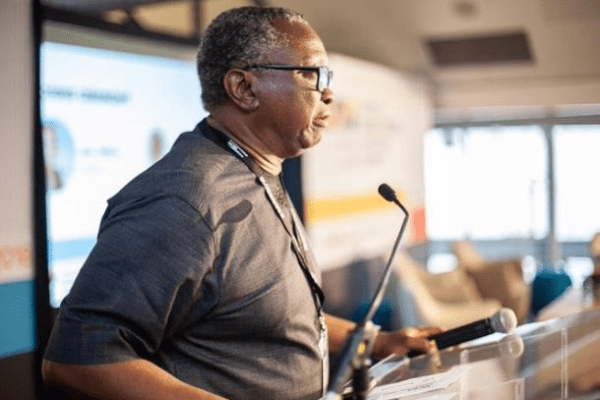
Salum Awadh, founder, Tanzania Angel Investors Networth told BusinessDay that AIs in Africa have invested about $1 billion in startups so far. The African Business Angels Network (ABAN) – the umbrella body and mentor providing support for all networks across the continent – is attempting to come up with more accurate data on the investment landscape.
Angel investing (AIs) is a type of business funding where high networth individuals invest in early stage, seed start-ups. They also fund Series A rounds. There are also super angels who invest checks up to $500,000 in Series A and up.
In many ways, AIs differ from VCs. One of them is that AIs use their own money to invest while VCs use other people’s money. Secondly, AIs invest mainly in early stage startups while VCs invest at growth stage. Importantly, AIs are not as risk averse as VCs hence they invest small amounts, unlike the latter which can go for the big bucks.
“AI is actually picking up and AIs are getting their hands dirty, even though it’s still at its infant stage. But activities are happening across the continent, we have just recently seen the launch of new networks in Benin, Senegal, and Mali. We also know some networks such Lagos Angles have done deals worth more than $1m to date,” Awadh said.
But the Angel investment landscape is plagued by many problems contributing to many early stage startups not being able to access needed funding before they shut down. For starters, there is a low level of awareness and knowledge on the part of investors who are not signed up to the networks and therefore unable to share their wealth and knowledge in supporting startups.

Angel investors typically give a lower amount of time to startups which may be problematic for early stage startup founders that may be seeking a longer term arrangement. It also gives little room for sufficient mentorship since AIs are often very successful business people and poor understanding of how the angel investing business really works.
To be sure, angel investors fill the gap between friends and family, and more formal venture capital funds. While some invest for profit, others just want to make an impact with their money by investing in causes and industries they are really passionate about ranging from education, health to farming and environment protection.
Data from Halo Report shows that angel investors particularly like startups operating in the following industries: Internet (23.5%), mobile and telecom (10.4%), energy and utilities (4.3%), electronics (4.3%), consumer products and services (2.3%), and other industries (16.5%).
“We also have challenges in getting the right investable companies as many start-up hubs are also taking shape in breeding proper startups ready for investment,” Awadh told BusinessDay.
He explained that startups need to understand how angel investing works and what stage of their cycle they should contact angel investors.
“Don’t go when you are too early and don’t go when you are too late,” he said. Angel investors typically look for a great team with a good market that could potentially return ten times their initial investment in a period of five years maximum.
The whole business of investing is risky and angels who are not as sophisticated in terms of processes like VCs, would want to see the real fundamentals for a startup’s growth potential, to clearly show the problem they solve and why their solution stands out.
Angel investment landscape lacks specific regulations. In the absence, existing AI networks comply with prevailing national laws on investment, contracts, and taxes among others. Tunisia however stands out from the rest with its Unique Startup Act that is expected to transform the startup ecosystem, which other countries can borrow a leaf from.
African countries can also take a cue from India, which recently boosted prospects for more angel investments in startups. Recently the India government announced that angel tax will no longer apply to startups registered with the government’s department for promotion of industry and internal trade (DPIIT). The law was introduced in 2012 to curb money laundering through small companies. Now startups can look forward to engaging more AIs for funding.